




RELATED: How congestion pricing, MaaS, new policies to benefit all
What London can teach the U.S. about curbing congestion
As the population continues to rise, major cities are turning to mobility solutions such as congestion pricing to alleviate the number of cars on roadways.
August 21, 2019

London's Picadilly Circus station
© visitlondon.com/Antoine Buchet
4 min to read

London's Picadilly Circus station
© visitlondon.com/Antoine Buchet
(Co-written by Kyle Funk and Brenna Rivett.)
Mobility in cities, towns, and villages is critical to individual and societal prosperity. Individuals need the ability to get around to work, see each other and have fun.
But congestion in our streets is resulting in an inefficient system that not only makes it more difficult for Americans to get around but also degrades our streets and increases pollution. Solving congestion, and the problems it causes is at the top of many local leaders’ agendas.
One possible solution is congestion pricing — also referred to as congestion charging — which is about to be launched in New York City.
Last week my colleagues at the National League of Cities (NLC) and I released a new guide, “Making Space: Congestion Pricing in Cities,” which analyzes different congestion pricing schemes. The report is intended to help cites across America solve two problems: funding infrastructure projects and reducing congestion.
Congestion pricing is a type of road user charge system in which a flat or variable rate fee is charged to vehicles that drive in a specified area or zone within a city. With variable pricing, the goal is for congestion charges to rise in accordance with increased traffic congestion, thereby pushing some drivers off the road and making traffic flow more smoothly.
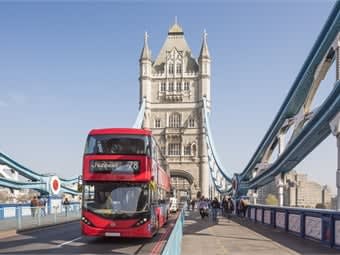
The iconic Tower Bridge and a red bus in London.
© visitlondon.com/Ben Pipe
This tool is based upon the economic principal that when a public good is in high demand, the price charged to use that good will increase in value. Congestion on our roads in the U.S. has yet to become a marketable good.
It’s true that New York City is the first U.S. city to innovate in this space, but congestion charging is already an established program in several cities around the world. One of the most notable examples is London.
The city of London is the most comparable to New York City. Over fifteen years old, London’s congestion charge is 15 years old and is in effect throughout downtown London. Before pricing began in 2003, automobiles only reached an average speed of 7.5 mph and they were accruing an estimated $3-$6 million economic loss for the city every week because of gridlock. Almost one hundred percent of Londoners expressed concerns that travel times were too high and air pollution was at an unhealthy level.
The congestion charge in London seems to show a plethora of positive results. A year after the pricing began, congestion decreased, resulting in a 30% increase in traffic speeds. Trip time reliability increased for travelers and air quality improvements contributed to 2,000 fewer deaths each year.
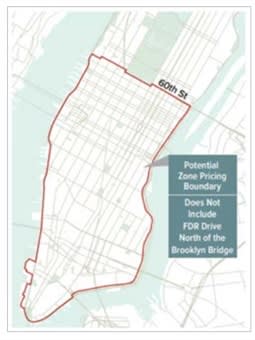
Figure 1: Manhattan Central Business District Tolling Program (CBDTP) as Described in Statute
The first ten years of London’s congestion charge brought in about $3.9 billion, half of which went to funding infrastructure projects and the other half towards operating costs. London meanwhile experienced a traffic volume decrease of 9.9%, despite a population growth of 20%, from 2000 to 2015.
In the last few years, there have been several updates made to the program following changes in the economy and technology. The price of the charge has changed from £5 ($6) per car in 2003 to £11.50 ($14) in 2014. Meanwhile, the advancement of green and electric vehicles has caused several problems for London’s charging zone. Low-emission standard vehicles were exempt at first from the pricing. The market responded by creating lower and lower emission vehicles, and over the years London has responded by also creating tighter and tighter standards. The city plans to get rid of the exemption all together in 2025.

Figure 2: London Congestion Charge and Ultra Low Emission Zone
Taxis and private hire vehicles were also originally exempt from the congestion pricing scheme. While initially a prudent political exemption, the city had not foreseen the advent of ride-sharing vehicles which got included in the private hire vehicles category. This caused an increase in both congestion and public complaints between 2014 and 2016. In response, the Transportation Committee of London recently did away with the exemption for taxis and private hire vehicles in 2017.
While London provides invaluable insights into how to build a congestion charging program and prepare for changing technology, it isn’t the only city that has seen success with this model. This model is also not the only tool available to cities. When all is said and done, what matters is that streets in America’s cities, towns and villages once again become an asset to people — as opposed to just their cars — and that we have a stable, sustainable way to fund them.
Kyle Funk is a research assistant and Brenna Rivett is a principal research associate with National League of Cities' urban innovation at the Center for City Solutions.
Subscribe to Our Newsletter
More Blog Posts
Building a Winning FTA Grant Proposal: Why Propane Autogas is the Pragmatic Choice for Fleet Resilience
With $610 million available through the FY 2026 Buses and Bus Facilities Competitive Program and the Low or No Emission Grant Program, agencies must build a compelling case before the September 21 deadline that balances environmental compliance with operational feasibility.
Read More →
Velo-city Conference 2026: Latest Trends in Cycling as Part of Urban Mobility
The global cycling conference highlighted how cities are integrating bicycles into multimodal transportation networks, expanding cycle tourism and reshaping urban mobility.
Read More →
Kindness Isn’t Soft...It’s Strategic.
Mike Bismeyer — often known as “The Kindness Guy” — has spent more than 17 years in public transit and mobility, serving in industry leadership roles, speaking across North America, and advocating for stronger workplace cultures. But his message doesn’t come from theory. It comes from lived experience.
Read More →
Inside ITF 2026: Transport Reacts to A Challenging World
Transport leaders from around the world gathered in Leipzig, Germany, for the 2026 International Transport Forum to discuss resilience, climate impacts, supply chains and the future of sustainable mobility.
Read More →
Every Ride Tells a Story — But You’re Not Just Selling the Ride
You’re selling the moment, the meaning, and the emotion behind it.
Read More →
How Digital Signage is Reshaping the Traveler Experience at Transportation Hubs
What was once a landscape of static signs has evolved into a responsive, immersive environment powered by real-time visual communication.
Read More →
Latest Trends in Urban Mobility from Polis Conference 2025
Polis comprises cities and regions, as well as corporate partners, from across Europe, promoting the development and implementation of sustainable mobility. This year’s event had over a thousand attendees across various policy forums and an exhibition.
Read More →
Why Transit Leaders Require Better Tools for Operational Clarity In Today’s Tech-Fragmented Environment
Across North America and beyond, transit agency officials are contending with a perfect storm of operational headaches and strategic challenges that hamper daily service and long-term progress.
Read More →
The Powerless Brokers: Why California Can’t Build Transit
It is no secret that transit in the U.S. is slow and expensive to build.
Read More →
Why Transport Sustainability Should Focus on People Instead of Cars
Simply incentivizing electrification is not enough to make a meaningful impact; we must shift our focus toward prioritizing public transportation and infrastructure.
Read More →