



What to Consider When Integrating Private Microtransit Service - Pt. 2
Decisionmakers and planners are increasingly looking to the world of private microtransit to optimize their existing service.

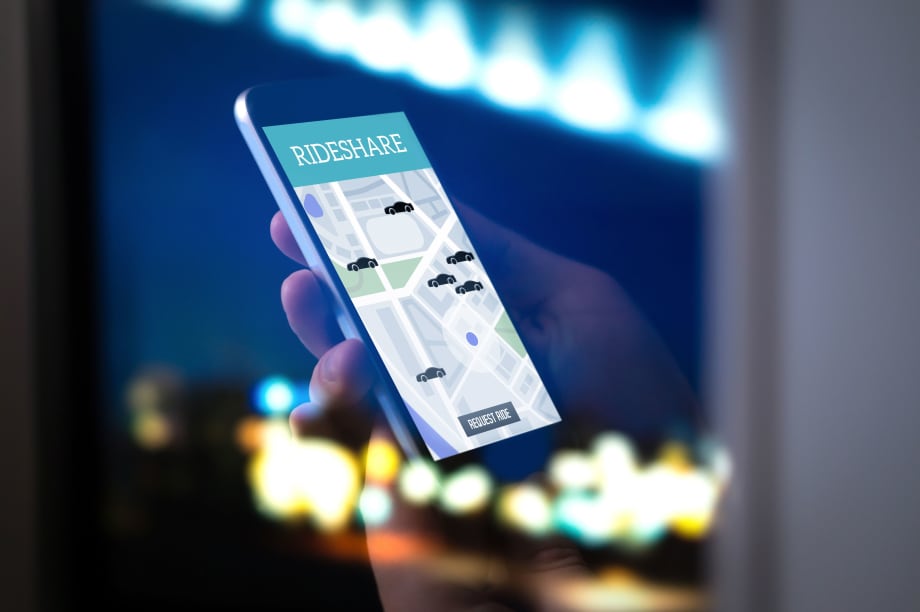
When considering integrating private microtransit, it’s important to look at the potential impact to your fixed-route service. Image By Tero Vesalainen
When considering integrating private microtransit, it’s important to look at the potential impact to your fixed-route service. Image By Tero Vesalainen
In part one of our series for METRO, we introduced some of the factors driving the growing demand for accessible transit ridership. We also addressed several challenges facing transit agencies as they work to modernize and optimize their systems to become more attractive to riders while working within the confines of strict budgets.
Decisionmakers and planners in agencies of all sizes are increasingly looking to the world of private microtransit to optimize their existing service.
Considerations
In the course of working with transit agencies in communities across the U.S. and Canada, my team and I are helping identify and pilot tailored approaches to meet the growing demand for accessible transit options. The goal is to deliver mobility to residents beyond traditional fixed-route service. There are clear benefits and a growing list of agencies employing private microtransit models within their system and service planning, with many seeing overall reduced cost, increased ridership, and overall convenience to riders.
RELATED: Mobility On Demand: The Future of Transportation
When considering integrating private microtransit, it’s important to look at the potential impact to your fixed-route service (i.e., you don’t want to create redundancies in a new service that could result in the cannibalization of your bus ridership). One way of doing that is putting some thoughtful business rules or a radius around the microtransit service.
Ensuring strong communication with stakeholders, government and the community about the ways in which the service will better support users.
Another factor in the integration of alternate delivery models, particularly when they come in place of a traditional fixed-route service, is ensuring strong communication with stakeholders, government and the community about the ways in which the service will better support users, and ensure continued compliance with Title VI.
Most importantly, before exploring external partnerships, it’s only logical to first closely examine current operations to identify under-utilized internal capacity and look at the potential in an agency’s existing on-demand systems, such as paratransit, where perhaps there is additional capacity that isn’t being fully utilized. (In our next article, we’ll explore ways some agencies are optimizing these existing resources to better serve their ridership.)
Before exploring external partnerships, it’s only logical to first closely examine current operations to identify under-utilized internal capacity.
Below, we explore how specific transit agencies are employing or piloting strategies incorporating private microtransit within their service models to better meet the mobility needs of the communities they serve.
In general, these initiatives consist of partnerships with existing transportation network companies (TNC) or offering similar services using off-the-shelf TNC technology providers. Although there are many TNC companies and technology solutions, Uber and Lyft occupy a large part of the on-demand ride-sharing market and as such are commonly found in partnerships with transit agencies piloting alternative delivery services.
Boston | MBTA RIDE paratransit pilot
In the fall of 2016, the Massachusetts Bay Transportation Authority (MBTA) began an on-demand paratransit pilot program that allowed 400 of their registered paratransit users to use Uber and Lyft services instead. Through partnering with ride-sharing companies, the MBTA sought to improve customer experience and reduce operating costs in comparison to the existing conventional paratransit service.
Under the pilot, the rider pays the first $2 of the fare and the MBTA subsidizes the rest up to a maximum of $40 — the rider is responsible for paying any fare amount more than $42 dollars. Benefits to the rider include a lower base fare ($2 down from $3.15 and $5.25) as well as the ability to book trips instantly instead of a day ahead, as was the case with the conventional system. The pilot was initially successful with ridership increasing slightly from 10 to 13 trips per person per month and the cost of offering the service decreased from $30 per trip to $9 per trip. The MBTA extended the pilot until this spring and expanded the program to allow all registered paratransit users to participate.
Tampa Bay, Fla. | HyperLINK
The Hillsborough Area Regional Transit Authority (HART) began the "HyperLink" pilot in November 2016 using a "door-to-bus" smartphone app that allowed HART transportation users to travel between their origin or destination and designated bus stops for $1. Riders wishing to connect to travel other than bus stops may do so for $3 provided the trip is completed within one of the designated "HyperLINK Zones." Payment can be made through the app or by cash, and the fare amount is consistent with other HART fares, which range from $1 to $3 for conventional fares and $4 for paratransit fares.
HART originally considered partnering with existing ride-sharing companies such as Uber and Lyft but there were concerns that these companies could not ensure ADA-compliant conditions for their passengers. To satisfy this condition, HART contracted Transdev to operate the program, subsidizing $7 per ride. Funding for the program comes from a $400,000 grant from the Florida Department of Transportation as well as an additional $400,000 matched by HART. HyperLink has now completed its pilot stage, and HART now operates the program as part of their family of services.
Dublin, Calif. | GO Dublin!
In January 2017, the Livermore Amador Valley Transit Authority (LAVTA) launched the GO Dublin! ride-sharing pilot program — a partnership between the LAVTA and ride-sharing companies Uber, Lyft and DeSoto. The program sought to deliver a lower cost transit service to low-density suburban areas of Dublin by removing a fixed bus route and instead offering riders a 50% discount off the cost of their ride share trip, up to a maximum of $5, provided the trip origin and destination are within the city limits. Additionally, riders must choose the communal travel option from the ride-sharing carriers (i.e. UberPool, Lyft Line, DeSoto Share).
An on-demand ride-sharing strategy has the potential for reduced costs and improved rider experience when compared to traditional service offerings.
Riders have the freedom to select their ride share provider of choice, giving the user the option to find the right trip for their needs. For example, only the DeSoto service allows the ability to pay cash for trips and has wheelchair accessible vehicles. The result is that ridership is above what it was on the original fixed route with costs decreasing from roughly $15 per person per trip to $3 per person per trip. Originally slated to end in June 2017, the pilot was extended to June 28, 2018.
As these examples illustrate, an on-demand ride-sharing strategy has the potential for reduced costs and improved rider experience when compared to traditional service offerings. Stay tuned for our next article, where we’ll explore how agencies are optimizing their existing resources to meet some of these same goals.
Sasha Pejcic, PMP is Managing Senior Associate, Transportation (GTA) & Transit Advisory Lead at Stantec.
More Blog Posts
Building a Winning FTA Grant Proposal: Why Propane Autogas is the Pragmatic Choice for Fleet Resilience
With $610 million available through the FY 2026 Buses and Bus Facilities Competitive Program and the Low or No Emission Grant Program, agencies must build a compelling case before the September 21 deadline that balances environmental compliance with operational feasibility.
Read More →
Velo-city Conference 2026: Latest Trends in Cycling as Part of Urban Mobility
The global cycling conference highlighted how cities are integrating bicycles into multimodal transportation networks, expanding cycle tourism and reshaping urban mobility.
Read More →
Kindness Isn’t Soft...It’s Strategic.
Mike Bismeyer — often known as “The Kindness Guy” — has spent more than 17 years in public transit and mobility, serving in industry leadership roles, speaking across North America, and advocating for stronger workplace cultures. But his message doesn’t come from theory. It comes from lived experience.
Read More →
Inside ITF 2026: Transport Reacts to A Challenging World
Transport leaders from around the world gathered in Leipzig, Germany, for the 2026 International Transport Forum to discuss resilience, climate impacts, supply chains and the future of sustainable mobility.
Read More →
Every Ride Tells a Story — But You’re Not Just Selling the Ride
You’re selling the moment, the meaning, and the emotion behind it.
Read More →
How Digital Signage is Reshaping the Traveler Experience at Transportation Hubs
What was once a landscape of static signs has evolved into a responsive, immersive environment powered by real-time visual communication.
Read More →
Latest Trends in Urban Mobility from Polis Conference 2025
Polis comprises cities and regions, as well as corporate partners, from across Europe, promoting the development and implementation of sustainable mobility. This year’s event had over a thousand attendees across various policy forums and an exhibition.
Read More →
Why Transit Leaders Require Better Tools for Operational Clarity In Today’s Tech-Fragmented Environment
Across North America and beyond, transit agency officials are contending with a perfect storm of operational headaches and strategic challenges that hamper daily service and long-term progress.
Read More →
The Powerless Brokers: Why California Can’t Build Transit
It is no secret that transit in the U.S. is slow and expensive to build.
Read More →
Why Transport Sustainability Should Focus on People Instead of Cars
Simply incentivizing electrification is not enough to make a meaningful impact; we must shift our focus toward prioritizing public transportation and infrastructure.
Read More →