



C-TRAN Named North American Mid-sized 'Transit System of the Year'
Vancouver, Wash.-based agency increased total ridership by 4.63% during the past two years, one of key achievements factored in.

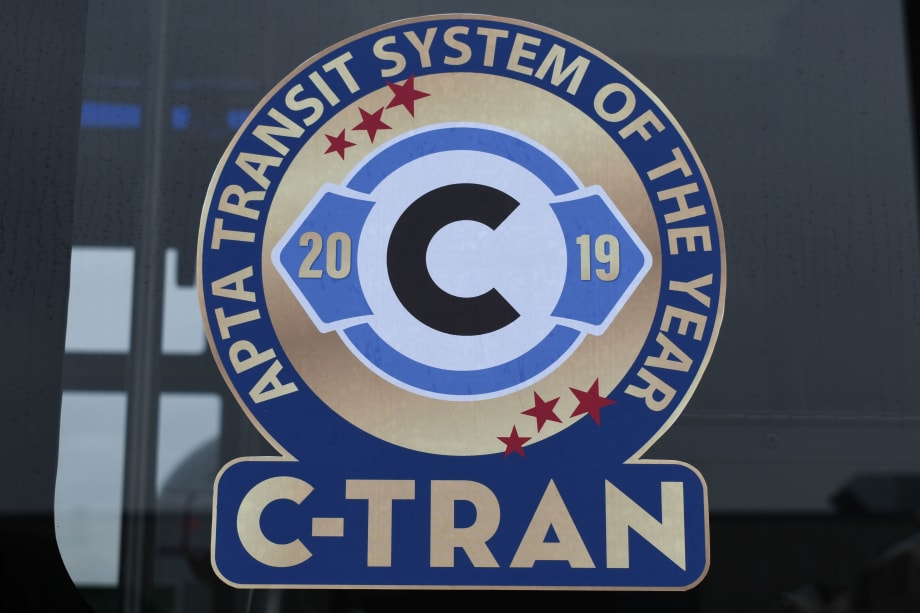
Vancouver, Wash.-based C-TRAN has been named the 2019 national mid-sized Transit System of the Year by the American Public Transportation Association.
Photo: C-TRAN
Vancouver, Wash.-based C-TRAN has been named the 2019 national mid-sized Transit System of the Year by the American Public Transportation Association (APTA).
The honor was officially announced this month as part of the annual APTA Awards, which recognizes transit systems across North America. As winner of the Outstanding Public Transportation System Achievement Award for mid-sized agencies, C-TRAN was judged among other systems with a total ridership between four million and 20 million trips per year. C-TRAN tallied about 6.2 million total trips in 2018.
RELATED: Portland-Vancouver launch transit fare card on iPhone
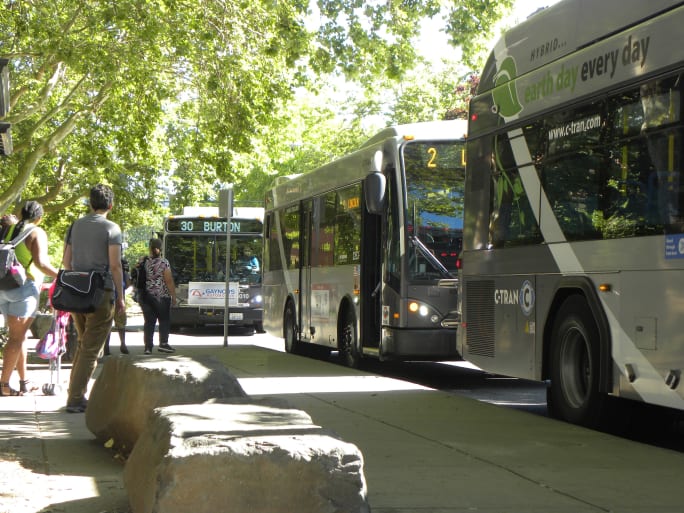
C-TRAN was judged among other systems with a total ridership between 4 million and 20 million trips per year.
Photo: C-TRAN
The award encompasses C-TRAN’s achievements during the past three years in 12 core areas: safety, operations, maintenance, access, customer service, financial management, sustainability, workforce development, attendance and employee costs, minority and women advancement, marketing, and community relations.
C-TRAN marked several important achievements that were factored in the award selection:
Increased total ridership by 4.63% during the past two years, among the national leaders in changing ridership trends.
Launched The Vine, the Portland-Vancouver region’s first and only bus rapid transit system.
Partnered with TriMet and Portland Streetcar to introduce Hop Fastpass, a state-of-the-art regional electronic fare system, and the only one in the U.S. with “fare capping."
Received a finding of “no deficiencies” from the Federal Transit Administration’s triennial review, a rare feat achieved by only 7% of agencies reviewed from 2015 to 2017 (the same period as C-TRAN’s most recent review). All U.S. transit systems must periodically undergo a triennial review.
Raised the number of hybrid-electric buses in service to 62, representing more than half of our fixed-route fleet.
Continued to operate as a financially healthy, debt-free agency.
“This incredible honor exemplifies the hard work being accomplished by our world-class employees,” said C-TRAN CEO Shawn M. Donaghy. “We’re humbled to receive such a prestigious honor from APTA, and we take pride in serving our community each and every day.”
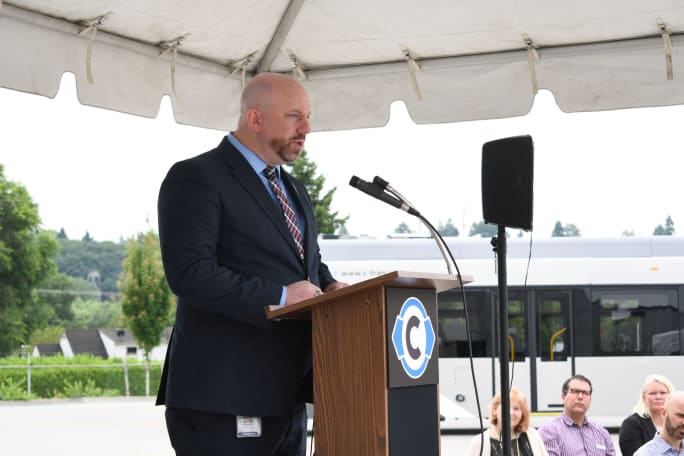
“We’re humbled to receive such a prestigious honor from APTA, and we take pride in serving our community each and every day,” said C-TRAN CEO Shawn M. Donaghy (shown).
Photo: C-TRAN
The APTA Awards highlight the best of public transportation in North America each year. C-TRAN and the rest of this year’s award winners will be honored at the APTA Annual Meeting in October.
More Management

METRO Opens Submissions for 2026 Motorcoach Awards
Nominations are now being accepted for METRO Magazine’s Operator of the Year and Innovative Operator of the Year awards.
Read More →
New York MTA Advances Final Contract for Second Avenue Subway Expansion
Contract Four is the largest in the Second Avenue Subway Phase 2 project and includes construction of station infrastructure, tracks, and signals for the subway expansion, MTA officials said. Work on Contract Four will begin in 2027.
Read More →
Transit Agencies Highlight Safety Gains at National Summit
Leaders from 15 major transit systems shared crime-reduction results and safety initiatives while discussing the role of continued federal support.
Read More →

NITA Names New Leadership, Expands Reduced-Fare Program at First Board Meeting
The new regional transit authority appointed its first board chair and interim executive director while extending reduced fares across CTA, Metra, and Pace for eligible riders.
Read More →
Beyond the Checklist: A Structured Approach to Transit Maintenance
Reliability-Centered Maintenance helps transit agencies move beyond routine checklists to focus limited resources on the assets and failures that have the greatest impact on safety, reliability, and service.
Read More →
APTA 2026 Nominating Committee Selects Leadership Slate, Names Chair and Vice Chair Nominees
Leadership changes will help shape the association’s priorities and its representation of the transportation industry during the 2026–2027 term.
Read More →
DART Launches Major Security, Fare Enforcement Initiative
The 90-day demonstration will deploy coordinated security teams at five light rail stations while testing controlled access and gathering data to guide future investments.
Read More →
Advancing Fare Collection Through Technology and Innovation
Learn about delivering 1300 gates at 91 stations while managing fare evasion. Explore the large scale deployment, solution customization and real-world results that affect the region. Prepare for deployment in your region now.
Read More →
Game Day in Motion: Moving Millions During the 2026 World Cup
Between packed transit stations and team motorcoaches, see how agencies and operators across North America tackled the transportation demands of the 2026 FIFA World Cup.
Read More →
Surface Transportation Extension Averts Shutdown, Leaves Transit Funding Gap
The stopgap keeps federal transportation programs moving, but missing advance funding could complicate the transit and rail projects agencies are planning next.
Read More →