



Agencies Release Feasibility Study to Increase Capacity at New York Penn Station
The study concludes none of the concepts achieve this capacity goal, a significant milestone that determines the focus going forward will be on options that expand the station physical footprint.

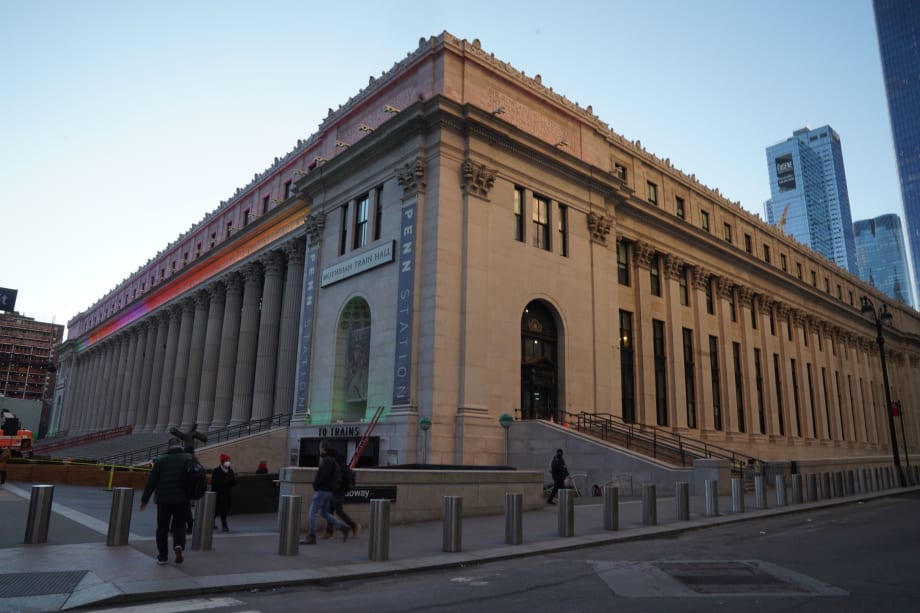
The “Under Penn Station” concepts evaluated in the study involve adding 10 station tracks directly below the existing facility.
Photo: MTA
Amtrak, the New York Metropolitan Transportation Authority (MTA), and NJ TRANSIT released the engineering feasibility study, “Doubling Trans-Hudson Train Capacity at New York Penn Station” (NYP), which analyzes the potential of four concepts to double train capacity at the station during the peak period, as well as expand Amtrak Empire Service, without expanding the current station’s footprint.
The study concludes none of the concepts achieve this capacity goal, a significant milestone that determines the focus going forward will be on options that expand the station physical footprint.
“This study demonstrates that to meet the needs of the region, we must expand the station beyond its existing footprint to deliver the passenger capacity promised by the Gateway Program,” said Amtrak CEO Stephen Gardner. “The feasibility study is part of a long-term collaboration between Amtrak, MTA, and NJ TRANSIT to seek ways to transform the busiest train station in the Western Hemisphere into a modern, world-class facility with the capacity to provide 200,000 more passenger trips.”
The Gateway Program
The station and its operational infrastructure, including the North and East River Tunnels, currently function at maximum capacity.
The Gateway Program is a series of infrastructure improvements built around increasing train capacity within the 10 miles between Newark Penn Station and NYP. Significant additional train capacity at NYP is needed to accommodate existing and anticipated passenger demand, improve reliability, and support future cross-regional rail service.
As it’s within the most congested segment of the Northeast Corridor (NEC), one of Gateway’s key objectives is to double passenger train service between New York and New Jersey from 24 to 48 trains per hour, or more, during peak hours.
NEC Upgrades
The approach is also consistent with the long-term vision for expanded intercity and regional passenger rail service on the NEC established by the Federal Railroad Administration’s NEC FUTURE Program.
The study focuses on two alternatives with two design concepts each to evaluate their potential to at least double the station’s existing rail capacity between New York and New Jersey in the peak direction during rush hours.
The “Under Penn Station” concepts evaluated in the study involve adding 10 station tracks directly below the existing facility.
The “Through-Running” alternatives include a “Full Reconstruction” option that requires complete demolition of existing tracks and platforms and reconstruction of fewer tracks with wider platforms, and a “Limited Track and Platform Reconfiguration” option, which also envisions wider platforms and fewer tracks, but would require only partial demolition and reconstruction of existing tracks and platforms.
The study concludes that all concepts evaluated suffer from constructability, operational, safety, and/or connectivity challenges and flaws that render them infeasible for further evaluation.
During the design and the environmental evaluation phases, the Railroad Partners will continue to develop options for expanding the station’s capacity that have the potential to meet the Gateway goal of doubling cross-Hudson train capacity.
Seeking Public Engagement
Amtrak, MTA, and NJ TRANSIT are committed to a robust public engagement process in support of the two Penn Station projects (Reconstruction, which will improve the existing facility, and Capacity Expansion, which will increase rail capacity), including convening a Station Working Advisory Group (SWAG) of more than 50 regional stakeholders who will meet regularly to discuss and provide input on the Railroad Partners’ vision for the station complex.
The SWAG is co-chaired by Regional Plan Association President/CEO Tom Wright and NYU Rudin Center for Transportation Director & Assistant Clinical Professor of Public Service Sarah Kaufman.
More Rail

New York MTA Advances Final Contract for Second Avenue Subway Expansion
Contract Four is the largest in the Second Avenue Subway Phase 2 project and includes construction of station infrastructure, tracks, and signals for the subway expansion, MTA officials said. Work on Contract Four will begin in 2027.
Read More →
San Diego MTS Breaks Monthly Trolley Ridership Record
Agency officials said July’s ridership indicates MTS’s continued recovery from the pandemic.
Read More →
Report Examines NJ TRANSIT Reliability, Funding Challenges
The Garden State Initiative analysis examines the roles of Amtrak infrastructure, fleet management, and agency operations while recommending a more performance-based approach to improving reliability.
Read More →
Stadler, CapMetro Sign Long-Term Rail Fleet Support Agreement
Beginning in 2027, Stadler will provide on-site technical expertise, spare parts support, training, and obsolescence management to help extend the reliability and longevity of CapMetro’s GTW fleet.
Read More →
Biz Briefs: Alstom Lands Canadian Contract, LYT to Supply California TSP, and More
In METRO's latest installment, we take a look at recent news from Complete Coach Works, Beep, FlixBus, and more partnerships making headlines across the transportation sector.
Read More →
CATS Gold Line Marks 5 Years of Service, 2.8M Passenger Trips
With a six-mile expansion planned, the Charlotte streetcar is positioned to connect more neighborhoods and major transit hubs across the region.
Read More →
Why Simulating Pedestrian Movement Has Become Essential for Modern Rail Stations
Pedestrian microsimulation is helping rail planners identify bottlenecks, test station designs, and prepare complex transit hubs for growing passenger volumes.
Read More →
Amtrak Begins Major Construction at New York’s Sunnyside Yard
The new maintenance facility will support Amtrak’s Airo trainsets while improving maintenance efficiency and turnaround times in New York.
Read More →
Chicago Leaders Unveil Plans for O’Hare Airport Express Train
The privately developed project would offer a 15-minute trip between downtown and O’Hare’s Terminal 2, with trains operating every 15 minutes on a dedicated track. The service would use battery-electric trains and three existing freight rail rights-of-way.
Read More →
OCTA Maps Out 30-Year Strategy to Protect Coastal Rail Corridor
The draft feasibility report identifies strategies to protect the coastal rail line for decades as the agency continues near-term stabilization and sand placement efforts.
Read More →