Amtrak's Pacific Surfliner Relaunching Service Through Damaged Area
With all 33 steel beams for the foundation of the wall in place and Amtrak conducting its own risk analysis, the team has agreed that limited Pacific Surfliner service can safely resume to and from San Diego through San Clemente.
Pacific Surfliner provides important connectivity to San Diego and other rail destinations nationwide. BNSF has been operating freight trains through the area overnight intermittently since Jan. 30.
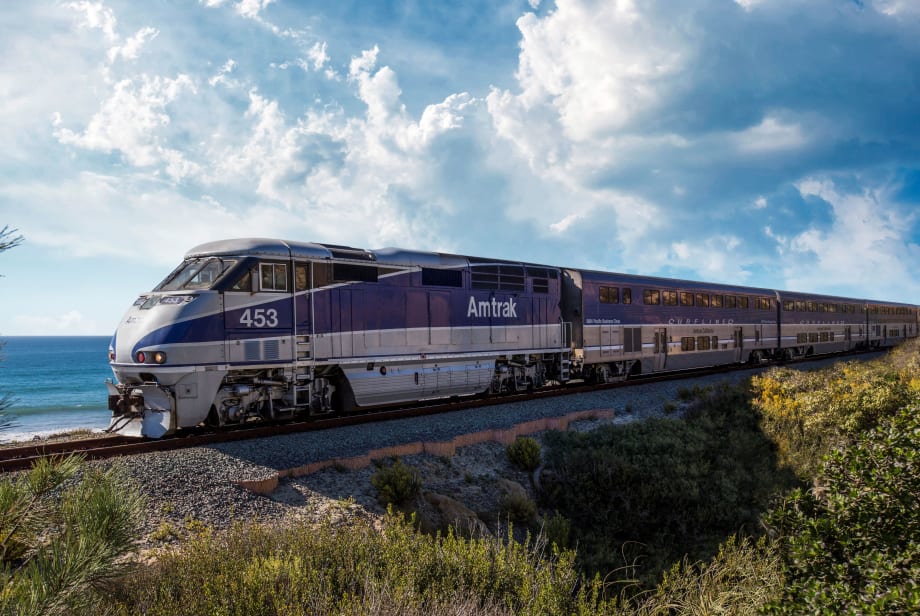
Photo: Amtrak
2 min to read
Amtrak’s Pacific Surfliner is set to resume limited passenger service through San Clemente March 6, as work continues to build a catchment wall at Mariposa Point to protect the rail right of way.
With all 33 steel beams for the foundation of the wall in place and Amtrak conducting its own risk analysis, the OCTA, Metrolink, and LOSSAN team have agreed that limited Pacific Surfliner service can safely resume to and from San Diego through San Clemente.
Ad Loading...
Both morning and evening services are set to be fully reinstated without bus connection, however, mid-day service will not resume yet so that construction of the catchment wall can continue.
Continuing to Restore Service
While the resumption of morning and evening service will reduce the daily work window for construction, the team still anticipates being able to complete the catchment wall later this month. Once the wall construction is complete, full passenger service is expected to resume.
Pacific Surfliner provides important connectivity to San Diego and other rail destinations nationwide. BNSF has been operating freight trains through the area overnight intermittently since Jan. 30.
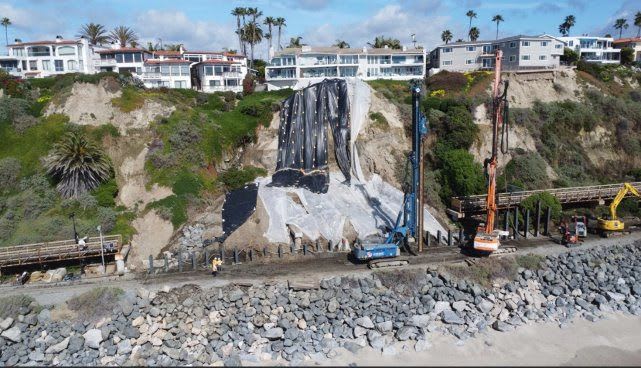
The construction team, led by OCTA and Metrolink, continues to make progress on the catchment wall. Even with additional rain expected later this week, the team plans to continue to work on drainage, excavation, and installing the wooden panels between the steel beams that will create the catchment wall.
The rail line was closed through San Clemente the evening of Wednesday, Jan. 24, when a landslide on private property above the city-owned Mariposa Trail Pedestrian Bridge caused major damage to the bridge and scattered debris onto the track.
Photo: OCTA
Background on the Issue
The rail line was closed through San Clemente the evening of Wednesday, Jan. 24, when a landslide on private property above the city-owned Mariposa Trail Pedestrian Bridge caused major damage to the bridge and scattered debris onto the track.
Ad Loading...
OCTA, which owns the track, worked with partners at Metrolink and contractors to quickly mobilize emergency crews, who used heavy machinery on the rails to remove debris and haul away two large spans of the bridge, each weighing 24,000 pounds. The OCTA and Metrolink team continues to work to safely resume full passenger rail service as soon as possible.
Over the past three years, San Clemente’s eroding bluffs — on both city and private property — have repeatedly forced the closure of the rail line, which has operated largely uninterrupted for more than 125 years.
Amtrak officials said it is becoming increasingly common for California’s transportation infrastructure to suffer storm-related damage forcing closures and evacuations.
Most recently, indefinite nightly closures were announced for a six-mile stretch of Pacific Coast Highway north of Malibu, where storm damage sheared off stretches of the roadway. Additionally, roads and buildings in the City of Rancho Palos Verdes have suffered significant damage after record-setting rains saturated the ground and accelerated a landslide.
Contract Four is the largest in the Second Avenue Subway Phase 2 project and includes construction of station infrastructure, tracks, and signals for the subway expansion, MTA officials said. Work on Contract Four will begin in 2027.
The Garden State Initiative analysis examines the roles of Amtrak infrastructure, fleet management, and agency operations while recommending a more performance-based approach to improving reliability.
Beginning in 2027, Stadler will provide on-site technical expertise, spare parts support, training, and obsolescence management to help extend the reliability and longevity of CapMetro’s GTW fleet.
In METRO's latest installment, we take a look at recent news from Complete Coach Works, Beep, FlixBus, and more partnerships making headlines across the transportation sector.
Pedestrian microsimulation is helping rail planners identify bottlenecks, test station designs, and prepare complex transit hubs for growing passenger volumes.
The privately developed project would offer a 15-minute trip between downtown and O’Hare’s Terminal 2, with trains operating every 15 minutes on a dedicated track. The service would use battery-electric trains and three existing freight rail rights-of-way.
The draft feasibility report identifies strategies to protect the coastal rail line for decades as the agency continues near-term stabilization and sand placement efforts.