The $2.6 billion combined operating budgets for both conventional and Wheel-Trans paratransit services and represents a 7.5% increase over the approved 2023 budget.
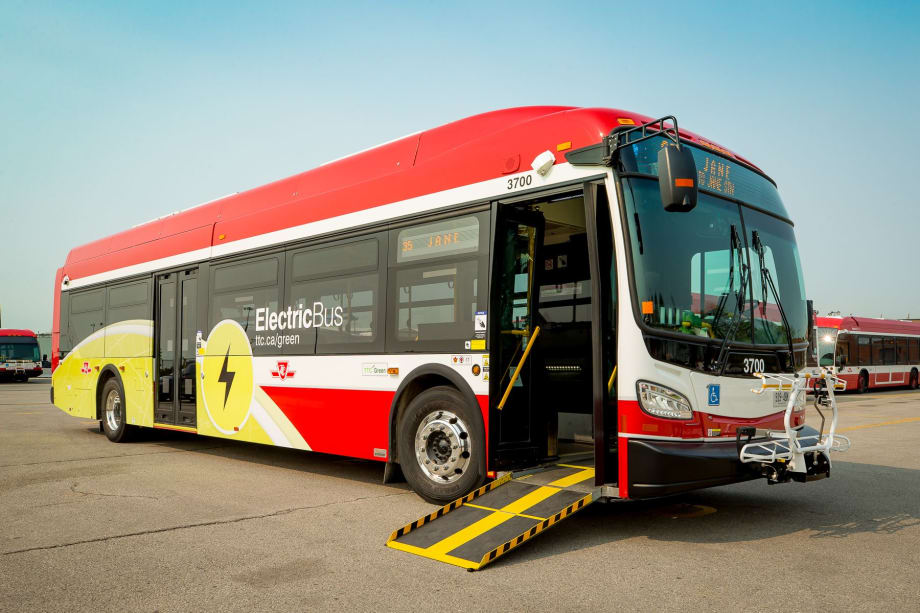
The TTC budget includes continued funding for 336 Hybrid Buses, 340 electric buses, and charging infrastructure based on revised delivery schedules.
Photo: TTC/New Flyer
3 min to read
The Toronto Transit Commission (TTC) board approved a 2024 operating budget that freezes fares, continues to increase service, and invests millions of dollars in system safety and cleanliness.
The $2.6 billion combined operating budgets for both conventional and Wheel-Trans paratransit services and represents a 7.5% increase over the approved 2023 budget.
Ad Loading...
Among other highlights, the 2024 budget:
Freezes TTC fares at 2023 rates in recognition of the impact current economic conditions have on its customers.
Fully funds the unplanned in-year service increases made in 2023 (to 95% from 91%) in response to increased and changing demand.
Funds a further service increase to 97% by September 2024.
Increases Wheel-Trans service hours to meet the rising demand, estimated to reach 84% of pre-pandemic levels by year-end 2024.
Invests more than $28 million in the TTC’s Community Safety, Security and Well-Being program.
Addresses substantial inflationary pressures for things like vehicle parts, service contracts, and escalating employee benefit-related expenses.
Invests in increased maintenance capacity for Line 2, as well as for new and existing streetcars to be delivered in 2024.
Funds operating and maintenance costs for the opening of Lines 5 and 6 in 2024, as well as full-year operations on the Line 3 SRT bus replacement service.
Envisions 2024 fare revenues based on 80% of pre-pandemic ridership levels by year-end.
“TTC customers are coming back quicker than we expected, and this budget allows us to meet their needs for the next year,” said TTC CEO Rick Leary. “This budget balances our need to deliver safe and reliable service while addressing the increased operating costs associated with inflation and new transit lines that we need to manage.”
TTC Capital Budget Plan
The TTC board also approved the $12.4 billion 2024-2033 capital budget plan.
Highlights include:
Ad Loading...
Fully covering the City/TTC’s one-third share for the Subway Car procurement to ensure readiness to proceed with the procurement of 55 subway trains, should matching funding from the Federal government be available.
Advancing accessibility projects at Warden and Islington stations, and capacity improvement projects (including Bloor-Yonge Capacity Improvements and Line 1 and Line 2 Capacity Enhancement projects).
Providing ongoing funding for 60 new streetcars and associated infrastructure projects at Hillcrest and Russell, and 336 hybrid buses, 340 electric buses, and charging infrastructure based on revised delivery schedules.
Enhancing cybersecurity initiatives.
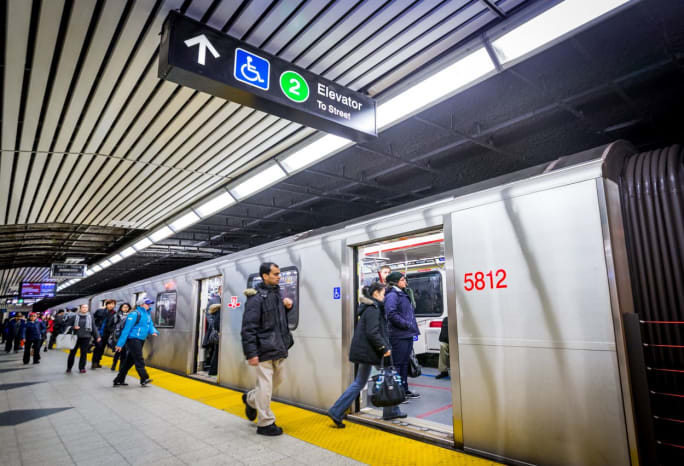
The TTC's budget envisions 2024 fare revenues based on 80% of pre-pandemic ridership levels by year-end.
Photo: TTC
Capital Investment Plan Report
The TTC Board also considered a revised Capital Investment Plan report.
That report shows despite significant capital/state-of-good-repair investments, there’s a growing backlog estimated to reach $8.244 billion by 2033, with unmet capital needs anticipated at nearly $17.916 billion over 10 years and $35.458 billion over 15 years.
The report notes investing in the TTC’s future remains crucial for the city’s vitality, offering economic, environmental, and social benefits, not only for Toronto, but also for the GTA, Province of Ontario, and Canada at large.
The board also heard a presentation from the University of Toronto’s Mobility Network highlighting the benefits of investing in public transit. Key economic metrics included in the Value of Transit Investment Interim Findings report show that investment in TTC operations and capital works translate into:
Ad Loading...
Every dollar invested would add an additional $0.81 dollars in GDP, generating a value-added impact resulting in an increase in profit, taxes, and spending on labor.
Every dollar invested would create the equivalent of $2.14 of economic activity (Gross Output).
Every $1 million invested creates 13 new jobs.
Transit also brings numerous social equity and environmental benefits, the interim report noted.
Contract Four is the largest in the Second Avenue Subway Phase 2 project and includes construction of station infrastructure, tracks, and signals for the subway expansion, MTA officials said. Work on Contract Four will begin in 2027.
The new regional transit authority appointed its first board chair and interim executive director while extending reduced fares across CTA, Metra, and Pace for eligible riders.
Reliability-Centered Maintenance helps transit agencies move beyond routine checklists to focus limited resources on the assets and failures that have the greatest impact on safety, reliability, and service.
The 90-day demonstration will deploy coordinated security teams at five light rail stations while testing controlled access and gathering data to guide future investments.
Learn about delivering 1300 gates at 91 stations while managing fare evasion. Explore the large scale deployment, solution customization and real-world results that affect the region. Prepare for deployment in your region now.
Between packed transit stations and team motorcoaches, see how agencies and operators across North America tackled the transportation demands of the 2026 FIFA World Cup.
The stopgap keeps federal transportation programs moving, but missing advance funding could complicate the transit and rail projects agencies are planning next.