



Battery-Electric Buses Could Be Best Option in Virginia, Report Finds
The report, “Alternative Fuels for Transit Buses: What’s the Best Option for Your Transit Agency? (Vol.1),” focuses on three alternative fuel choices — battery electric, CNG, and fuel-cell electric — and their ability to meet ridership needs as a sustainable solution for public transit.

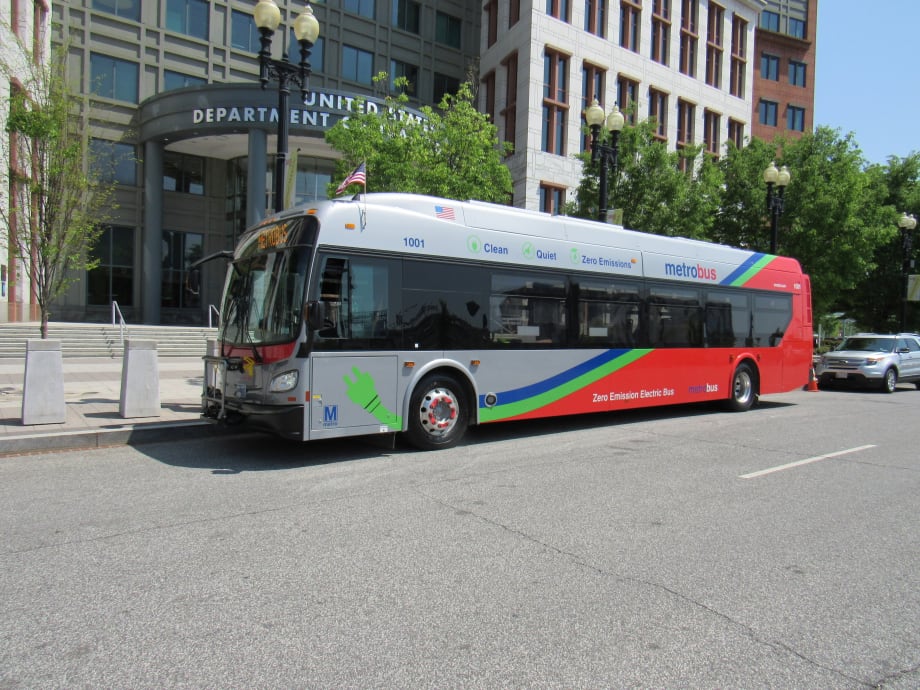
Considering factors such as costs, environmental impact, community health, safety, and market trends, BEBs rank as the preeminent choice amongst the three technologies considered, according to a C3 report.
New Flyer
Virginia’s Community Climate Collaborative (C3) released a new report to inform localities on the best alternative fuel options aligned with climate objectives, public health, environmental justice, fiscal responsibility, and service quality.
The report, “Alternative Fuels for Transit Buses: What’s the Best Option for Your Transit Agency? (Vol.1),” focuses on three alternative fuel choices — battery-electric buses (BEBs), compressed natural gas (CNGs) buses, and fuel-cell electric buses (FCEBs) — and their ability to meet ridership needs as a sustainable solution for public transit.
“Shifting from diesel-powered bus fleets to zero-emissions buses is one of the first steps cities can take to lead on climate,” said Susan Kruse, executive director of C3. “Cities across the country, and even the world, are already electrifying bus fleets and developing a new framework to provide reliable and sustainable transportation solutions that meet the needs of people. This report will help localities understand what alternative fuel options exist and how to maintain communal spaces free from pollution.”
The C3 Report
C3 includes original research through surveys, interviews, and an exhaustive analysis from peer-reviewed and gray literature looking at BEBs, CNGs, and FCEBs.
Considering factors such as costs, environmental impact, community health, safety, and market trends, BEBs rank as the preeminent choice amongst the three technologies considered.
Using a scorecard, C3 found that:
BEBs performed the best out of the three technologies studied.
FCEBs scored well overall but fell behind BEBs in terms of operating costs, short-term GHG reductions, and market/technology trends.
CNG buses scored the lowest on the whole, largely due to their negative health and environmental impacts, and were recommended to not be a future transit option.
“Across the board, Battery Electric Buses scored the highest in terms of operating costs, reduced greenhouse gas emissions, and favorable market trends,” said Caetano de Campos Lopes, director, climate policy, at C3. “The overwhelming majority of transit operators across the country shared that BEBs are proving to be just as reliable, if not more, than diesel buses, with minimal disruption and no harmful emissions. This is an exciting and promising solution for more cities to reach climate goals rooted in justice.”
Reason for Study
C3 initiated this study as Charlottesville City Council is expected to vote on an alternative-fuel technology for the Charlottesville Area Transit in October.
The organization is pushing for the council to adopt readily available zero-emission buses to reduce air pollution, protect health, save on long-term costs, and enhance the overall experience for riders and drivers.
More Zero Emissions
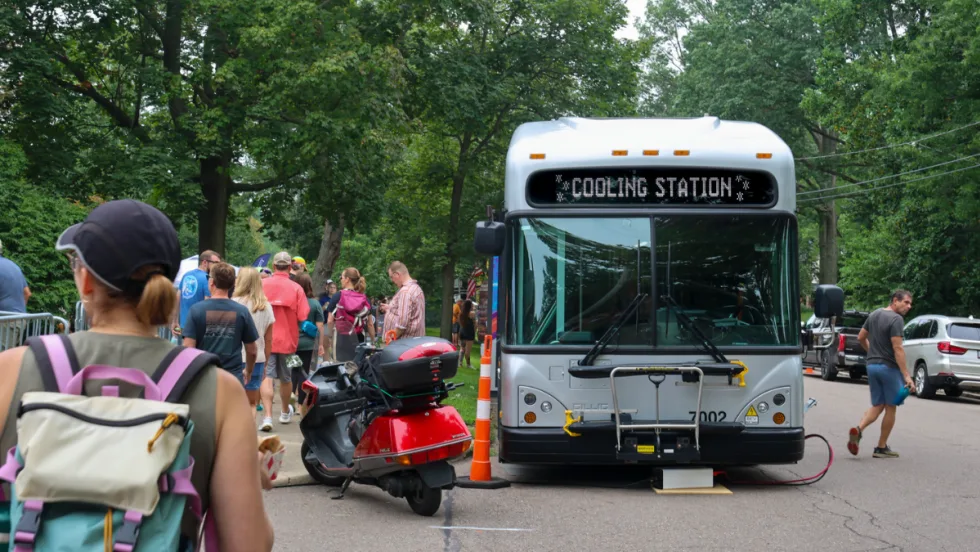
Ohio’s METRO RTA Turns Electric Buses into Mobile Power Sources at PorchROKR
See how three Gillig battery-electric buses powered festival stages while the agency’s new Park & Ride service carried approximately 1,000 attendees, demonstrating another potential use for transit agencies’ electric fleets.
Read More →
CALSTART and Forth Combine to Form Catalyst Mobility
The new name represents a renewed vision for the nonprofit focused on advancing clean, equitable, and affordable transportation solutions that move people and goods.
Read More →
Building a Flexible Path to Transit Electrification
John Hroncich discusses BAE Systems’ modular and scalable approach, lessons learned from decades of real-world operations, and how agencies can identify electrification strategies that fit their fleets.
Read More →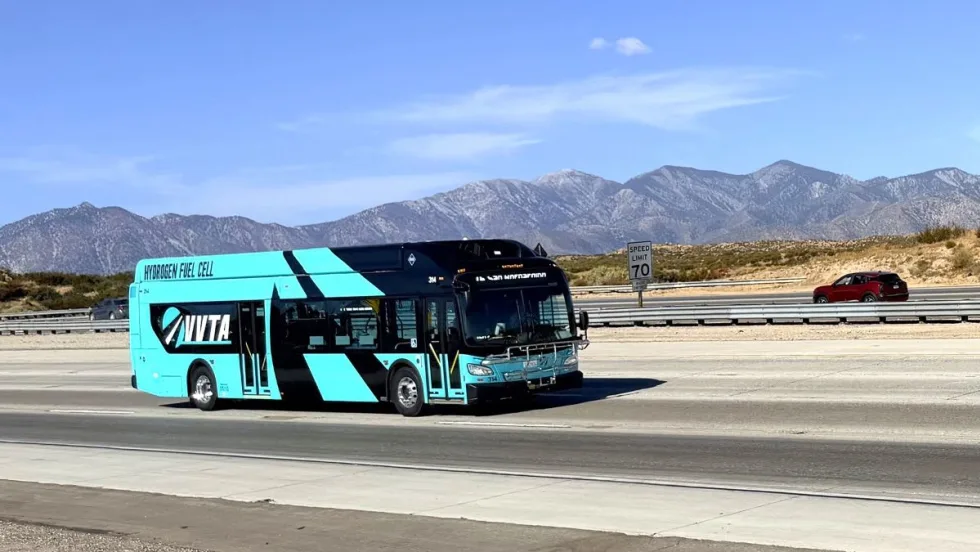
California's VVTA Begins Phased Rollout of Hydrogen Fuel Cell Buses
The agency is introducing 13 zero-emission buses into revenue service while evaluating performance across its urban, rural, and long-distance routes.
Read More →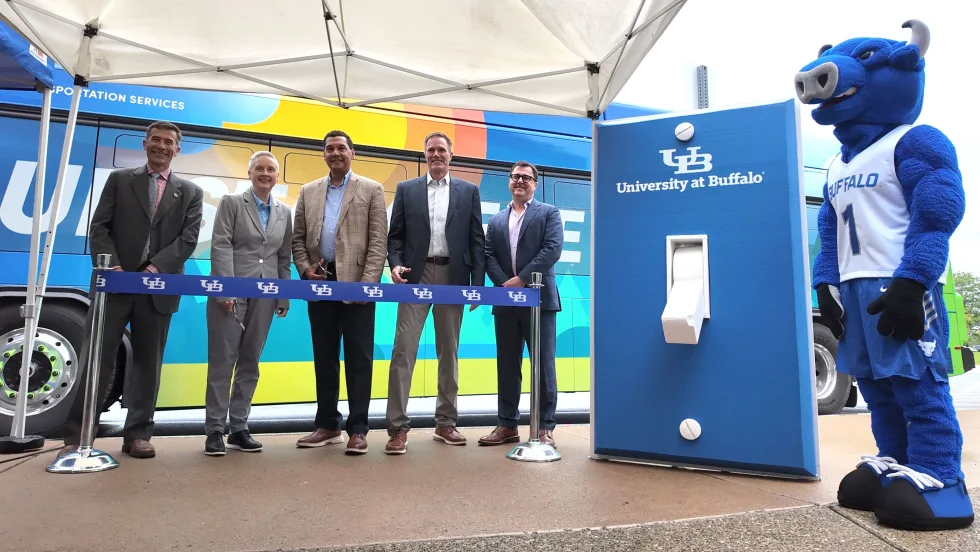
Inside Look: University at Buffalo Puts First 8 Electric Buses Into Stampede Service
UB, transportation solutions provider WeDriveU, and fleet electrification specialist Zenobē marked the deployment in the presence of students, university administrators, and local officials.
Read More →
Biz Briefs: OCTA Taps Clean Energy for Hydrogen Station, Stadler to Supply Via Rail Vehicles, and More
From manufacturers and suppliers to transit agencies and motorcoach operators, these updates offer a snapshot of the projects, partnerships and business moves driving the industry forward.
Read More →
AC Transit’s Cecil Blandon on Building the Next Generation of Transit Maintenance Leaders
The agency’s maintenance chief discusses leadership, workforce development, zero-emission technology, and preparing technicians for the future of public transportation.
Read More →
CTDOT Taps STV for Electric Bus Facility Design
The firm will work with CTDOT and RVT to define the facility layout, operational requirements, and long-term flexibility for RVT’s growing electric fleet.
Read More →
Chicago’s Pace Deploys 24 Hybrid-Electric Buses in Will County
The new buses reduce emissions and fuel consumption while advancing the agency's long-term goal of transitioning to a fully zero-emission fleet.
Read More →
DASH Breaks Ground on First On-Route Electric Bus Chargers in D.C. Region
The fast-charging infrastructure will help extend electric bus range, improve fleet utilization, and support DASH's goal of transitioning to a fully zero-emission fleet.
Read More →