



Boston's MBTA Strikes Labor Agreements with Entire Workforce
The accomplishment, the first of its kind since 2009, was realized within 18 months of the Healey-Driscoll Administration taking office and under the leadership of MBTA GM Phillip Eng.


MBTA has taken a comprehensive approach focusing on recruitment, retention, skills training, and leadership development.
Photo: METRO Magazine
Boston’s Massachusetts Bay Transportation Authority (MBTA) reached a landmark achievement by successfully negotiating agreements with all 28 of its affiliated labor unions, representing 16 collective bargaining agreements.
The accomplishment, the first of its kind since 2009, was realized within 18 months of the Healey-Driscoll Administration taking office and under the leadership of MBTA GM Phillip Eng.
Key Highlights of the MBTA’s Labor Agreement
Key Highlights:
All agreements finalized within one year of negotiations, a significant improvement from previous multi-year processes.
Four-year terms for all 16 contracts, ensuring the longest period of labor stability since the 1980s.
Enhanced wages and incentives to boost recruitment and retention efforts.
Built upon the historic pension agreement with the Carmen's Union (March 2023) and similar agreement with the Transit Police Association (Fall 2023).
The final agreement, ratified with the MBTA Plumbers in June 2024, completes a series of contracts modeled after the August 2023 agreement with the Boston Carmen's Union, ATU Local 589.
These agreements address long-standing labor concerns and aim to stabilize and expand the MBTA workforce.
“The Healey-Driscoll Administration understood from the beginning that rebuilding our workforce was paramount to restoring the reliability of safe public transit. I’m thankful for the efforts across our organization that negotiated and settled these contracts with our labor partners in record time. These contracts provide a level of stability we haven’t seen in decades,” said Eng. “Union workers and the new hires we’re eager to bring on are on the frontline of providing reliable safe service for many communities. I’m so proud to stand side by side with the MBTA workforce.”
MBTA’s Workforce Development Initiatives
Workforce Development Initiatives taken on by the MBTA include:
Over 1,900 new hires since the beginning of the Healey-Driscoll Administration, including more than 1,600 in 2023 alone.
$20 million investment from a supplemental budget to support hiring efforts and the Local 589 Agreement.
Comprehensive approach focusing on recruitment, retention, skills training, and leadership development.
Restructuring of senior leadership and improvement of frontline teams, safety protocols, engineering, and planning.
More Management

Castro to Lead RTC of Southern Nevada and More in People Movement
In this edition, we also cover recent appointments and announcements at the STV, MCI, and more, showcasing the individuals helping to shape the future of transportation.
Read More →
STraffic Expands North American Presence with Fare Collection Technology
John Moon, Associate Director, Product Strategy at STraffic, discusses the company's growth in North America, its efforts to reduce fare evasion, and more.
Read More →
Study: Denver RTD Generates $2.1 Billion in Annual Economic Activity
An economic impact study finds the agency supports approximately 17,500 jobs, delivers $1.6 billion in annual community and mobility benefits, and generates $2.42 in economic value for every dollar invested.
Read More →
Mark Aesch Nominated to Lead Federal Transit Administration
The former Rochester transit chief and TransPro founder, who has also contributed to METRO Magazine, brings decades of industry experience and a focus on performance, accountability, and financial sustainability to the nomination.
Read More →
Best and Worst U.S. Cities for Public Transportation in 2026
A new analysis of 50 major U.S. urban areas ranks public transit systems based on accessibility, affordability, usefulness, and safety, highlighting where transit performs best and where challenges remain.
Read More →
Laketran Cuts Fuel Costs, Boosts Efficiency with Propane-Powered Fleet
The Ohio transit agency is using propane-powered vehicles and on-site fueling infrastructure to cut fuel and maintenance costs while meeting growing demand for paratransit services.
Read More →
Canada’s Public Transit Supports $65.6 Billion in Annual GDP
New research from the Canadian Chamber of Commerce examines transit's economic contributions, including job creation and the financial implications of transportation investment.
Read More →
Pierce Transit Moves to Expand Fleet Following Proposition 1 Approval
The agency authorized the purchase or refurbishment of up to 60 buses to support a 47% service expansion, as voters nationwide approved billions in new transit funding.
Read More →
Right-Sizing Rural Transit: Lessons from North Grenville’s On-Demand Model
A small municipality shows how flexible service, rider needs, and public accountability can expand mobility with limited resources.
Read More →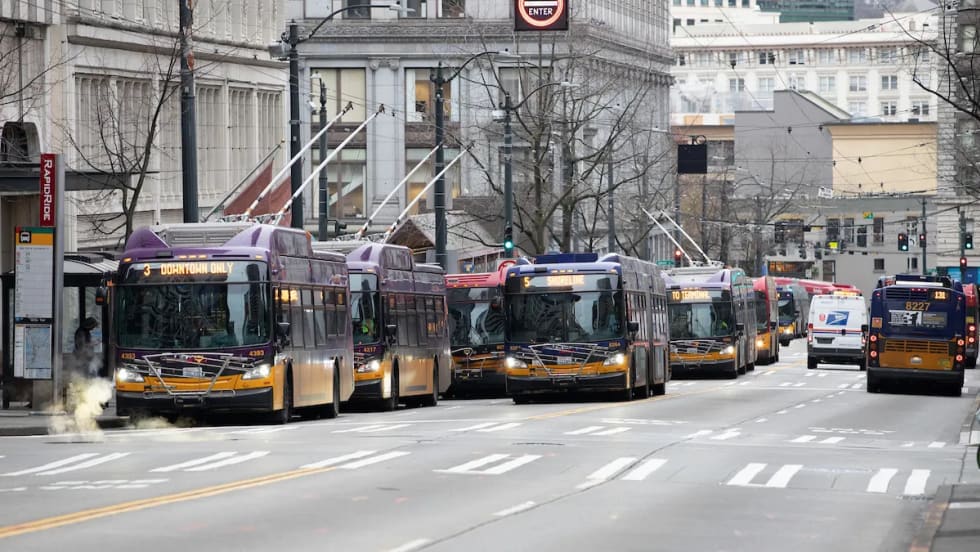
Transit Ballot Victories Signal Strong Voter Support: What Comes Next?
Voters approved billions in public transportation investments in 2026, giving agencies opportunities to preserve service, expand operations, and strengthen regional connections amid a changing political landscape.
Read More →