



Canada's TransLink Takes Step Forward with BRT Plan
The latest announcement is the next step toward implementing TransLink’s incoming bus-based rapid transit system that will provide fast, frequent, and reliable service through dedicated bus lanes, signal priority at intersections, and weather-protected stations.

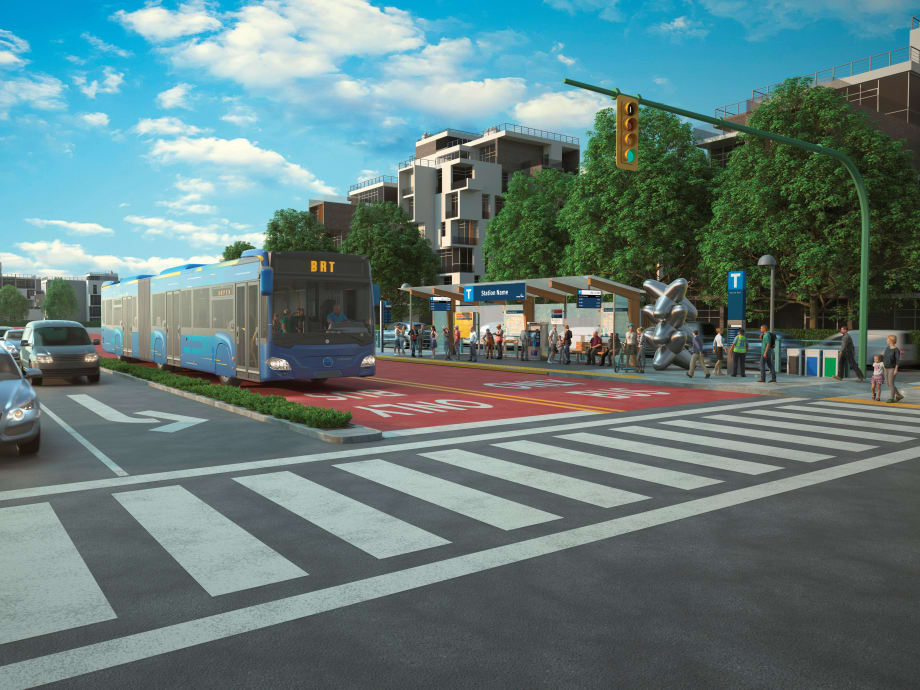
Members of the public are being asked to rank which features will be most important for them, which will help TransLink advance BRT planning.
Photo: TransLink
Canada’s TransLink is launching public engagement and announcing station locations for two future bus rapid transit (BRT) routes serving customers traveling in Surrey, Maple Ridge, and the Township of Langley.
The announcement is the next step toward implementing TransLink’s incoming bus-based rapid transit system that will provide fast, frequent, and reliable service through dedicated bus lanes, signal priority at intersections, and weather-protected stations.
Members of the public are being asked to rank which features will be most important for them, which will help TransLink advance BRT planning.
BRT Station Locations
Planned locations for the route’s stations are also being released as part of the engagement.
In Surrey, the King George Boulevard BRT route has 12 planned stations, and the Langley–Haney Place BRT route has 13 planned stations. When operational, each route will speed up service on these corridors by approximately 40%.
Station locations were determined based on the following main criteria:
Facilitate connection with the Expo Line and other transit hubs like Surrey Central Station, King George Station, the future Willowbrook Station, South Surrey Park and Ride, Semiahmoo Town Centre, and Carvolth Exchange.
Support growing residential areas and key destinations like Simon Fraser University’s Surrey Campus, Bear Creek Park, Surrey Memorial Hospital, Haney Place Mall, Ridge Meadows Hospital, Langley Events Centre, Willowbrook Shopping Centre, and Kwantlen Polytechnic University.
Connect customers with other bus routes by being positioned at major intersections.
Speed up service for customers by having limited stops spaced approximately one-half mile apart.
TransLink’s Access for Everyone Plan
Through the Access for Everyone plan, TransLink has identified up to nine corridors for BRT implementation over the next 10 years; the first three were announced in late 2023. Engagement on the BRT route between Metrotown and the North Shore will happen later this year.
The BRT projects are currently unfunded. TransLink is working to secure funding for BRT implementation from all levels of government through future Investment Plans.
Once funding is secured, TransLink estimates that BRT construction can be completed within five years.
Rapid BRT Facts
TransLink BRT facts include:
Once complete, TransLink estimates travel times on both corridors would speed up by approximately 40%.
Currently, traveling end to end on both corridors takes just over one hour by bus on average. Once BRT is implemented, customers will save over 20 minutes in each direction, bringing end-to-end travel time down to approximately 40 minutes on average.
TransLink estimates that the King George BRT would provide rapid transit access to approximately 130,000 residents and 60,000 jobs that are within walking distance of the planned station locations.
TransLink estimates that the Langley–Haney Place BRT would provide rapid transit access to approximately 72,000 residents and 55,000 jobs that are within walking distance of the planned station locations.
More Bus
Report: Transit Bus Manufacturing Supports 34,100 Jobs, $5.1B in GDP
The “Buses Mean Business” report examines the transit bus manufacturing industry’s economic footprint, supply chain, and rising demand for vehicle replacements.
Read More →
Biz Briefs: New Flyer Delivers in Columbus, Houston, Beep and Freebee Merge, and More
In this edition of Biz Briefs, we spotlight the latest developments shaping the future of mobility.
Read More →
People Movement: Dan Dipert Coaches Adds Third-Generation Leader, Keolis Names New Valley Metro VP/GM, and More
In this edition, we also cover recent appointments and announcements at the Wabtec, SilverRide, HNTB, and more, showcasing the individuals helping to shape the future of transportation.
Read More →
New York MTA Plans Largest Bus Fleet Upgrade in More Than a Decade
The agency is seeking manufacturers for 650 new CNG buses to replace aging vehicles, improve reliability, and advance its broader fleet modernization strategy.
Read More →
Building a Flexible Path to Transit Electrification
John Hroncich discusses BAE Systems’ modular and scalable approach, lessons learned from decades of real-world operations, and how agencies can identify electrification strategies that fit their fleets.
Read More →
Bus Tech Talk: Keeping Transit Technicians Ahead of the Technology Curve
LA Metro’s Obed Mejia discusses technician training, evolving maintenance technology, fleet replacement, and strategies for getting the most out of today’s transit fleets.
Read More →
Biz Briefs: RIPTA Unveils New Frontrunners, Clevland RTA Adds New Siemens, and More
In METRO's latest installment, we take a look at recent news from Siemens, Prevost, Dodge, and more partnerships making headlines across the transportation sector.
Read More →
People Movement: Holly Arnold Joins Transdev and More
In this edition, we also cover recent appointments and announcements at Pace, CamTran, MCI, and more, showcasing the individuals helping to shape the future of transportation.
Read More →
The High Cost of Transit Buses: Industry Leaders Look to Procurement Reform
Transit leaders and policymakers examine how standardized bus designs, streamlined procurement, and predictable funding could help agencies stretch budgets and deliver better service.
Read More →
The Business Voice Behind Public Transportation
As chair of APTA’s Business Members Board of Governors, Ray Melleady explains how more than 850 business members are partnering with transit agencies to advance funding, innovation, and industry-wide collaboration.
Read More →