



Denver RTD selects Ballard as agency's interim GM/CEO
Contract negotiations with Ballard, who retired in April 2019 as CEO of Trinity Metro, are underway.

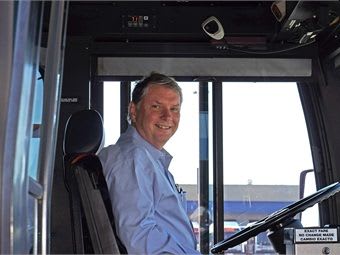
Paul Ballard, the former head of Fort Worth, Texas' Trinity Metro, was named interim CEO of Denver's RTD.
Trinity Metro
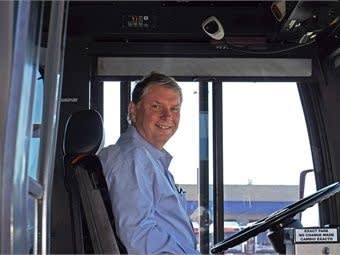
Paul Ballard, the former head of Fort Worth, Texas' Trinity Metro, was named interim CEO of Denver's RTD.
Trinity Metro
The Denver Regional Transportation District (RTD)’s Board of Directors appointed Paul Ballard as the agency’s interim GM/CEO, bringing to a close a search that began late last year when outgoing leader Dave Genova announced his retirement.
Contract negotiations with Ballard are underway. A start date for the position will be announced soon.
Ballard retired in April 2019 as CEO from Trinity Metro, which serves the city of Fort Worth, Texas, and its suburbs. Prior to that, he was CEO of the Nashville MTA and Regional Transportation Authority of Middle Tennessee. Over more than four and a half decades, Ballard has served as a GM, CEO or president of public- and private-sector transit systems.
The Board was impressed with Ballard’s experience, leadership and ideas, said Chair Angie Rivera-Malpiede. With this selection, the group believes he is well-suited to guide RTD through a period of transition, until a permanent general manager and CEO is named.
“My Board colleagues and I think that Mr. Ballard will skillfully lead us into RTD’s next era while also ensuring that the agency’s employees remain focused on their service to the public,” Rivera-Malpiede said. “On behalf of every Board member, we want to thank the community for its input as part of this process. We look forward to working with him in the months ahead.”
The search for a permanent GM/CEO begins with Board approval tonight to designate up to $200,000 to fund activities associated with an executive search. These activities include the use of an executive search firm, communications outreach associated with the search, and external legal counsel to conduct negotiations for both the interim and permanent general manager and CEO positions. Any funds not spent at the close of the search will be returned to the reserve account from which they came.
More Management

LIT Marks 10-Year Milestone at Annual Summit
Hosted by the COTA from September 10 to 13, the Summit carried the theme “Celebrating 10 Years of Excellence, Leadership, and Impact,” with every part of the program honoring the people, agencies, and partners who built LIT over its first decade.
Read More →
People Movement: Dan Dipert Coaches Adds Third-Generation Leader, Keolis Names New Valley Metro VP/GM, and More
In this edition, we also cover recent appointments and announcements at the Wabtec, SilverRide, HNTB, and more, showcasing the individuals helping to shape the future of transportation.
Read More →
METRO Opens Submissions for 2026 Motorcoach Awards
Nominations are now being accepted for METRO Magazine’s Operator of the Year and Innovative Operator of the Year awards.
Read More →

New York MTA Advances Final Contract for Second Avenue Subway Expansion
Contract Four is the largest in the Second Avenue Subway Phase 2 project and includes construction of station infrastructure, tracks, and signals for the subway expansion, MTA officials said. Work on Contract Four will begin in 2027.
Read More →
Transit Agencies Highlight Safety Gains at National Summit
Leaders from 15 major transit systems shared crime-reduction results and safety initiatives while discussing the role of continued federal support.
Read More →
NITA Names New Leadership, Expands Reduced-Fare Program at First Board Meeting
The new regional transit authority appointed its first board chair and interim executive director while extending reduced fares across CTA, Metra, and Pace for eligible riders.
Read More →
Beyond the Checklist: A Structured Approach to Transit Maintenance
Reliability-Centered Maintenance helps transit agencies move beyond routine checklists to focus limited resources on the assets and failures that have the greatest impact on safety, reliability, and service.
Read More →
APTA 2026 Nominating Committee Selects Leadership Slate, Names Chair and Vice Chair Nominees
Leadership changes will help shape the association’s priorities and its representation of the transportation industry during the 2026–2027 term.
Read More →
DART Launches Major Security, Fare Enforcement Initiative
The 90-day demonstration will deploy coordinated security teams at five light rail stations while testing controlled access and gathering data to guide future investments.
Read More →
Advancing Fare Collection Through Technology and Innovation
Learn about delivering 1300 gates at 91 stations while managing fare evasion. Explore the large scale deployment, solution customization and real-world results that affect the region. Prepare for deployment in your region now.
Read More →