



EXCLUSIVE: 15 years on, contactless ticketing in London revolutionizes travel
The story of the 15 years of ticketing transformation in London bears many lessons for other transport operators in the world, as well as for the implementation of technology based public services more generally.


Transport for London
Transport for London
Fifteen years is an eternity in many modern businesses. Increased competition, technological change, evolving consumer demands and entire new sectors have challenged well established business models.
London Underground recently celebrated its 150th anniversary and is one of the oldest public transport operators in the world. It is quite easy, even on a rapidly modernizing system, to see the multiple layers of transport history stretching back to the Victorian age. An aspect of the public transport business in London that is unrecognizable versus 15 years ago is ticketing, where the pace of change continues to accelerate. Today, travelers in London:
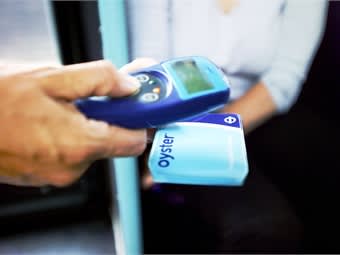
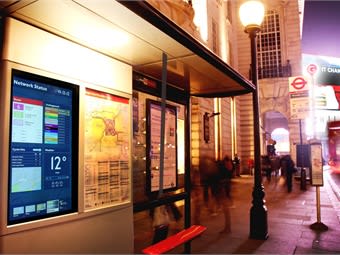
No longer need to buy a “ticket” and can travel across all Transport for London (TfL) modes via use of any contactless bank card.
Cash is no longer used on the bus network and only Oyster, or contactless bank cards.
Ticket windows at Underground stations are rapidly being removed and staff re-deployed to gatelines and other customer facing duties — even at the very busy central London rail terminal stations.
New more flexible types of price capping are being offered.
Even Apple Pay has recently been launched as a means of paying for travel.
Where will public transport ticketing be in another 10 years?
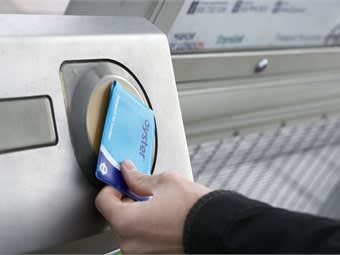
The story of the 15 years of ticketing transformation in London bears many lessons for other transport operators in the world, as well as for the implementation of technology based public services more generally. TfL is one of the largest public sector organizations in the U.K. It has implemented Oyster based on a clear and long-term public sector led strategy supported by an effective and long-term contract partner (Cubic Transportation Systems). The move from Oyster to contactless bankcards is also the result of the public sector working with, and in many cases leading change, in a substantial part of the private sector — the banking and payments industries.
Transport for London
Transport in London is an enormous undertaking and the public transport network is critical to the effective operation of the city. The road network in no way provides the capacity to offer universal private-based mobility. As a city of over 8.5 million people, and continuing to grow rapidly, London is served by an interconnected series of transport modes. The bus network is the busiest public transport mode serving over six million trips per day. Over four million trips are made on the Underground network; hundreds of thousands of travelers arrive in London on the National Rail network each day as well as large parts of Greater London are served primarily by National rail services as the local urban rapid transport network.
In addition, the Docklands Light Railway and Tramlink services operate in key parts of the city, while river buses also provide mobility along the Thames. All of these systems need to work together to provide mobility across the urban area, but often have quite different histories, local users, operators and even public sector control. With a few limited exceptions, the National Rail network in London is run under franchises from the national Department for Transport.
The transport ticketing needs across this complex network is elaborate and each system had developed ticketing policies to meet their own needs and management policies.
Briefly, a history of ticketing in London, and the U.K., would include:
An incredibly complex set of fares on the rail networks that has been built up over years of point to point fares on differing scales and concentric fare zones within Greater London.
Concessions, discount cards, staff entitlements, differentials within and outside of the urban area, etc. This made, and still makes, national rail fare estimation extremely complex. In effect, few users fully understand the complete range of ticketing options.
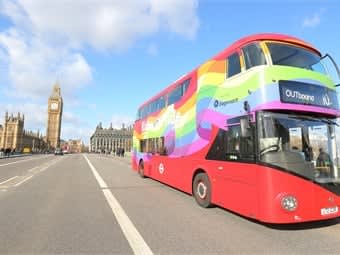
Until recently, bus fares being physically collected on vehicles by the driver and change offered. This remains quite common in the U.K. outside of Greater London. This is a process quite unlike the contemporary North American bus operating model. In addition, some fares were based on the number of bus stops travelled or time of day or night and thus, the passenger would need to tell the driver where they were going to have these fares calculated. Furthermore, a range of bus passes and rail and bus passes were offered. Thus, bus boardings were often slow and complex. Even in a large and busy system such as London’s, numerous conversations were required at each bus stop.
Each of the national rail train operating companies in Greater London was, within national regulatory control, able to offer differing fares on their own network depending on local marketing strategies and revenue elasticity’s. Thus, negotiation with these operators on the business models for new fare media including the Oyster products, contactless, the continued use of paper tickets as well as further new initiatives is required.
The Docklands Light Railway and Tramlink, which were initially built as private franchises offered by the government originally had differing fares as well as fare machines and were designed as open platform access systems unlike the Underground.
Transport for London
All of these systems then were bound into a zonal “Travelcard” network developed by London Transport in the early 1980’s as an earlier means of ticket simplification. While hugely popular, Travelcards meant that any changes in fares had to be negotiated across a multi-party public and private stakeholder mix.
The greatest customer innovation in the ticketing revolution in London based on this history, in the view of this author, is the resulting customer proposition for Oyster. In an incredibly complex ticketing environment the user was, and still is, promised the “best ticket price” through the use of an Oyster card. That is, between daily Travelcards or single or return fares. Thus, the user puts their trust in the product and the credibility of the large organization, TfL, behind it. Numerous and highly complicated back office processes were put in place to make the system work.
TfL also placed numerous contact points around the customer where any issues regarding the use of Oyster can be remedied. These include staff at all Tube stations, phone, web and social media contact centers, travel information centers and several thousand retail outlets in Greater London that can top up as well as investigate basic queries with the card. The Oyster cards also offered security of purchase if lost or stolen as they were more readily replaced once registered. The development of customer trust in a technology offered by a, in effect, monopoly-based public body is not a trivial task and was a result of long term and intensive customer strategy.
However, Londoners truly appreciated the results and high satisfaction resulted. Oyster customer satisfaction remains higher than for many comparable private consumer products. It can be argued that the national rail industry in the U.K., for example, still does not have this customer trust in their ticketing offer. Based on this trust in an electronic wallet, a range of technical and customer innovations were then possible.
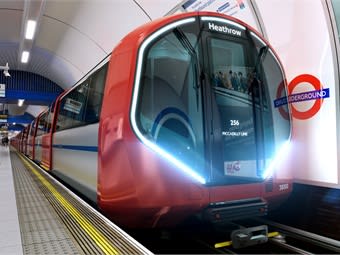
The politics of the early introduction of Oyster also should be considered. Oyster was developed in the late 1990’s by London Transport (LT) which was one of the predecessor bodies of TfL that operated London Underground and London Buses only. It was not directly responsible to any London political body, but directly to national government. LT had very specific operational and cost reasons to develop Oyster card ticketing particularly, regarding the operation of the Underground stations.
Transport for London
However, upon the creation of TfL in 2000 and a broader political and operational debate about the needs of London and TfL, as well as the new London Mayor’s desire for early transport innovation, the Oyster program was expanded, accelerated and made much more prominent to residents. The political focus on this innovation was critical for this public service.
Management at TfL, and earlier LT, has been very consistent in considering, championing and developing a long term strategy for Oyster ticketing, the comprehensiveness and universality of the system, its customer offer, the protection of the brand and its values, and the sure but steady roll out of continuing innovations. Many of these innovations, including contactless bankcards have taken up to a decade to implement in a highly complex, multi-industry and stakeholder environment. A long-term relationship was also in place with a supplier that was able to evolve over the years, but which provided a strong technical basis for the eventual system.
Political leaders have seen the benefit in supporting this long term view, even if the new product launches were not immediately apparent. Meanwhile, TfL management could offer a coherent, well thought out and trustworthy management perspective to their political leaders.
With such a complicated, and hence operationally expensive, ticketing proposition in London, LT and then TfL were very keen on exploring ways of reducing the operational costs of the ticketing side of the business. While initially very expensive to implement and operate, Oyster contactless ticketing provided a long term means of significantly lowering this cost. Furthermore, the case for contactless bankcards was built on further significant cost savings in better and industry standard back end systems, card production and distribution savings, and more innovative ticketing products.
Transport for London
Based on the success of Oyster, and particularly its all but universal acceptance and advocacy by London residents and public transport users, the banking and mobile phone industries were very keen on exploring how the Oyster service could form the basis for their own eventual development of contactless bankcards in the early 2000’s and eventually mobile phone ticketing solutions as well. It could be argued that the implementation of contactless bankcards in London, let alone the U.K., was led by the success of Oyster in London and by TfL.
As of June 2015, one in ten contactless bankcard transactions in the United Kingdom are made on TfL’s network and more than 100 million contactless bankcard journeys have been made on its services since September 2014. Over four million unique credit or debit cards have been used on TfL services so far. More than 1.2 million contactless transactions are made each day on TfL services.
The new contactless bankcard method of payment is particularly being promoted as being faster to use as there is no need to buy a separate “transport” ticket. This allows for more transparent control of your spending. Also, some new ticket products are only available via contactless bankcards.
There are numerous ticketing forums and conferences in London and across the European Union that continue to explain and advance the ticketing practices that are being developed in London.
Giles K Bailey is a director at Stratageeb Ltd., a London based consultancy assisting businesses think about their strategic vision and innovation.
More Management

Bringing Austin’s First Light Rail System to Life
Austin Transit Partnership CEO Greg Canally discusses the city's nearly 10-mile light rail project, its collaborative approach to project delivery, the importance of community engagement, and the milestones ahead as construction approaches in 2027.
Read More →
ETA CEO John Maglio on Transit Technology, Innovation, and Building Agency Trust
ETA founder and CEO John Maglio explores the evolution of transit technology, the importance of reliable systems, and how stronger partnerships can help agencies improve operations and the passenger experience.
Read More →
Metra Draft Plan Outlines Costs, Service Improvements for Regional Rail
The Systemwide Network Plan identifies infrastructure needs and potential investments to expand all-day, bidirectional rail service across the Chicago region.
Read More →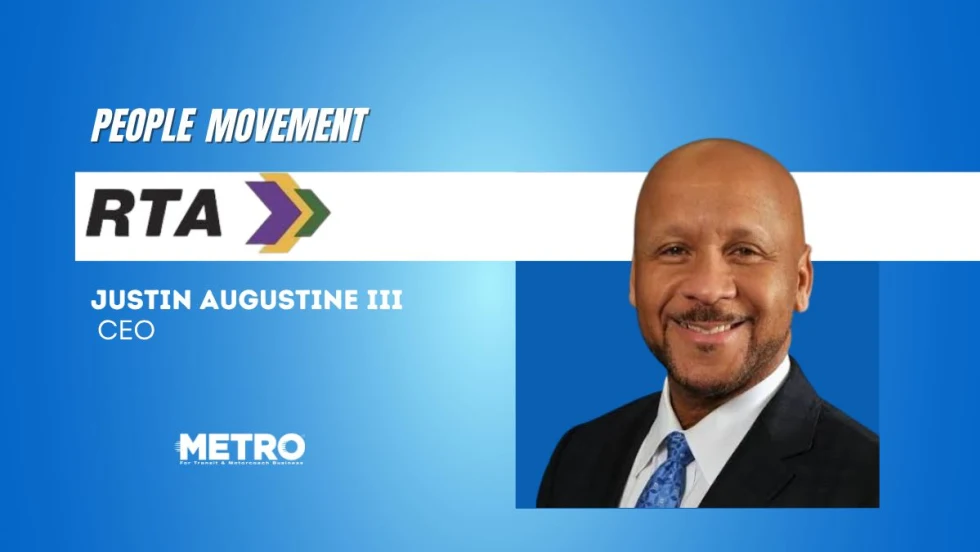
New Orleans RTA Names Augustine III as New CEO
In this edition, we also spotlight recent personnel moves at HDR, PATH, STV, and more, highlighting the people taking on new roles across the transportation industry.
Read More →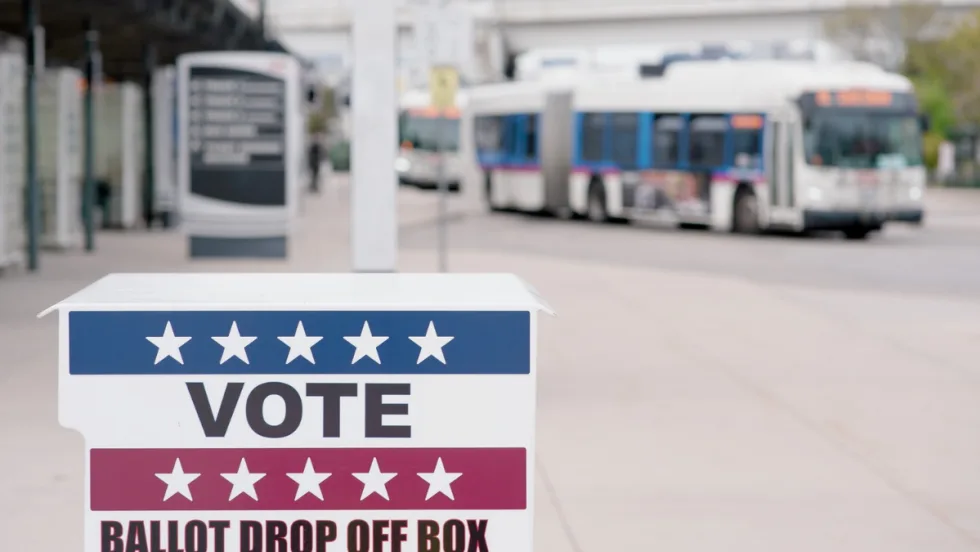
How Transit Agencies Are Using Free Rides to Improve Voting Access
Transit agencies are using fare-free service, trip-planning tools, and targeted rides to improve voting access. See what other agencies can learn from these efforts.
Read More →
Caltrain’s Electrification Drives a New Era of Ridership Growth
The railroad’s shift to electric service has brought more frequent trains, stronger customer satisfaction, and increased ridership, earning it APTA’s Outstanding Public Transportation System award.
Read More →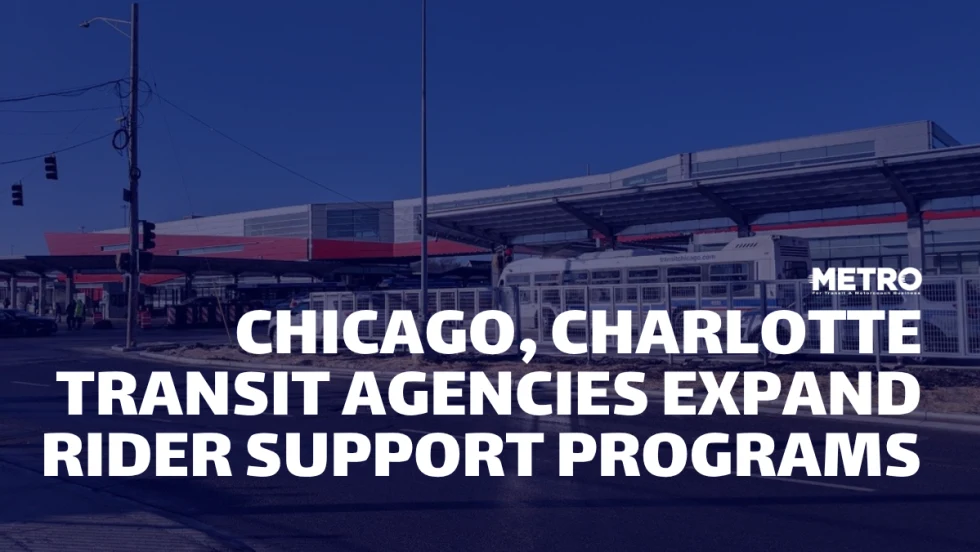
Chicago, Charlotte Transit Agencies Expand Rider Support Programs
CTA launched crisis intervention teams as CATS prepares to deploy fare ambassadors, expanding customer assistance and security efforts across both systems.
Read More →
New York MTA Launches Historic $1.9B Signal, Track Modernization Project
Funded in part by congestion pricing revenue, the project will replace nearly century-old signals along the A and C lines in Brooklyn and Queens.
Read More →
Brian Dickson on Building Stronger, More Resilient Transportation Organizations
Bus Business Consultants Founder Brian Dickson discusses the leadership principles, operational discipline, and strategic planning that separate transportation companies positioned for long-term success from those stuck in survival mode.
Read More →
LA Metro Breaks Ground on Vermont BRT Project
The 12.4-mile corridor is projected to serve 66,200 daily riders, reduce travel times by up to 24%, and create the nation's busiest bus rapid transit corridor.
Read More →