



Florida BCT's New Transit Center Lands LEED Certification
The center is the first LEED Transit Center in Florida and the first LEED Transit GOLD level in the U.S.

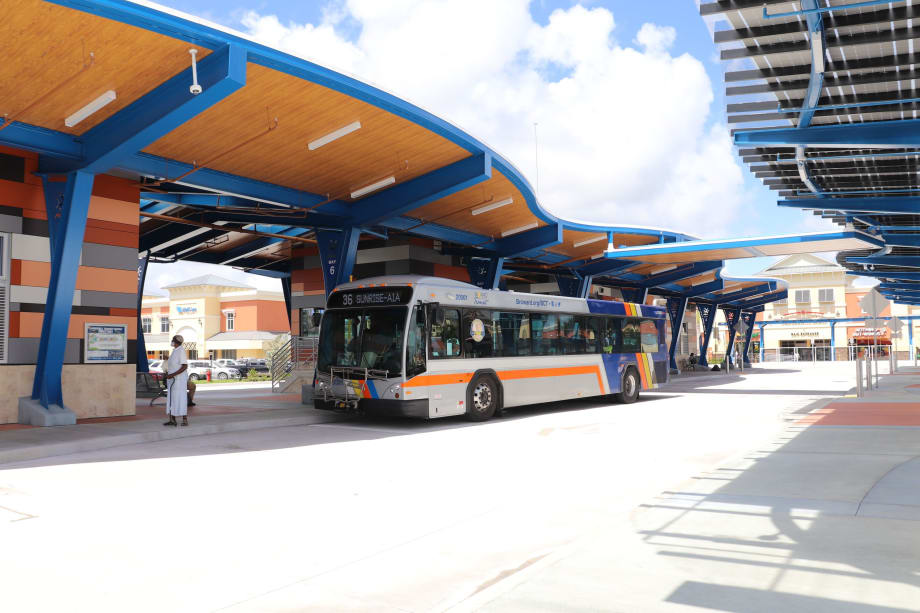
The Lauderhill Transit Center is Broward County Transit’s newest transit center and this LEEDv4 Transit Center Gold certification signifies the center’s exemplary performance across various sustainability categories.
Photo: BCT
Florida’s Broward County Transit’s (BCT) Lauderhill Transit Center received the prestigious GOLD level LEEDv4 Transit Center Rating System.
The center is the first LEED Transit Center in Florida and the first LEED Transit GOLD level in the U.S.
About Broward County Transit’s LEED Center
The Lauderhill Transit Center is Broward County Transit’s newest transit center and this LEEDv4 Transit Center Gold certification signifies the center’s exemplary performance across various sustainability categories, including water and energy efficiency, indoor environmental quality, materials selection, and transportation accessibility. This certification validates the project's adherence to the highest standards of green building practices and its positive impact on both the environment and the community it serves.
“We are extremely proud to have achieved LEED Gold Certification for our Lauderhill Transit Center,” said Coree Cuff Lonergan, Broward County Transit’s GM and director. “As an organization, we are committed to sustainability and environmental stewardship, and this facility, is a testament to that commitment. We believe that sustainable building practices are not only good for the environment, but also good for our employees and the communities we serve.”
One of the center's notable features includes solar canopies strategically installed around the station and bus loading area. These solar canopies, including a solar array, harness clean, renewable energy from the sun and generate more than 100% of the building's energy needs. By effectively utilizing solar power, the Lauderhill Transit Center has achieved net positive energy, significantly reducing its carbon footprint and operating costs.
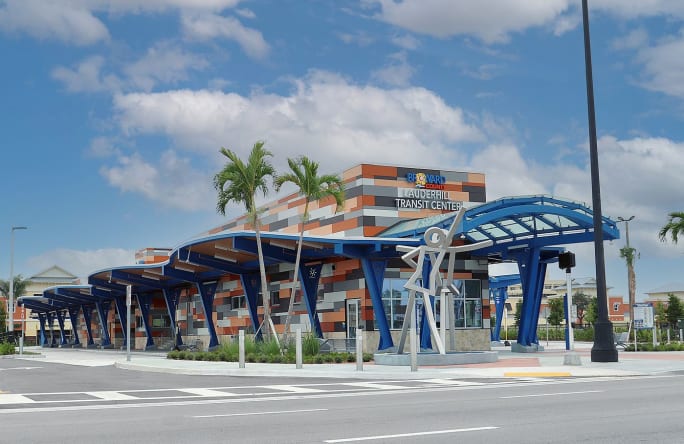
One of the center's notable features includes solar canopies strategically installed around the station and bus loading area.
Photo: BCT
The LEEDv4 Transit Station Gold certification, coupled with the center's net zero energy capabilities, exemplifies the collaborative efforts of all stakeholders involved in the Lauderhill Transit Center project. It showcases their commitment to pushing the boundaries of sustainable design, while providing a functional and environmentally responsible facility.
As the first LEED Transit Station Gold certified project in Florida and the U.S., the Lauderhill Transit Center has set a new standard for sustainable public transportation infrastructure. The achievement demonstrates Broward County's commitment to environmental stewardship, enhances the quality of life for its residents, and serves as an inspiration for future sustainable development projects.
More Management

Report: Transit Bus Manufacturing Supports 34,100 Jobs, $5.1B in GDP
The “Buses Mean Business” report examines the transit bus manufacturing industry’s economic footprint, supply chain, and rising demand for vehicle replacements.
Read More →
LIT Marks 10-Year Milestone at Annual Summit
Hosted by the COTA from September 10 to 13, the Summit carried the theme “Celebrating 10 Years of Excellence, Leadership, and Impact,” with every part of the program honoring the people, agencies, and partners who built LIT over its first decade.
Read More →
People Movement: Dan Dipert Coaches Adds Third-Generation Leader, Keolis Names New Valley Metro VP/GM, and More
In this edition, we also cover recent appointments and announcements at the Wabtec, SilverRide, HNTB, and more, showcasing the individuals helping to shape the future of transportation.
Read More →

METRO Opens Submissions for 2026 Motorcoach Awards
Nominations are now being accepted for METRO Magazine’s Operator of the Year and Innovative Operator of the Year awards.
Read More →
New York MTA Advances Final Contract for Second Avenue Subway Expansion
Contract Four is the largest in the Second Avenue Subway Phase 2 project and includes construction of station infrastructure, tracks, and signals for the subway expansion, MTA officials said. Work on Contract Four will begin in 2027.
Read More →
Transit Agencies Highlight Safety Gains at National Summit
Leaders from 15 major transit systems shared crime-reduction results and safety initiatives while discussing the role of continued federal support.
Read More →
NITA Names New Leadership, Expands Reduced-Fare Program at First Board Meeting
The new regional transit authority appointed its first board chair and interim executive director while extending reduced fares across CTA, Metra, and Pace for eligible riders.
Read More →
Beyond the Checklist: A Structured Approach to Transit Maintenance
Reliability-Centered Maintenance helps transit agencies move beyond routine checklists to focus limited resources on the assets and failures that have the greatest impact on safety, reliability, and service.
Read More →
APTA 2026 Nominating Committee Selects Leadership Slate, Names Chair and Vice Chair Nominees
Leadership changes will help shape the association’s priorities and its representation of the transportation industry during the 2026–2027 term.
Read More →
DART Launches Major Security, Fare Enforcement Initiative
The 90-day demonstration will deploy coordinated security teams at five light rail stations while testing controlled access and gathering data to guide future investments.
Read More →