



For-hire transportation group urges 'essential business' designation
Transportation Alliance is suggesting its members reach out to let Congressional members know they can help during pandemic.


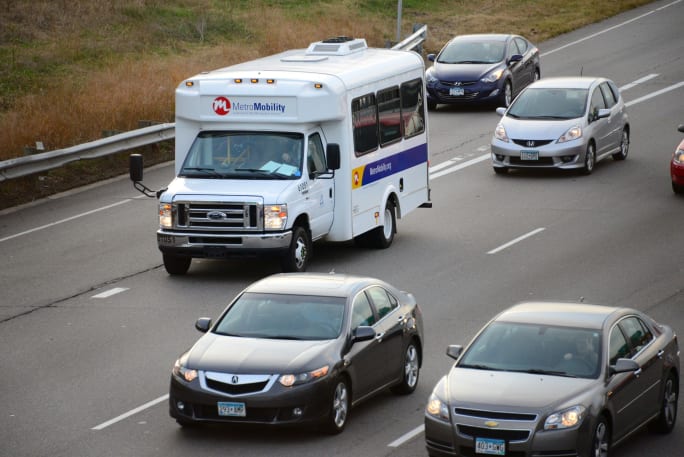
The industry continues to provide paratransit and non-emergency medical transportation to bring those with severe health issues to life-saving doctor appointments. Photo via Metropolitan Council
The Transportation Alliance (TTA) is urging companies in the for-hire transportation industry to send a letter to their respective governors asking that their companies be designated “essential businesses” to help during the COVID-19 crisis.
Nine states have already declared transportation companies as “essential businesses.” TTA’s suggested letter to governors points out that:
The industry continues to provide paratransit and non-emergency medical transportation (NEMT) to bring those with severe health issues to life-saving doctor appointments. Among these are daily or weekly trips to dialysis centers for people with kidney disease or chemotherapy treatment for cancer patients; the transportation of low-income citizens living in food deserts to grocery stores and pharmacies; transportation for those struggling with substance abuse and mental health issues to the care they require; and services for the disability community with our industry’s ample supply of wheelchair vehicles meeting ADA requirements.
Instead of transporting special need students, schools are now depending on the industry to deliver subsidized meals to the homes of low-income children.
Taxi and livery services are increasingly being called upon to offer food delivery from grocery stores and restaurants.
Given the current trajectory of the virus, ambulance fleets could quickly be overrun with hospital trips. The transportation industry is needed to transport those patients who, while ill, do not require an ambulance.
Larger vehicles such as shuttles and buses are already being used to ferry health care workers to the front lines of the coronavirus battle, including hospitals and healthcare facilities. These vehicles offer the ability to safely distance passengers per CDC-recommended guidelines.
Airline and railroad crews continue to need transportation services as they move goods and people across the country.
As transit services are reduced, the industry helps meet citizens’ unscheduled transportation needs.
“In order for us to fight this invisible threat, all private sector transportation companies are at your disposal,” the letter reads. “Each vehicle represents an essential piece of equipment in our state’s toolbox as we work together to end this deadly virus.”
TTA is sending copies of its own letters to the U.S. Department of Homeland Security and the U.S. Department of Health and Human Services seeking federal “essential business” designation for members.
Last week, The Transportation Alliance joined six other major passenger ground transportation trade associations in signing an unprecedented industry letter to President Trump and Congressional leaders outlining an eight-plan to rescue their member companies. The request included a broad array of requests such as cash infusions, zero-interest loans, deferments on existing loans, and assistance in opening a pipeline to cleaning products, among others.
Collectively, the industry moves three billion passengers a year, approximately the same total number of passengers moved by the equally vital airline industry. Hundreds of thousands of drivers — most of them their own independent, small American companies — affiliate with transportation companies for their livelihood.
More Management

METRO Opens Submissions for 2026 Motorcoach Awards
Nominations are now being accepted for METRO Magazine’s Operator of the Year and Innovative Operator of the Year awards.
Read More →
New York MTA Advances Final Contract for Second Avenue Subway Expansion
Contract Four is the largest in the Second Avenue Subway Phase 2 project and includes construction of station infrastructure, tracks, and signals for the subway expansion, MTA officials said. Work on Contract Four will begin in 2027.
Read More →
Transit Agencies Highlight Safety Gains at National Summit
Leaders from 15 major transit systems shared crime-reduction results and safety initiatives while discussing the role of continued federal support.
Read More →

NITA Names New Leadership, Expands Reduced-Fare Program at First Board Meeting
The new regional transit authority appointed its first board chair and interim executive director while extending reduced fares across CTA, Metra, and Pace for eligible riders.
Read More →
Beyond the Checklist: A Structured Approach to Transit Maintenance
Reliability-Centered Maintenance helps transit agencies move beyond routine checklists to focus limited resources on the assets and failures that have the greatest impact on safety, reliability, and service.
Read More →
APTA 2026 Nominating Committee Selects Leadership Slate, Names Chair and Vice Chair Nominees
Leadership changes will help shape the association’s priorities and its representation of the transportation industry during the 2026–2027 term.
Read More →
DART Launches Major Security, Fare Enforcement Initiative
The 90-day demonstration will deploy coordinated security teams at five light rail stations while testing controlled access and gathering data to guide future investments.
Read More →
Advancing Fare Collection Through Technology and Innovation
Learn about delivering 1300 gates at 91 stations while managing fare evasion. Explore the large scale deployment, solution customization and real-world results that affect the region. Prepare for deployment in your region now.
Read More →
Game Day in Motion: Moving Millions During the 2026 World Cup
Between packed transit stations and team motorcoaches, see how agencies and operators across North America tackled the transportation demands of the 2026 FIFA World Cup.
Read More →
Surface Transportation Extension Averts Shutdown, Leaves Transit Funding Gap
The stopgap keeps federal transportation programs moving, but missing advance funding could complicate the transit and rail projects agencies are planning next.
Read More →