



Hall of Fame inducts Wulkan, Martin, Catoe, Scanlon and Volk
This year, APTA is adding five new names to its Hall of Fame: Alan Wulkan, Frank T. Martin, John Catoe, Mike Scanlon and William Volk.


This year, APTA is adding five new names to its Hall of Fame: Alan Wulkan, Frank T. Martin, John Catoe, Mike Scanlon and William Volk.
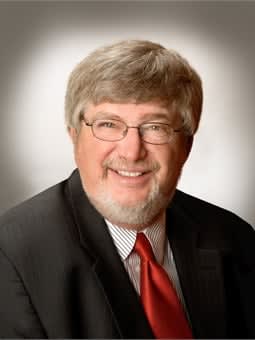
Alan Wulkan
Wulkan is founder and president of The Wulkan Group and has been involved with the development and management of new start rail, bus rapid transit and automated guideway projects. He is nationally recognized for his work in Washington, D.C., on legislative issues affecting the transit industry and receives numerous national and local requests to discuss transportation issues.
“One of the accomplishments I’m most proud of is helping to make a difference in so many lives over the past 43 years,” he says. “Whether it has been in communities like Miami, Austin, Norfolk, Va. or Phoenix, where I played significant roles in expanding public transit systems, or Charlotte, Honolulu, Tempe, and others where I helped pass transit initiatives to expand transit services, it has been a joy to work with so many people committed to improving public transit.”
Wulkan’s experience includes senior management positions in the private transportation industry, as well as serving as executive director of the Capital Metropolitan Transportation Authority in Austin, Texas and director, intergovernmental administration, for the Metro Dade Transportation Administration in Miami.
“When I first began in the industry, public transit, especially rail transit, was a poor step-child to the automobile, constantly having to justify its existence” he reflects. “However, over the past 40 years there has been a renaissance in rail transit, which is unparalleled in our nation’s history. Public transit is now viewed as an important partner in providing choices to our nation’s commuters, as well an important tool in creating livable communities and protecting the environment.”
Wulkan currently serves on APTA’s Board of Directors, the APTA Foundation Board and the Business Members Board of Governors.
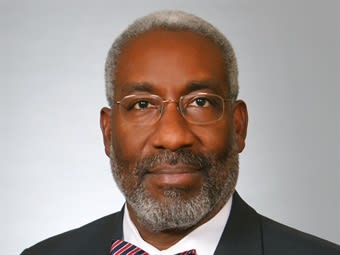
Frank T. Martin
Martin is president of Frank T. Martin Consult LLC, a strategic business development and management consultancy. The firm was opened in spring 2014 after spending more than four decades in the private and public sectors in senior management for two global transportation and engineering companies and as CEO and chief operating officer for several of the nation’s top transit organizations in Birmingham, Ala.; New Orleans, Miami; and San Jose, Calif.
“One [moment was] restoring the public confidence in the transit system in Birmingham. So it was: how do I put this system back into a secure financial position, given the amount of funding we have, as well as restoring the loss in public confidence in the system, from the riding public, the non-riding public, elected officials and the business community at large?,” he says about the moment of his career that he’s most proud of. “We were able to, in a short period of time, get the system back running and restore confidence, to where it became a well-respected agency.”
Martin has extensive experience in urban and regional planning, managing and directing transportation projects focusing on multidisciplinary and complex planning, administrative, operations and maintenance policies and procedures; analyzing organizations, programs, systems and processes; and developing business plans and strategies to optimize operating efficiency. As a public servant, he developed the reputation as a skilled and accomplished public transportation management executive, solving some of the most complex issues facing the public transit industry.
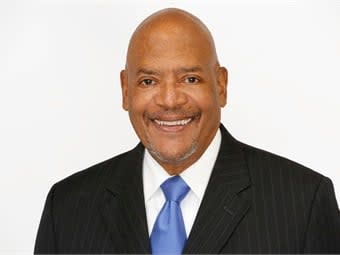
John Catoe
Catoe has contributed greatly to the delivery and enhancement of public transportation offerings throughout the U.S., beginning his career in transportation in 1979 with Orange County, Calif.’s Orange County Transportation Authority (OCTA).
As OCTA’s director, transit services, Catoe developed service policy and led service planning and development. This included the oversight of construction and startup of the Metrolink commuter rail service in Orange County.
While serving as the director for Santa Monica, Calif.’s Big Blue Bus, the agency received the Los Angeles County Transportation Commission’s Metro Award for Efficiency, APTA’s Outstanding Safety Award and two Outstanding Achievement Awards.
Catoe served as deputy CEO for the Los Angeles County Metropolitan Transportation Authority (L.A. Metro) from 2001 through 2007. There, he launched new L.A. Metro services, including 23 special rapid bus lines and extended rush hour operations for a continuous 17 hours. Catoe also worked with five Los Angeles County government councils to restructure bus operations into service sectors, thus, better serving local communities while containing operating costs. He also founded Metro Connections — a strategic plan to restructure routes to reach underserved areas and piloted the Gold Line, a light rail service connecting Pasadena to East Los Angeles.
Catoe also served as GM for the Washington Metropolitan Area Transit Authority (WMATA) from 2007 through 2010, overseeing a $2 billion budget and more than 10,000 employees. While there, he was named APTA’s Outstanding Public Transportation Manager in 2009 for orchestrating and executing safe, efficient, and reliable public transportation offerings to and from the 56th presidential inauguration events.
“There are many things I’m proud of — service expansion, APTA awards, COMTO awards — but the thing I’m most proud of are the people that I work with, as I watch them develop and move into leadership positions within the industry,” Catoe says.
Scanlon began his transit career in 1967 and spent 26 years with the Port Authority of Allegheny County in Pittsburgh, starting as a mail clerk and rising to the position where he oversaw all transit operations. He also served six years as the chief executive of Broward County Transit in Fort Lauderdale, Fla.

Mike Scanlon
In 1999, Scanlon was appointed CEO of SamTrans, where he oversaw bus operations, paratransit service and all affairs of the district. He also served as executive director of the Peninsula Corridor Joint Powers Board, which provides commuter rail service between San Francisco and Gilroy, Calif., and as executive director of the San Mateo County Transportation Authority, where he was responsible for administering a countywide half-cent sales tax for various transportation projects.
During his tenure at the district, Caltrain experienced historic growth in ridership and revenue; launching a project to fully electrify the railroad, in a historic partnership with the California High Speed Rail Authority and eight Bay Area transportation and planning entities. He also played a founding role in the formation and activities of the Grand Boulevard Initiative — a regional effort to transform the El Camino Real into a world-class boulevard.
“When I think about greatest accomplishments, it’s not about buses or buildings or train cars or any of that; I think the greatest is probably in the human area.” Scanlon says. “Helping people advance in their careers, and seeing them blossom into different areas of leadership, has been really great. It’s the human relationships and the human accomplishments that I get the most satisfaction from.”
He is an honorary lifetime member of the APTA Board, a member of the Board of the APTA Foundation and a member of the board of the California Transit Finance Corp.
William Volk
Volk graduated from Indiana University and worked for several years in transit in Indiana including in Fort Wayne. He accepted the managing director position at Ill.’s Champaign-Urbana Mass Transit District (MTD) in 1974. The MTD system was in turmoil and Volk was the third manager in the three years since its creation. There were a few dozen employees, only 13 buses and annual ridership was 555,000.
MTD moved into a new facility in Urbana in 1975 and eventually moved again in 2003. Today, the agency employs more than 300 people, has a ridership of over 13 million and boasts a fleet of 102 buses. Volk retired from MTD in 2014 after serving as managing director for 40 years.
“It’s very difficult to name one ‘greatest accomplishment’ in a career that included a successful funding referendum, building a multimodal terminal, establishing an unlimited access system and conceptualizing what became the Small Transit Intensive Cities legislation,” Volk says. “In the end, hard work by dedicated employees over 40 years, which transformed an inconsequential system with fewer than 800,000 yearly passengers into an integral part of the fabric of the community and 13 million passengers stands out as the ‘greatest accomplishment.’”
More Management

METRO Opens Submissions for 2026 Motorcoach Awards
Nominations are now being accepted for METRO Magazine’s Operator of the Year and Innovative Operator of the Year awards.
Read More →
New York MTA Advances Final Contract for Second Avenue Subway Expansion
Contract Four is the largest in the Second Avenue Subway Phase 2 project and includes construction of station infrastructure, tracks, and signals for the subway expansion, MTA officials said. Work on Contract Four will begin in 2027.
Read More →
Transit Agencies Highlight Safety Gains at National Summit
Leaders from 15 major transit systems shared crime-reduction results and safety initiatives while discussing the role of continued federal support.
Read More →

NITA Names New Leadership, Expands Reduced-Fare Program at First Board Meeting
The new regional transit authority appointed its first board chair and interim executive director while extending reduced fares across CTA, Metra, and Pace for eligible riders.
Read More →
Beyond the Checklist: A Structured Approach to Transit Maintenance
Reliability-Centered Maintenance helps transit agencies move beyond routine checklists to focus limited resources on the assets and failures that have the greatest impact on safety, reliability, and service.
Read More →
APTA 2026 Nominating Committee Selects Leadership Slate, Names Chair and Vice Chair Nominees
Leadership changes will help shape the association’s priorities and its representation of the transportation industry during the 2026–2027 term.
Read More →
DART Launches Major Security, Fare Enforcement Initiative
The 90-day demonstration will deploy coordinated security teams at five light rail stations while testing controlled access and gathering data to guide future investments.
Read More →
Advancing Fare Collection Through Technology and Innovation
Learn about delivering 1300 gates at 91 stations while managing fare evasion. Explore the large scale deployment, solution customization and real-world results that affect the region. Prepare for deployment in your region now.
Read More →
Game Day in Motion: Moving Millions During the 2026 World Cup
Between packed transit stations and team motorcoaches, see how agencies and operators across North America tackled the transportation demands of the 2026 FIFA World Cup.
Read More →
Surface Transportation Extension Averts Shutdown, Leaves Transit Funding Gap
The stopgap keeps federal transportation programs moving, but missing advance funding could complicate the transit and rail projects agencies are planning next.
Read More →