




Clear the Way:How Bus Lane Automation Can Improve City Transit
King County and City of Seattle to Increase Metro’s Safety and Security Presence
The $26 million proposal would boost metro security with more officers, safer buses, and SaFE Ambassadors for riders across Seattle and King County.
July 1, 2025
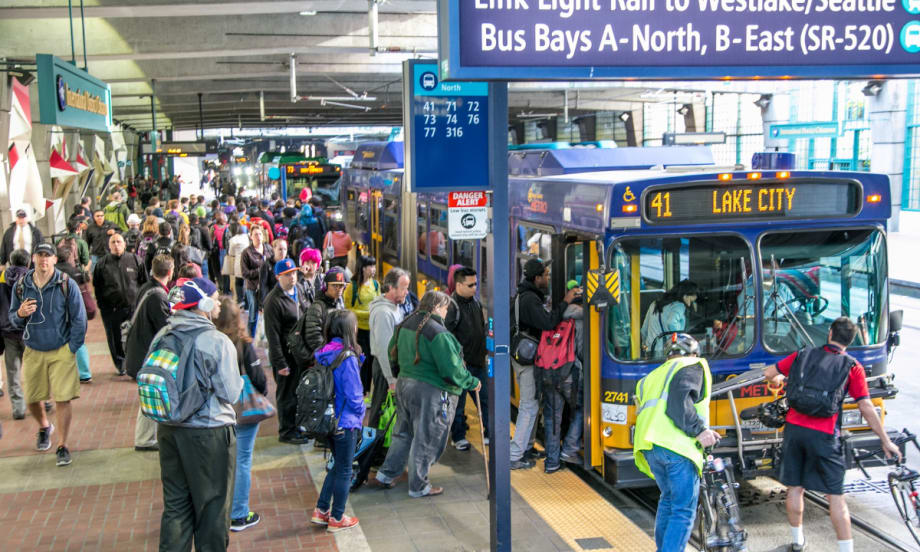
The proposed budget was sent to the King County Council on May 29, including $26.1 million in safety and security investments for King County Metro.
Photo: King County Metro
3 min to read
In an effort to strengthen transit safety and security in King County, Executive Shannon Braddock proposed a 2025 supplemental budget with funding support from the City of Seattle.
The proposed budget was sent to the King County Council on May 29, including $26.1 million in safety and security investments for King County Metro to fund more Transit Police and Transit Security Officers across its regional network. The budget also funds larger and stronger operator safety partitions for all buses.
The City of Seattle will contribute $5 million in voter-approved funding to the agency's transit safety and security efforts in 2025. These investments are from the Seattle Transportation Levy and the Seattle Transit Measure, $2 million of which was championed by City Councilmembers Rob Saka and Dan Strauss in the 2025 City budget process.
“Since 2023, King County Metro has dramatically increased our ridership, adding more than 10 million passengers,” Executive Braddock said. “This supplemental budget will fund more metro transit police and Transit Security Officers to deliver a safe and welcoming environment, which all our customers and employees deserve. In partnership with the City of Seattle, we are also bolstering the successful metro SaFE Ambassadors program to add more locations to support our riders and community members.”
“Safe and reliable public transit is essential to achieving our One Seattle vision for everyone to be able to travel freely and confidently across our city. Transit connects people to essential services, jobs, fun, and each other, but that is only possible if riders and operators are safe,” said Mayor Bruce Harrell.
Adding More Police and Security Officers
If approved, the King County supplemental budget would increase the number of transit police deputies by 10, totaling 89 when fully staffed.
“We don’t have a recruiting problem at Metro Transit Police,” said Metro Transit Major Todd Morrell. “Oftentimes, we are the work site of choice. A recent King County employee survey showed metro deputies were extremely satisfied and happy with their jobs. This will certainly help attract future applicants, which will, in turn, allow us to succeed in our mission of proactive and highly visible patrols that ensure the safety of anyone who rides the bus or streetcar.”
The countywide supplemental budget — supported by resources from the City of Seattle — would also fund the recent increases in the number of transit security officers, which has risen steadily from 60 in 2021 to 220 as of April 2025.
Separate from funding in the county’s supplemental budget, the city also invested $3 million in Seattle Transit Measure funding toward safety and security on Seattle-funded bus routes and the Seattle Streetcar.
In 2025, SDOT had Metro Transit Police begin serving as the streetcar’s primary law enforcement agency, increasing the security presence and creating a consistent rider experience across transit services in Seattle.
Providing Directions and Rider Support
$1 million in SDOT funding from the Seattle Transit Measure was approved to support the SaFE Ambassadors program, which was born of the SaFE Reform work launched in 2021.
SaFE Ambassadors, wearing easy-to-spot blue jackets, answer questions and support riders. Currently deployed in the Central District, Mount Baker, and Renton, the program expanded this year to add more ambassadors to Rainier Valley and the University District, partly thanks to the city’s investments.
“At King County Metro, we’re driven to serve our community members and to be your favorite way to travel,” said King County Metro General Manager Michelle Allison. “We’re appreciative to Executive Braddock, Mayor Harrell, and other leaders and partners for supporting our metro riders and employees.
The King County Council is expected to take final action on Executive Braddock’s proposed supplemental budget next month.
More Management

METRO Opens Submissions for 2026 Motorcoach Awards
Nominations are now being accepted for METRO Magazine’s Operator of the Year and Innovative Operator of the Year awards.
Read More →
New York MTA Advances Final Contract for Second Avenue Subway Expansion
Contract Four is the largest in the Second Avenue Subway Phase 2 project and includes construction of station infrastructure, tracks, and signals for the subway expansion, MTA officials said. Work on Contract Four will begin in 2027.
Read More →
Transit Agencies Highlight Safety Gains at National Summit
Leaders from 15 major transit systems shared crime-reduction results and safety initiatives while discussing the role of continued federal support.
Read More →

NITA Names New Leadership, Expands Reduced-Fare Program at First Board Meeting
The new regional transit authority appointed its first board chair and interim executive director while extending reduced fares across CTA, Metra, and Pace for eligible riders.
Read More →
Beyond the Checklist: A Structured Approach to Transit Maintenance
Reliability-Centered Maintenance helps transit agencies move beyond routine checklists to focus limited resources on the assets and failures that have the greatest impact on safety, reliability, and service.
Read More →
APTA 2026 Nominating Committee Selects Leadership Slate, Names Chair and Vice Chair Nominees
Leadership changes will help shape the association’s priorities and its representation of the transportation industry during the 2026–2027 term.
Read More →
DART Launches Major Security, Fare Enforcement Initiative
The 90-day demonstration will deploy coordinated security teams at five light rail stations while testing controlled access and gathering data to guide future investments.
Read More →
Sponsored•September 9, 2026
Advancing Fare Collection Through Technology and Innovation
Learn about delivering 1300 gates at 91 stations while managing fare evasion. Explore the large scale deployment, solution customization and real-world results that affect the region. Prepare for deployment in your region now.
Read More →
Game Day in Motion: Moving Millions During the 2026 World Cup
Between packed transit stations and team motorcoaches, see how agencies and operators across North America tackled the transportation demands of the 2026 FIFA World Cup.
Read More →
Surface Transportation Extension Averts Shutdown, Leaves Transit Funding Gap
The stopgap keeps federal transportation programs moving, but missing advance funding could complicate the transit and rail projects agencies are planning next.
Read More →