



L.A. Metro report details challenges faced by women riding system
The women who responded to Metro’s survey identified safety concerns as the top barrier to riding transit.

According to a newly released study analyzying women's use of Los Angeles' Metro system, 57% of women bring their children on transit.
Metro
CC0 Public Domain
(Article was originally posted on Sept. 20, 2019.)
A new study titled “Understanding How Women Travel” was released by Los Angeles-based Metro this month. The report is the first of its kind by a transit agency in the U.S. and is a broad effort that doesn’t pull any punches when it comes to pointing to challenges faced by women when using the Metro system — from traveling with kids and strollers to safety to fares.
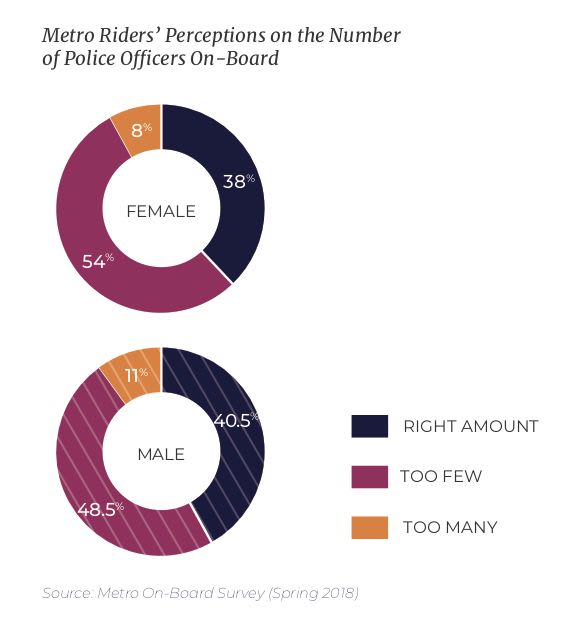
The report’s findings confirm much of what we already know: women have different mobility needs, travel patterns and commute demands and some women feel unsafe using Metro for a variety of reasons. But we now have far more detailed data — gleamed from several sources, including focus groups and Metro’s customer surveys — on specific concerns and where there may be room for improvement, whether it’s better lighting at stations and stops and surrounding areas or having a more visible police or security presence.
It’s important to understand the report is a first step. It’s a building block, in other words. With the findings from this study, Metro will next create a Gender Action Plan that will recommend specific actions to improve women’s travel experiences on our system. Those could include upgrades to the design of bus stops, train stations and vehicles — as well as improvements to service and safety. The report also includes some best practices that Metro can draw from other transit systems around the world.
We also think it’s worth adding some context: while it’s good to acknowledge there’s room for improvement, the Metro system carries about 1.15 million boardings on the average weekday and many women and men successfully use the system without incident each day.
Among the report’s findings:
Women Travel Behavior
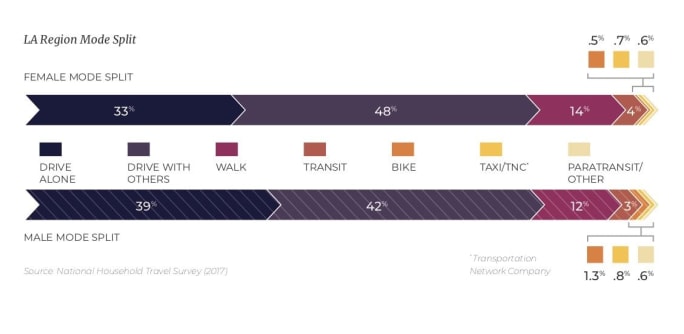
Across all modes of transportation, women typically take more trips per day than men. At the other end of the spectrum, women are more likely than men to make zero trips per day. What that means: women have more exposure to travel burdens (cost, stress, safety risks) and are more likely to be isolated or disconnected from the opportunities that travel affords.
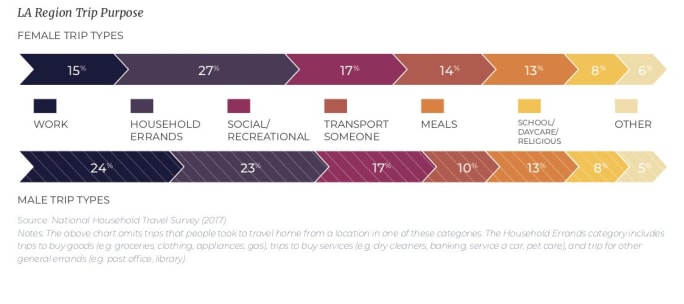
Women in Los Angeles make shorter trips than men and women’s trips are more varied to more destinations and are more likely to primarily serve the needs of someone else (i.e. family members, etc.).
Women are more likely to trip chain, that is, make stops along the way to other destinations — the reason some wait for a day when they have access to a car and can run all their errands at once. Women in Los Angeles are also more likely than men to travel mid-day, with a travel peak around 2 p.m. when transit service may be reduced.
Women ride more public transit than men and over the years ridership among women has continued to grow, while male ridership continues to decrease. Almost 90 percent of female riders use the system more than three days per week.
57 percent of women bring their children on transit.
A couple of good graphics:
Safety
The women who responded to Metro’s survey identified safety concerns as the top barrier to riding transit. Those surveyed included current riders, former riders and those who have never ridden Metro. Safety was not the top concern among men.
Sixty percent of female riders who participated in our survey feel safe riding Metro during the day, but that number falls to 20 percent at night. Many surveyed also said they don’t feel safe waiting at stops/stations or traveling to stops/stations. Concerns about safety are causing riders to alter their behavior – to consider their clothing choices or, for those who have other options, simply not ride transit.
Here is an excerpt from the report: “Some women reported wearing sneakers on the bus or train in case they unexpectedly need to run from an assailant. They also said they would avoid wearing skirts because they did not want their bare skin to touch the seat and out of fear that men would sexually harass them. Women reported that they hide their jewelry on public transit due to fear that it may be stolen, and many shared stories of seeing people robbed on public transportation.”
And this: “Over and over, participants in the workshops and pop-ups pointed to problems that could be solved by a deeper investment in lighting, more frequent service to produce shorter wait times, and other solutions at stops and stations.”
•Two key graphics:

Cost
Although many women riders would qualify for low-income fare discounts, many do not pursue them or know about them. The $100 regular monthly pass offers discounts if used 58 or more times a month. But women told Metro they considered the monthly pass as too expensive and said they hesitated to buy one because they were uncertain whether it would be worth the expense.
Navigating buses and trains
Women were more likely than men to use elevators and escalators, as well as benches and other seating, and were observed to be traveling more frequently than men with bags, carts, strollers, and other items and people in their care. Older women and women traveling with children reported having a difficult time maneuvering with strollers and carts on the bus.
Older women and women with limited mobility had difficulty moving through the aisle while buses were in motion. These groups were more likely to wait for the bus to come to a full stop before exiting the bus. They were also more likely to take the first seats that were available from the front of the bus. Some operators seemed aware and were accommodating and waited a few seconds before leaving a bus stop.
Service and reliability
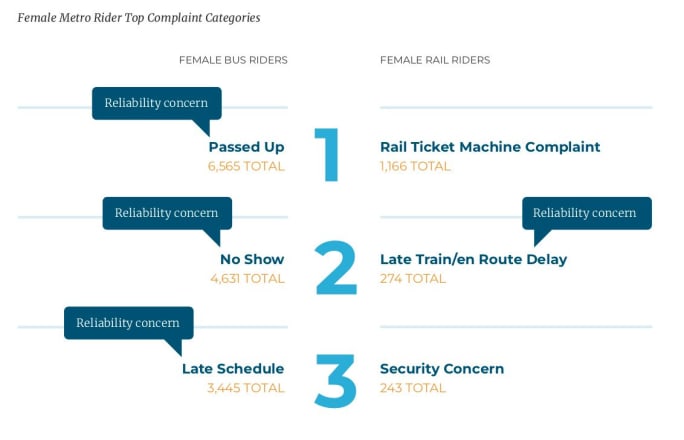
The top three complaints filed by female Metro bus riders are all related to the reliability of the bus system — buses that fail to stop for riders, buses that never show up and late buses. Metro also heard numerous complaints about unreliable real-time information on station signs and cell phone apps.
From the report: “These experiences cause women to alter their travel behavior — sometimes leaving hours ahead of time due to unreliable service, using ridesharing services instead of transit due to infrequent service at night, carrying a flashlight to ensure that they are not passed up by operators while waiting in the dark, or even sleeping at the bus stop because service does not start running until several hours after they get off work.”
The next step for Metro is to develop a Gender Action Plan, which will:
Pivot from research findings into actionable changes.
Ensure that the agency’s policy, programs and activities include a gender perspective and to promote the considerations of gender issues at all levels.
Reassess communications on board buses and trains and at stops and stations to create an environment that prioritizes safety and customer service, reduces sexual harassment and encourages women to report instances of harassment.
Explore alternatives to the current fare policy to better accommodate families and low-income riders and to provide affordable options for trip-chaining.
Investigate changes to station, stop and vehicle designs to better address the needs and concerns of women, including elements such as better lighting, seating at stops and stations, clearer sight-lines and more space on transit vehicles to accommodate strollers and carts.
Evaluate services provided by time of day to understand how they can be adjusted to better meet women’s travel needs during midday and evening off-peak hours, including on-demand services such as Access.
This blog was originally posted on Metro's The Source.
More Management

METRO Opens Submissions for 2026 Motorcoach Awards
Nominations are now being accepted for METRO Magazine’s Operator of the Year and Innovative Operator of the Year awards.
Read More →
New York MTA Advances Final Contract for Second Avenue Subway Expansion
Contract Four is the largest in the Second Avenue Subway Phase 2 project and includes construction of station infrastructure, tracks, and signals for the subway expansion, MTA officials said. Work on Contract Four will begin in 2027.
Read More →
Transit Agencies Highlight Safety Gains at National Summit
Leaders from 15 major transit systems shared crime-reduction results and safety initiatives while discussing the role of continued federal support.
Read More →

NITA Names New Leadership, Expands Reduced-Fare Program at First Board Meeting
The new regional transit authority appointed its first board chair and interim executive director while extending reduced fares across CTA, Metra, and Pace for eligible riders.
Read More →
Beyond the Checklist: A Structured Approach to Transit Maintenance
Reliability-Centered Maintenance helps transit agencies move beyond routine checklists to focus limited resources on the assets and failures that have the greatest impact on safety, reliability, and service.
Read More →
APTA 2026 Nominating Committee Selects Leadership Slate, Names Chair and Vice Chair Nominees
Leadership changes will help shape the association’s priorities and its representation of the transportation industry during the 2026–2027 term.
Read More →
DART Launches Major Security, Fare Enforcement Initiative
The 90-day demonstration will deploy coordinated security teams at five light rail stations while testing controlled access and gathering data to guide future investments.
Read More →
Advancing Fare Collection Through Technology and Innovation
Learn about delivering 1300 gates at 91 stations while managing fare evasion. Explore the large scale deployment, solution customization and real-world results that affect the region. Prepare for deployment in your region now.
Read More →
Game Day in Motion: Moving Millions During the 2026 World Cup
Between packed transit stations and team motorcoaches, see how agencies and operators across North America tackled the transportation demands of the 2026 FIFA World Cup.
Read More →
Surface Transportation Extension Averts Shutdown, Leaves Transit Funding Gap
The stopgap keeps federal transportation programs moving, but missing advance funding could complicate the transit and rail projects agencies are planning next.
Read More →