



L.A. Metro Board Approves 2020 Long Range Transportation Plan
The $400-billion plan lays out a 30-year transportation blueprint for bringing about a more mobile and sustainable future.
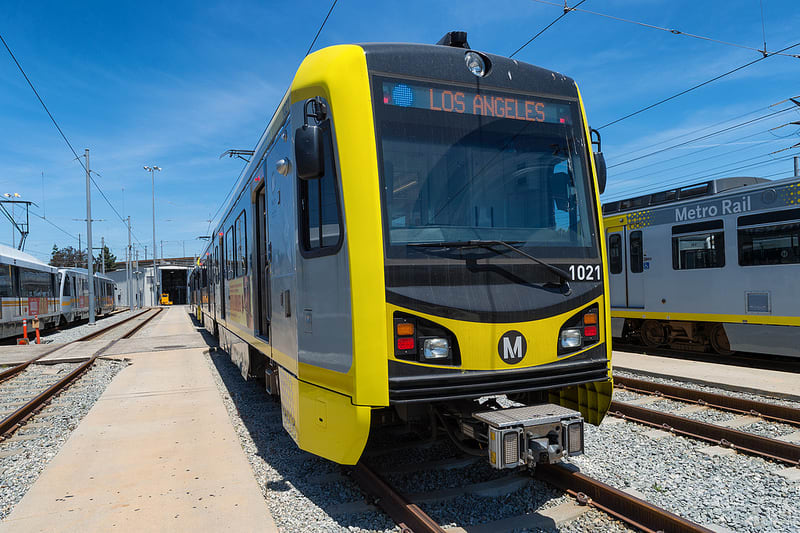
The 2020 Long Range Transportation Plan details how Metro will add more than 100 miles of rail over the next 30 years, invest in arterial and freeway projects to reduce congestion, and add more bicycle and pedestrian projects.
L.A. Metro
The Los Angeles County Metropolitan Transportation Authority (Metro) board approved the updated 2020 Long Range Transportation Plan, a 30-year transportation blueprint for the region, following a 45-day public review period to gather additional comments from the public.
The $400-billion plan lays out a vision and roadmap for bringing about a more mobile and sustainable future for Los Angeles County. Through extensive public outreach over the past two years that included 77 community events, 38 public meetings, and 20,000 survey responses from the public, Metro has distilled the region’s desires into four goals: better transit, less congestion, complete streets, and access to opportunity.
The 2020 Long Range Transportation Plan (2020 LRTP) outlines what Metro is doing currently and its plans over the next 30 years for funding, planning, and maintaining the region’s transportation system. Current challenges — including the COVID-19 pandemic — will present opportunities for Metro to take bold action and help achieve mobility improvements in the region.
"Los Angeles is entering a transportation renaissance — a chance to redefine our city’s relationship with public transit and reimagine the ways it can be a force for good in people’s lives," said Los Angeles Mayor Eric Garcetti. "The Long Range Transportation Plan paves a clear path to a more sustainable, fair, and equitable transportation future — an era that delivers on the promises of Measure M and our back to basics agenda, doubles down on electrification, and opens new doors of opportunity across our region."
The 2020 LRTP details how Metro will add more than 100 miles of rail over the next 30 years, invest in arterial and freeway projects to reduce congestion, and add more bicycle and pedestrian projects, such as the L.A. River Path Project to increase bicycle access.
The plan calls for improving the transit rider experience by prioritizing bus travel on L.A. County’s busiest streets and implementing the recommendations of the NextGen Bus Plan to make bus service more frequent and faster. Furthermore, Metro will invest in technology and promote innovative new mobility options such as microtransit and use freight-focused technologies.
The 2020 LRTP includes over $200 billion for operations and the agency's state of good repair, as well as $38 billion in funding that returns to local transit agencies to maintain the local transportation system.
"For this plan to succeed, we must and will continue to build strong partnerships with local, state, and federal agencies as well as our many local stakeholders," said Metro CEO Phillip A. Washington. "These partnerships are crucial for funding and delivering projects and for coordinated planning on issues of regional significance. Metro will increase our collaboration with local jurisdictions to support transit priority on local roadways, to improve first/last mile access to transit, and to make everyone’s mobility easier and more equitable."
The plan also notes the potential to deliver significant mobility benefits to the region through major capital projects, programs, partnerships, and policies. After implementation, 21% of L.A. county residents and 36% of jobs will be within a 10-minute walk of rail or bus rapid transit options — up from only 8% of residents and 16% of jobs currently. The plan also estimates an 81% increase in daily transit trips, a 31% decrease in traffic delay, and a 19% decrease in overall greenhouse gas emissions in the county.
More Management

METRO Opens Submissions for 2026 Motorcoach Awards
Nominations are now being accepted for METRO Magazine’s Operator of the Year and Innovative Operator of the Year awards.
Read More →
New York MTA Advances Final Contract for Second Avenue Subway Expansion
Contract Four is the largest in the Second Avenue Subway Phase 2 project and includes construction of station infrastructure, tracks, and signals for the subway expansion, MTA officials said. Work on Contract Four will begin in 2027.
Read More →
Transit Agencies Highlight Safety Gains at National Summit
Leaders from 15 major transit systems shared crime-reduction results and safety initiatives while discussing the role of continued federal support.
Read More →

NITA Names New Leadership, Expands Reduced-Fare Program at First Board Meeting
The new regional transit authority appointed its first board chair and interim executive director while extending reduced fares across CTA, Metra, and Pace for eligible riders.
Read More →
Beyond the Checklist: A Structured Approach to Transit Maintenance
Reliability-Centered Maintenance helps transit agencies move beyond routine checklists to focus limited resources on the assets and failures that have the greatest impact on safety, reliability, and service.
Read More →
APTA 2026 Nominating Committee Selects Leadership Slate, Names Chair and Vice Chair Nominees
Leadership changes will help shape the association’s priorities and its representation of the transportation industry during the 2026–2027 term.
Read More →
DART Launches Major Security, Fare Enforcement Initiative
The 90-day demonstration will deploy coordinated security teams at five light rail stations while testing controlled access and gathering data to guide future investments.
Read More →
Advancing Fare Collection Through Technology and Innovation
Learn about delivering 1300 gates at 91 stations while managing fare evasion. Explore the large scale deployment, solution customization and real-world results that affect the region. Prepare for deployment in your region now.
Read More →
Game Day in Motion: Moving Millions During the 2026 World Cup
Between packed transit stations and team motorcoaches, see how agencies and operators across North America tackled the transportation demands of the 2026 FIFA World Cup.
Read More →
Surface Transportation Extension Averts Shutdown, Leaves Transit Funding Gap
The stopgap keeps federal transportation programs moving, but missing advance funding could complicate the transit and rail projects agencies are planning next.
Read More →