



MARTA's Parker named '2015 Outstanding Public Transportation Manager'
Parker is credited with launching a top-to-bottom transformation of MARTA at a time when it was still reeling from staggering budget deficits, declining ridership and a poor public image.

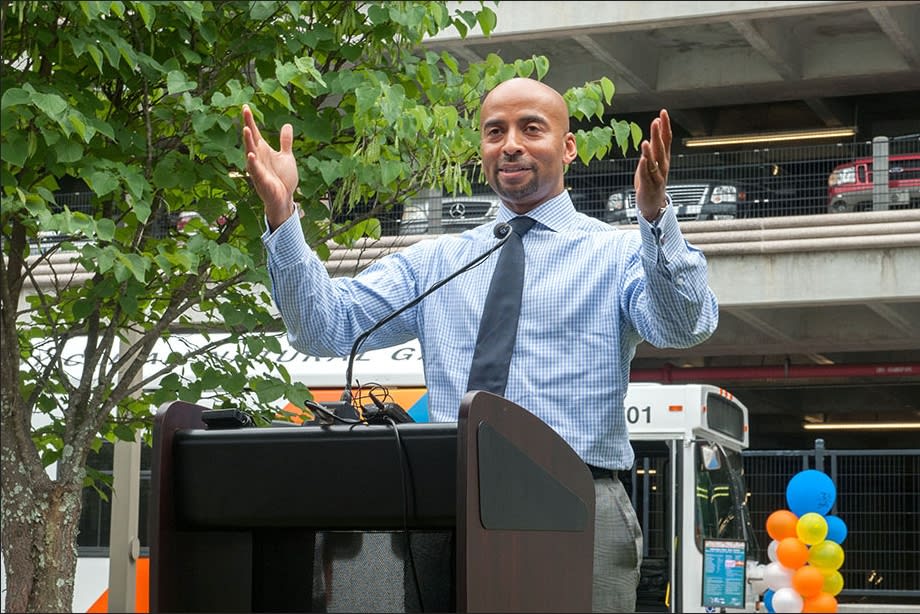
MARTA GM/CEO Keith Parker
MARTA GM/CEO Keith Parker
The American Public Transportation Association (APTA) has selected MARTA’s GM/CEO Keith T. Parker, AICP, as the 2015 Outstanding Public Transportation Manager. This highly prestigious award is in recognition of Parker’s major accomplishments at MARTA and his contributions to the public transportation industry during his two decade career.
“I’m deeply humbled to be recognized by APTA’s selection committee for this honor,” Parker said. “This is a high point in my career and I’m grateful for the opportunities to serve that the public transportation industry has provided me. I want to thank the MARTA Board of Directors, our staff and our customers for their wonderful support and guidance.”
Michael Melaniphy, APTA President/CEO, extended kudos to Parker for the award.
“This is a very significant award that is given only to those individuals who have excelled in leading public transportation systems,” Melaniphy said. “I offer my congratulations to Keith. His record in managing four public transit systems has demonstrated his innovative leadership that has positively transformed each of these agencies. He is truly worthy of national recognition.”
“Hiring Keith Parker is one of the best decisions MARTA’s ever made,” said Robert L. Ashe III, chairman of the MARTA board of directors. “His optimistic leadership, fiscal discipline, and relentless pursuit of excellence in matters both big and small have helped MARTA re-emerge as a transit system to be reckoned with. On behalf of my colleagues on the MARTA Board, congratulations Mr. Parker. Keep up the great work.”

MARTA GM/CEO Parker is joined by local dignitaries to celebrate the agency's 35th anniversary in June 2014.
Parker is credited with launching a top-to-bottom transformation of MARTA, the nation’s ninth largest transit agency, at a time when it was still reeling from staggering budget deficits, declining ridership and a poor public image.
Since Parker’s arrival in December 2012, MARTA has stabilized its finances, increased financial reserves and improved its credit rating. Ridership is on the rise and the agency’s relationship with the business community, state and local elected officials and, most of all, its customers, continues to grow stronger.
Under Parker’s leadership, MARTA experienced a signature achievement when Clayton County joined the transit system which represents the first jurisdictional expansion since its inception more than four decades ago. MARTA bus service began in Clayton County in March 2015.
In the coming months, MARTA plans to introduce a host of customer-focused benefits including video surveillance cameras on all of its railcars and Wi-Fi availability on its buses and trains. MARTA’s Transit-Oriented Development (TOD) program is poised to create a new round of vibrant, live-work-play communities at rail stations that will help boost ridership, provide long-term revenue and benefit surrounding neighborhoods.
The 2015 awards ceremony is Oct. 6, 2015, in San Francisco at APTA’s Annual Conference.
More Management

FTA Ends Direct Oversight of MBTA Safety Actions
The federal agency closed its remaining special directive to the Massachusetts Department of Public Utilities following a safety review that began in 2022.
Read More →
Report: Transit Bus Manufacturing Supports 34,100 Jobs, $5.1B in GDP
The “Buses Mean Business” report examines the transit bus manufacturing industry’s economic footprint, supply chain, and rising demand for vehicle replacements.
Read More →
LIT Marks 10-Year Milestone at Annual Summit
Hosted by the COTA from September 10 to 13, the Summit carried the theme “Celebrating 10 Years of Excellence, Leadership, and Impact,” with every part of the program honoring the people, agencies, and partners who built LIT over its first decade.
Read More →

People Movement: Dan Dipert Coaches Adds Third-Generation Leader, Keolis Names New Valley Metro VP/GM, and More
In this edition, we also cover recent appointments and announcements at the Wabtec, SilverRide, HNTB, and more, showcasing the individuals helping to shape the future of transportation.
Read More →
METRO Opens Submissions for 2026 Motorcoach Awards
Nominations are now being accepted for METRO Magazine’s Operator of the Year and Innovative Operator of the Year awards.
Read More →
New York MTA Advances Final Contract for Second Avenue Subway Expansion
Contract Four is the largest in the Second Avenue Subway Phase 2 project and includes construction of station infrastructure, tracks, and signals for the subway expansion, MTA officials said. Work on Contract Four will begin in 2027.
Read More →
Transit Agencies Highlight Safety Gains at National Summit
Leaders from 15 major transit systems shared crime-reduction results and safety initiatives while discussing the role of continued federal support.
Read More →
NITA Names New Leadership, Expands Reduced-Fare Program at First Board Meeting
The new regional transit authority appointed its first board chair and interim executive director while extending reduced fares across CTA, Metra, and Pace for eligible riders.
Read More →
Beyond the Checklist: A Structured Approach to Transit Maintenance
Reliability-Centered Maintenance helps transit agencies move beyond routine checklists to focus limited resources on the assets and failures that have the greatest impact on safety, reliability, and service.
Read More →
APTA 2026 Nominating Committee Selects Leadership Slate, Names Chair and Vice Chair Nominees
Leadership changes will help shape the association’s priorities and its representation of the transportation industry during the 2026–2027 term.
Read More →