



Mobility Ventures talks accessible transportation at Capitol Hill event
Roll on Capitol Hill will bring wheelchair users, clinicians and United Spinal members to Washington, D.C. to meet with Members of Congress and staff to discuss policies that improve the health, independence, and quality of life of people with disabilities.

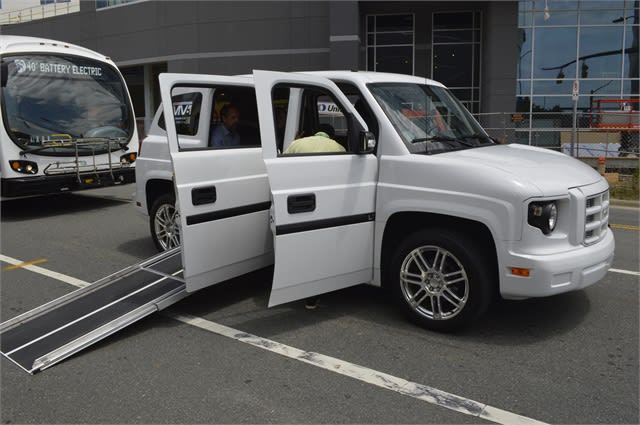
MV-1
MV-1
Mobility Ventures, manufacturer of the MV-1 purpose-built wheelchair accessible vehicle, will join approximately 150 other disability advocates to raise awareness of issues that affect the disability community as part of United Spinal Association's fifth annual Roll on Capitol Hill.
Mobility Ventures will be exhibiting at Roll on Capitol Hill, which takes place June 26 to 29, 2016, and highlighting the benefits of accessible transportation. The lack of accessible, affordable transportation is a growing problem for the estimated 20 million Americans who rely on wheelchairs, canes and other ambulatory devices, according to the company. Disability advocates are increasingly calling on transit systems, taxi and car-sharing services to add accessible vehicles like the MV-1 to their fleets.
In the D.C. metro, an estimated 390,000 people live with ambulatory disabilities. The D.C. Taxicab Commission (DCTC) added 16 MV-1s last year and is offering grants to help offset the purchase of the vehicles to taxicab companies and drivers. MV-1 vehicles are also used by the Washington Metropolitan Area Transit Authority (WMATA) as a part of its MetroAccess service.
"Mobility is critical to almost every aspect of our lives – our ability to work, to socialize, to go to doctor's appointments – it is truly synonymous with freedom and independence," said Pat Kemp, executive VP, Mobility Ventures. "Improving access to transportation for people with disabilities will transform lives and communities."
Roll on Capitol Hill will bring wheelchair users, clinicians and United Spinal members to Washington, D.C. to meet with Members of Congress and staff to discuss policies that improve the health, independence, and quality of life of people with disabilities.
"On this 70th anniversary year, what began in 1946 as a small, determined group of World War II veterans advocating for greater civil rights and independence in New York City, has spawned the most significant grassroots policy initiative for people with disabilities in the nation," said Jim Weisman, United Spinal's president/CEO.
Mobility Ventures is a sponsor of the event and working with the DCTC to provide transportation to event participants.
More Management

LIT Marks 10-Year Milestone at Annual Summit
Hosted by the COTA from September 10 to 13, the Summit carried the theme “Celebrating 10 Years of Excellence, Leadership, and Impact,” with every part of the program honoring the people, agencies, and partners who built LIT over its first decade.
Read More →
People Movement: Dan Dipert Coaches Adds Third-Generation Leader, Keolis Names New Valley Metro VP/GM, and More
In this edition, we also cover recent appointments and announcements at the Wabtec, SilverRide, HNTB, and more, showcasing the individuals helping to shape the future of transportation.
Read More →
METRO Opens Submissions for 2026 Motorcoach Awards
Nominations are now being accepted for METRO Magazine’s Operator of the Year and Innovative Operator of the Year awards.
Read More →

New York MTA Advances Final Contract for Second Avenue Subway Expansion
Contract Four is the largest in the Second Avenue Subway Phase 2 project and includes construction of station infrastructure, tracks, and signals for the subway expansion, MTA officials said. Work on Contract Four will begin in 2027.
Read More →
Transit Agencies Highlight Safety Gains at National Summit
Leaders from 15 major transit systems shared crime-reduction results and safety initiatives while discussing the role of continued federal support.
Read More →
NITA Names New Leadership, Expands Reduced-Fare Program at First Board Meeting
The new regional transit authority appointed its first board chair and interim executive director while extending reduced fares across CTA, Metra, and Pace for eligible riders.
Read More →
Beyond the Checklist: A Structured Approach to Transit Maintenance
Reliability-Centered Maintenance helps transit agencies move beyond routine checklists to focus limited resources on the assets and failures that have the greatest impact on safety, reliability, and service.
Read More →
APTA 2026 Nominating Committee Selects Leadership Slate, Names Chair and Vice Chair Nominees
Leadership changes will help shape the association’s priorities and its representation of the transportation industry during the 2026–2027 term.
Read More →
DART Launches Major Security, Fare Enforcement Initiative
The 90-day demonstration will deploy coordinated security teams at five light rail stations while testing controlled access and gathering data to guide future investments.
Read More →
Advancing Fare Collection Through Technology and Innovation
Learn about delivering 1300 gates at 91 stations while managing fare evasion. Explore the large scale deployment, solution customization and real-world results that affect the region. Prepare for deployment in your region now.
Read More →