



New York MTA Approves Resubmitting Historic Five-Year Capital Plan
The proposed plan will now be resubmitted to the MTA Capital Program Review Board in Albany, signaling a major step forward for what MTA officials are calling the agency's most rigorously developed capital program.

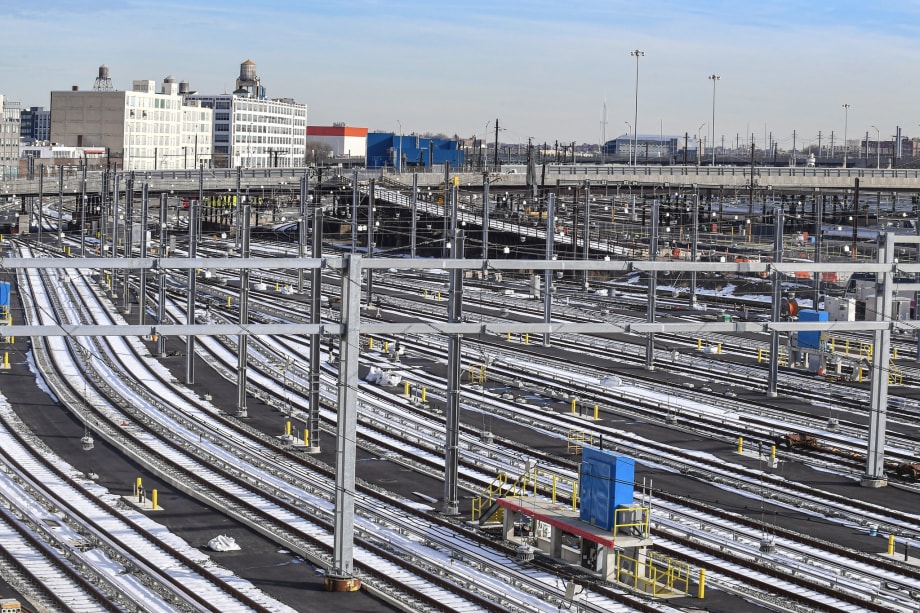
The plan is grounded in the Twenty-Year Needs Assessment, the MTA’s most comprehensive system-wide evaluation to date, and emphasizes investments that prioritize state of good repair, system modernization, and long-term sustainability.
Photo: New York MTA/Marc A. Hermann
The New York Metropolitan Transportation Authority (MTA) board formally approved a revised $68.4 billion Capital Plan for 2025–2029, following the allocation of state funding in the newly passed New York State budget.
The proposed plan will now be resubmitted to the MTA Capital Program Review Board in Albany, signaling a major step forward for what MTA officials are calling the agency's most rigorously developed capital program.
A Historic Investment in Resilience, Reliability
The plan is grounded in the Twenty-Year Needs Assessment, the MTA’s most comprehensive system-wide evaluation to date, and emphasizes investments that prioritize state of good repair, system modernization, and long-term sustainability.
“This is the first capital plan based on a comprehensive review of the condition of this priceless system,” said MTA Chair/CEO Janno Lieber. “And it unapologetically puts the spotlight on maintaining and modernizing the infrastructure New Yorkers depend on every day.”
With aging assets across the subway, bus, commuter rail, bridge, and tunnel networks, the plan allocates funding toward:
Modernizing 75 miles of signaling.
Making 60 stations ADA accessible.
Rebuilding more than 80 power substations.
Installing new fare gates at 150 stations.
Enhancing station security and passenger information systems.
Overhauling the Grand Central Artery.
Upgrading key train yards, shops, and substations.
Initial phases of work are already underway, including signal modernization along the Fulton and Liberty lines, early design for the Interborough Express, and climate resiliency projects on Metro-North’s Hudson Line.
Maximizing Efficiency with In-House Delivery
MTA Construction & Development (MTA C&D) is prepared to accelerate project delivery using its internal team, which has already initiated nearly half of the plan’s components.
A reassessment of scope has led to shifting additional responsibilities in-house, such as barrier installations, component repairs, and substation work, yielding notable cost savings.
So far in 2025, the MTA has installed platform barriers at 19 stations, and it plans to complete 100 installations by the end of the year.
The Capital Program Review Board in Albany will finalize the proposed plan.
Once approved, MTA C&D is set to proceed at full speed with delivering the proposed upgrades, the agency said.
More Management

METRO Opens Submissions for 2026 Motorcoach Awards
Nominations are now being accepted for METRO Magazine’s Operator of the Year and Innovative Operator of the Year awards.
Read More →
New York MTA Advances Final Contract for Second Avenue Subway Expansion
Contract Four is the largest in the Second Avenue Subway Phase 2 project and includes construction of station infrastructure, tracks, and signals for the subway expansion, MTA officials said. Work on Contract Four will begin in 2027.
Read More →
Transit Agencies Highlight Safety Gains at National Summit
Leaders from 15 major transit systems shared crime-reduction results and safety initiatives while discussing the role of continued federal support.
Read More →

NITA Names New Leadership, Expands Reduced-Fare Program at First Board Meeting
The new regional transit authority appointed its first board chair and interim executive director while extending reduced fares across CTA, Metra, and Pace for eligible riders.
Read More →
Beyond the Checklist: A Structured Approach to Transit Maintenance
Reliability-Centered Maintenance helps transit agencies move beyond routine checklists to focus limited resources on the assets and failures that have the greatest impact on safety, reliability, and service.
Read More →
APTA 2026 Nominating Committee Selects Leadership Slate, Names Chair and Vice Chair Nominees
Leadership changes will help shape the association’s priorities and its representation of the transportation industry during the 2026–2027 term.
Read More →
DART Launches Major Security, Fare Enforcement Initiative
The 90-day demonstration will deploy coordinated security teams at five light rail stations while testing controlled access and gathering data to guide future investments.
Read More →
Advancing Fare Collection Through Technology and Innovation
Learn about delivering 1300 gates at 91 stations while managing fare evasion. Explore the large scale deployment, solution customization and real-world results that affect the region. Prepare for deployment in your region now.
Read More →
Game Day in Motion: Moving Millions During the 2026 World Cup
Between packed transit stations and team motorcoaches, see how agencies and operators across North America tackled the transportation demands of the 2026 FIFA World Cup.
Read More →
Surface Transportation Extension Averts Shutdown, Leaves Transit Funding Gap
The stopgap keeps federal transportation programs moving, but missing advance funding could complicate the transit and rail projects agencies are planning next.
Read More →