



New York MTA on Pace for Record-Breaking 2025 After Strong First Half
Amid a historic capital program focused on state-of-good-repair investments, subway safety also improved, with major crimes down 3.2% year-over-year and nearly 10% below 2019 levels.

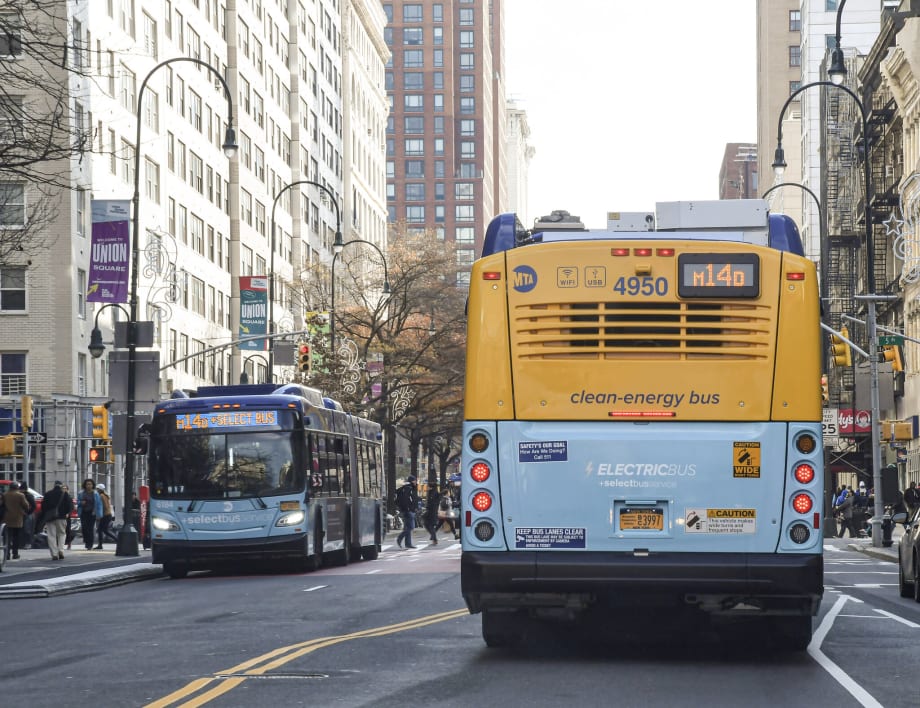
In the first half of 2025, performance across New York City Transit was at historic highs.
Photo: Marc A. Hermann

In the past several years, the MTA has increased service across the network.
Photo: METRO
The New York MTA is poised for a milestone year, driven by substantial gains in ridership, on-time performance, and customer satisfaction across NYCT, Long Island Rail Road (LIRR), and Metro-North (MNR) in the first half of 2025.
Amid a historic capital program focused on state-of-good-repair investments, subway safety also improved, with major crimes down 3.2% year-over-year and nearly 10% below 2019 levels.
“The new MTA is a business-like organization that delivers for customers, and the proof is in the data — soaring ridership, historic levels of on-time performance, and major improvements in customer satisfaction,” said MTA Chair/CEO Janno Lieber.
Increased Service Leading to Ridership Gains
In the past several years, the MTA has increased service across the network.
In 2023 and 2024, weekend and off-peak weekday service was increased on 12 subway lines, reducing wait times for millions of customers. The opening of Grand Central Madison in 2023 enabled a 41% increase in service on the LIRR.
Bus service has also improved across the city: service was increased on 8 express and 15 local routes with high ridership earlier this year, following the launch of congestion pricing. The Queens Bus Network Redesign, which began its first phase June 29, expands 24-hour service to hundreds of thousands of Queens bus riders and includes a $35 million annual investment in more service for the borough.
NYCT Hits Historic Highs
In the first half of 2025, performance across New York City Transit (NYCT) was at historic highs.
Weekday subway on-time performance in the first six months of 2025 was 83.7%, 2.4 percentage points higher than the same time last year and on track for the best non-pandemic year in recorded history.
Meanwhile, weekday subway delays are down 11% in 2025 compared to 2024, while weekend delays were down 14%.
Bus service delivery was above 95% each month of 2025, and bus speeds have improved over the first half of the year, thanks in part to reduced gridlock following the start of congestion pricing.
Across the board, customers are happier. In the biannual customer survey completed this spring, satisfaction for subways rose 8%, satisfaction for local buses rose 11%, and satisfaction for express buses rose 9% compared to the Fall of 2024.
Ridership has also surged in 2025. The first half of the year has seen record post-pandemic ridership for subways, buses, and paratransit.
In June, NYCT surpassed 106 million rides, up 10% from 2024, while 2025 subway ridership is up 8% compared to 2024 and 31% compared to 2022. Ridership gains have continued, with the first post-pandemic July days to exceed four million subway riders reached on July 9 and 10.
Bus ridership has also grown in 2025, with ridership up 12% compared to 2024. Bus paid ridership has grown in part following the MTA’s efforts to improve fare compliance through targeted deployments of fare enforcement teams. Combined, buses and subways have carried over 850 million customers in the first half of 2025.
Paratransit has also continued to see huge ridership and performance gains. In June, Paratransit served 1.3 million Paratransit riders on 904,000 completed trips, both above previous pre-COVID peaks, and delivered an on-time performance rate of 92 percent for the month. Customer satisfaction has remained high, with rates staying above 78% every month of 2025.
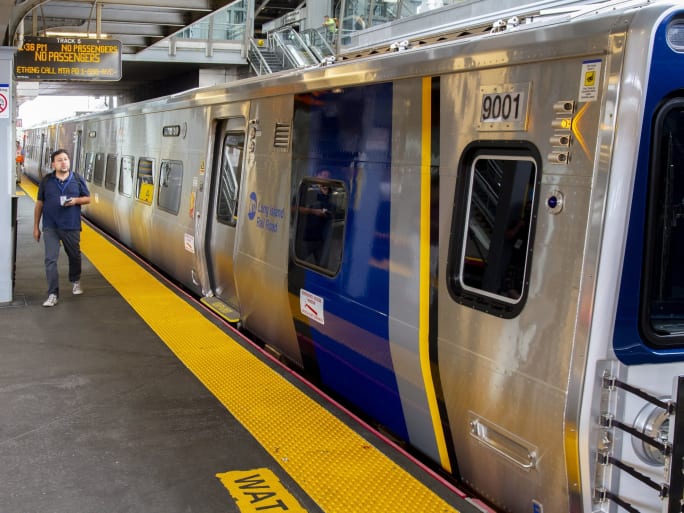
LIRR carried 6.9 million customers in June, representing 89% of pre-pandemic ridership — the best June since 2019.
Photo: LIRR
LIRR and MNR Improve On-Time Performance, Ridership
In June, LIRR hit a new post-pandemic high for weekday riders by averaging 266,047 weekday riders. On June 18, the agency set a new single-day post-pandemic ridership record, carrying 287,437 customers.
LIRR carried 6.9 million customers in June, representing 89% of pre-pandemic ridership — the best June since 2019. Year-to-date ridership on LIRR is up 9% compared to 2024 and up 64% from 2022.
LIRR also achieved the best June non-pandemic On-Time Performance in its history at 95.9%, up 1.4 percentage points from 2024.
On June 18, Metro-North carried nearly 259,000 riders, and the average weekday ridership for June was 235,450, both new post-pandemic highs. Year-to-date Metro-North ridership is up 6% compared to 2024 and up 63% compared to 2022.
Metro-North delivered an On-Time Performance rate of 98% in June, continuing its outstanding start to 2025. In the customer survey completed this spring, Metro-North received a satisfaction rating of 89% from customers, an increase of 4% from the Fall 2024 survey, while satisfaction among LIRR customers surged 11 percentage points from this time last year.
More Management

METRO Opens Submissions for 2026 Motorcoach Awards
Nominations are now being accepted for METRO Magazine’s Operator of the Year and Innovative Operator of the Year awards.
Read More →
New York MTA Advances Final Contract for Second Avenue Subway Expansion
Contract Four is the largest in the Second Avenue Subway Phase 2 project and includes construction of station infrastructure, tracks, and signals for the subway expansion, MTA officials said. Work on Contract Four will begin in 2027.
Read More →
Transit Agencies Highlight Safety Gains at National Summit
Leaders from 15 major transit systems shared crime-reduction results and safety initiatives while discussing the role of continued federal support.
Read More →

NITA Names New Leadership, Expands Reduced-Fare Program at First Board Meeting
The new regional transit authority appointed its first board chair and interim executive director while extending reduced fares across CTA, Metra, and Pace for eligible riders.
Read More →
Beyond the Checklist: A Structured Approach to Transit Maintenance
Reliability-Centered Maintenance helps transit agencies move beyond routine checklists to focus limited resources on the assets and failures that have the greatest impact on safety, reliability, and service.
Read More →
APTA 2026 Nominating Committee Selects Leadership Slate, Names Chair and Vice Chair Nominees
Leadership changes will help shape the association’s priorities and its representation of the transportation industry during the 2026–2027 term.
Read More →
DART Launches Major Security, Fare Enforcement Initiative
The 90-day demonstration will deploy coordinated security teams at five light rail stations while testing controlled access and gathering data to guide future investments.
Read More →
Advancing Fare Collection Through Technology and Innovation
Learn about delivering 1300 gates at 91 stations while managing fare evasion. Explore the large scale deployment, solution customization and real-world results that affect the region. Prepare for deployment in your region now.
Read More →
Game Day in Motion: Moving Millions During the 2026 World Cup
Between packed transit stations and team motorcoaches, see how agencies and operators across North America tackled the transportation demands of the 2026 FIFA World Cup.
Read More →
Surface Transportation Extension Averts Shutdown, Leaves Transit Funding Gap
The stopgap keeps federal transportation programs moving, but missing advance funding could complicate the transit and rail projects agencies are planning next.
Read More →