




Related: NY MTA to add 46 police officers trained in counterterrorism
NYC Transit records one-day subway ridership milestone
The new record day was one of five days in October when ridership exceeded the prior year’s record, and was one of 15 weekdays with ridership above six million.
December 11, 2015
3 min to read
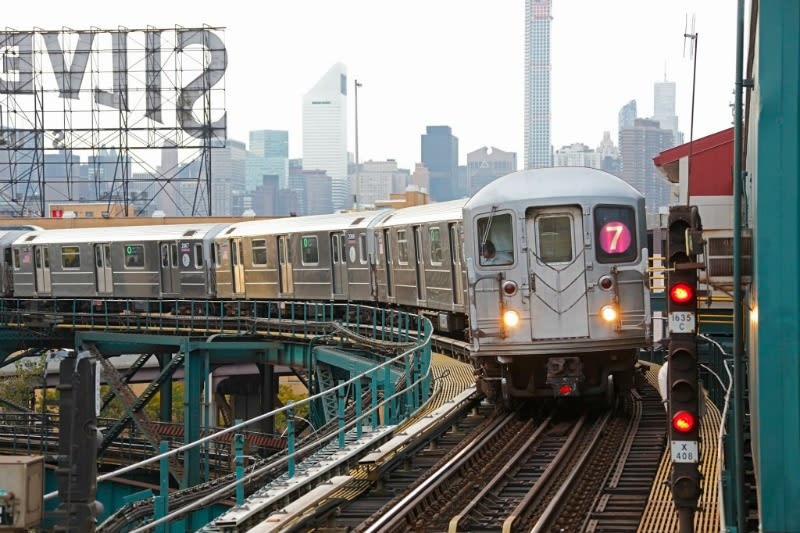
Preliminary data shows the New York Metropolitan Transportation Authority (MTA) reached a new modern record when 6,217,621 customers entered the MTA New York City Transit subway system on Thursday, Oct. 29. The subway system carried 50,000 more customers that day than at its previous record peak, just one year earlier.
“The relentless growth in subway ridership shows how this century-old network is critical to New York’s future,” said MTA Chairman/CEO Thomas F. Prendergast. “Our challenge is to maintain and improve the subways even as growing ridership puts more demands on the system. We are doing it thanks to the MTA Capital Program, which will allow us to bring meaningful improvements to our customers, such as real-time arrival information on the lettered subway lines, cleaner and brighter stations with new technology like Help Points, modern signal systems and almost 1,000 new subway cars.”
The new modern ridership record was set on the last Thursday in October, traditionally one of the system’s busiest days. The previous record of 6,167,165 was set Oct. 30, 2014. The new record day was one of five days in October when ridership exceeded the prior year’s record, and was one of 15 weekdays with ridership above six million. Daily subway ridership records have been kept since 1985, but the new record is believed to be the highest since the late 1940s.
October 2015’s average weekday subway ridership of 5.974 million was the highest of any month in over 45 years, and was 1.4% higher than October 2014. Approximately 80,000 more customers rode the subway on an average October 2015 weekday than just a year earlier — enough to fill more than 50 fully-loaded subway trains.
Ridership surged on the weekends as well, with the average weekend ridership higher than any October in over 45 years. On Oct. 31, 2015, the day of the Village Halloween Parade and a Mets World Series game, 3,730,881 customers rode the subway — making it the fifth-busiest Saturday on recent record.
Between 2010 and 2014, the subway system has added 440,638 daily customers, roughly the equivalent of the entire population of mid-sized cities like Miami or Raleigh, N.C. More customers have led to additional crowding on some lines, creating conditions in which trains are more likely to be delayed and delayed trains in turn affect more customers than in the past.
As ridership continues to soar, performing necessary maintenance and improvement work while providing good service has become a growing challenge. Work that is typically done overnight and on weekends now affects more riders as ridership grows during these off-peak hours.
The MTA has introduced short-term measures to improve train service this year, including Platform Controllers at strategic locations to help move customers on and off trains quickly, “step aside” boxes to encourage letting customers off the train before boarding, and staging more maintenance crews in locations to respond to problems quickly.
In the longer term, the MTA is adding subway capacity by installing communications-based train control (CBTC), a modern signaling system that allows trains to operate more closely together. CBTC is in operation on the L Subway line and is being installed on the 7 Subway line, while the next MTA Capital Program will expand CBTC work in Queens, the Bronx and Manhattan.
When the first phase of the Second Avenue Subway is completed next year, it will serve more than 200,000 customers each day and decrease crowding on the adjacent lines by as much as 13%, or 23,500 fewer customers on an average weekday.
More Management

LIT Marks 10-Year Milestone at Annual Summit
Hosted by the COTA from September 10 to 13, the Summit carried the theme “Celebrating 10 Years of Excellence, Leadership, and Impact,” with every part of the program honoring the people, agencies, and partners who built LIT over its first decade.
Read More →
People Movement: Dan Dipert Coaches Adds Third-Generation Leader, Keolis Names New Valley Metro VP/GM, and More
In this edition, we also cover recent appointments and announcements at the Wabtec, SilverRide, HNTB, and more, showcasing the individuals helping to shape the future of transportation.
Read More →
METRO Opens Submissions for 2026 Motorcoach Awards
Nominations are now being accepted for METRO Magazine’s Operator of the Year and Innovative Operator of the Year awards.
Read More →

New York MTA Advances Final Contract for Second Avenue Subway Expansion
Contract Four is the largest in the Second Avenue Subway Phase 2 project and includes construction of station infrastructure, tracks, and signals for the subway expansion, MTA officials said. Work on Contract Four will begin in 2027.
Read More →
Transit Agencies Highlight Safety Gains at National Summit
Leaders from 15 major transit systems shared crime-reduction results and safety initiatives while discussing the role of continued federal support.
Read More →
NITA Names New Leadership, Expands Reduced-Fare Program at First Board Meeting
The new regional transit authority appointed its first board chair and interim executive director while extending reduced fares across CTA, Metra, and Pace for eligible riders.
Read More →
Beyond the Checklist: A Structured Approach to Transit Maintenance
Reliability-Centered Maintenance helps transit agencies move beyond routine checklists to focus limited resources on the assets and failures that have the greatest impact on safety, reliability, and service.
Read More →
APTA 2026 Nominating Committee Selects Leadership Slate, Names Chair and Vice Chair Nominees
Leadership changes will help shape the association’s priorities and its representation of the transportation industry during the 2026–2027 term.
Read More →
DART Launches Major Security, Fare Enforcement Initiative
The 90-day demonstration will deploy coordinated security teams at five light rail stations while testing controlled access and gathering data to guide future investments.
Read More →
Sponsored•September 9, 2026
Advancing Fare Collection Through Technology and Innovation
Learn about delivering 1300 gates at 91 stations while managing fare evasion. Explore the large scale deployment, solution customization and real-world results that affect the region. Prepare for deployment in your region now.
Read More →