




RELATED: Agencies must step up to achieve transportation equity
NYPD Investigated for Alleged Racial Bias in Subway fare enforcement
Between October 2017 and June 2019, black and Hispanic New Yorkers received almost 70% of all civil summonses for fare evasion.
January 15, 2020
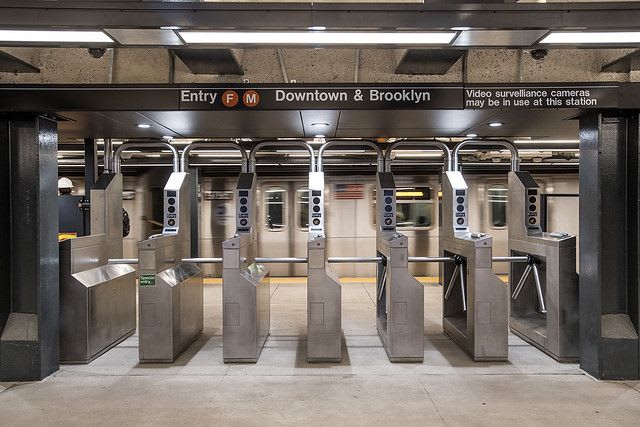
Between October 2017 and June 2019, black and Hispanic New Yorkers received almost 70% of all civil summonses for fare evasion, according to recent data.
Photo: Patrick J.Cashin-MTA
3 min to read
New York Attorney General Letitia James announced she is launching an investigation into whether the New York City Police Department (NYPD) has been targeting communities of color through its enforcement of the “theft of services” law and the Metropolitan Transit Authority’s (MTA) ‘fare evasion’ regulations.
In a letter to NYPD Police Commissioner Dermot Shea, Attorney General James requests fare evasion data and other information that may shine a light on whether officers have exhibited racial biases or engaged in discriminatory practices in their enforcement of these laws and regulations at subway stations throughout the city.
“We’ve all read the stories and seen the disturbing videos of men, women, and children being harassed, dragged away, and arrested by officers in our city’s subway system, which is why we are launching an investigation into this deeply troublesome conduct,” said Attorney General James in a statement. “If groups of New Yorkers have been unfairly targeted because of the color of their skin, my office will not hesitate to take legal action."
Current and former NYPD officers have recently alleged in sworn statements that — through at least 2015 — the NYPD had an unofficial policy of targeting black and Hispanic people for fare evasion and other low-level violations in the city’s subway system. But newly-published data indicates that this alleged policy may still continue today. Between October 2017 and June 2019, black and Hispanic New Yorkers received almost 70-percent of all civil summonses for fare evasion, even though they only account for slightly more than half of the city’s population. During that same period, they made up nearly 90-percent of arrests for fare evasion.
In her letter to Commissioner Shea, Attorney General James requests information detailing, but not limited to:
The number of officers assigned to every subway station throughout the city each day,
Any arrangements made between the NYPD and the MTA regarding enforcement of fare evasion laws,
Information pertaining to policies and training of NYPD officers on the enforcement of fare evasion laws, and
Additional data on notices, summonses, and arrests pertaining to fare evasion, broken down by race and age.
Ken Lovett, a senior adviser to MTA chairman Pat Foye, said in a statement that all customers "are entitled to fair and equal treatment under the law."
"Fare evasion is a $300 million annual problem that should be addressed in a way that does not unjustly target any specific group or community," Lovett said. "We are committed to assisting the attorney general with her inquiry in any way we can."
This Office of the New York State Attorney General has previously reviewed practices related to biases at the NYPD. In 2000, the office issued a report on the NYPD’s use of stop-and-frisk and issued a supplemental report in 2013 after a court found evidence of biased policing.
More Management

METRO Opens Submissions for 2026 Motorcoach Awards
Nominations are now being accepted for METRO Magazine’s Operator of the Year and Innovative Operator of the Year awards.
Read More →
New York MTA Advances Final Contract for Second Avenue Subway Expansion
Contract Four is the largest in the Second Avenue Subway Phase 2 project and includes construction of station infrastructure, tracks, and signals for the subway expansion, MTA officials said. Work on Contract Four will begin in 2027.
Read More →
Transit Agencies Highlight Safety Gains at National Summit
Leaders from 15 major transit systems shared crime-reduction results and safety initiatives while discussing the role of continued federal support.
Read More →

NITA Names New Leadership, Expands Reduced-Fare Program at First Board Meeting
The new regional transit authority appointed its first board chair and interim executive director while extending reduced fares across CTA, Metra, and Pace for eligible riders.
Read More →
Beyond the Checklist: A Structured Approach to Transit Maintenance
Reliability-Centered Maintenance helps transit agencies move beyond routine checklists to focus limited resources on the assets and failures that have the greatest impact on safety, reliability, and service.
Read More →
APTA 2026 Nominating Committee Selects Leadership Slate, Names Chair and Vice Chair Nominees
Leadership changes will help shape the association’s priorities and its representation of the transportation industry during the 2026–2027 term.
Read More →
DART Launches Major Security, Fare Enforcement Initiative
The 90-day demonstration will deploy coordinated security teams at five light rail stations while testing controlled access and gathering data to guide future investments.
Read More →
Sponsored•September 9, 2026
Advancing Fare Collection Through Technology and Innovation
Learn about delivering 1300 gates at 91 stations while managing fare evasion. Explore the large scale deployment, solution customization and real-world results that affect the region. Prepare for deployment in your region now.
Read More →
Game Day in Motion: Moving Millions During the 2026 World Cup
Between packed transit stations and team motorcoaches, see how agencies and operators across North America tackled the transportation demands of the 2026 FIFA World Cup.
Read More →
Surface Transportation Extension Averts Shutdown, Leaves Transit Funding Gap
The stopgap keeps federal transportation programs moving, but missing advance funding could complicate the transit and rail projects agencies are planning next.
Read More →