




RELATED: RTA approves 5-year 'Invest in Transit' strategic plan
Peer review finds Chicago's transit system ranks high in coverage, efficiency
According to the report, CTA, Pace, and Metra ranked in the top half of their peer groups for 14 of the 16 measures reviewed and in the top three for seven of those measures.
April 19, 2018
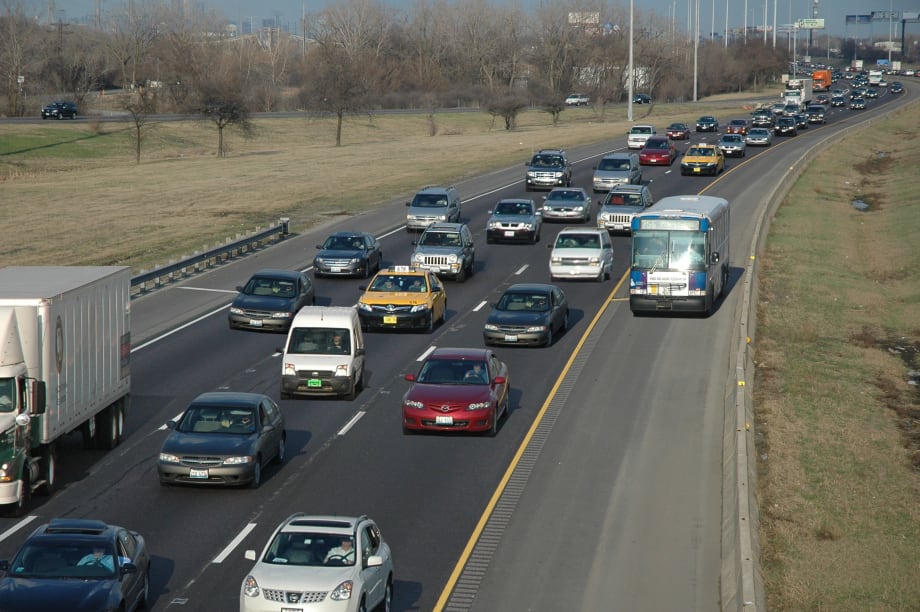
Pace retained its first-place ranking for operating cost per vehicle revenue hour for the eighth consecutive year and second-place rank for operating cost per passenger mile for the fifth year, measures of service efficiency and effectiveness.
Pace
3 min to read

Pace retained its first-place ranking for operating cost per vehicle revenue hour for the eighth consecutive year and second-place rank for operating cost per passenger mile for the fifth year, measures of service efficiency and effectiveness.
Pace
The Regional Transportation Authority (RTA) released its annual peer performance measure reports that examine Chicago Transit Authority (CTA), Metra, and Pace performance in relation to comparable peer systems around the country. The reports, which cover performance for the 2016 report year, show that the region’s system continues to perform well for measures relating to service coverage and efficiency and effectiveness.
The transit agencies ranked in the top half of their peer groups for 14 of the 16 measures reviewed and in the top three for seven of those measures. The region’s peer group consists of Atlanta, Boston, Dallas, Houston, Los Angeles, Miami, New York, Philadelphia, and Washington, DC.
“What we see with the regional peer review is that the Chicago region had a strong performance overall which is a testament to the hard work of the three transit agencies, who continue to excel in service to our riders,” said Leanne P. Redden, RTA executive director. “But the same report also shows many of our peers outspending us in terms of capital investment, which is a major concern when one looks at our state of good repair needs.”
The Regional Peer Review evaluates how the region’s transit system, as a whole, performs among the top 10 largest metropolitan regions in the U.S., with Chicago being the third largest by population. The sub-regional peer review examines how each of the transit agencies’ modes of transportation performs against five similar peer agencies. Both reports use data submitted to the Federal Transit Administration to ensure consistency and comparability.
Both reports use four categories for evaluating performance – Coverage, Efficiency and Effectiveness, Service Maintenance and Capital Investment, Solvency.
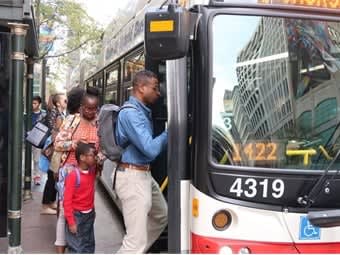
For the eighth consecutive year, CTA bus retained its top-ranked performance for operating cost per vehicle revenue hour.
Active Transportation Alliance
Regional Peer Review highlights include:
Coverage: Compared to its peer regions, Chicago placed in the top half for each measure of coverage. The Chicago region ranked second for annual ridership for the first time since regional reporting began, overtaking Los Angeles.
Efficiency and Effectiveness: Chicago retained its top-ranked position for operating cost per passenger mile for the sixth consecutive year, indicating the provision of cost-effective service throughout the region.
Maintenance and Capital Investment:The Chicago region dropped three rank positions for the performance measure miles between major mechanical failures, decreasing 22% compared to 2015 and returning to fourth-place rank for this metric.
Solvency: On a per-passenger basis, Chicago’s ranking for capital expenditures dropped to sixth place; Chicago transit expends roughly 35% of what New York spends per resident for capital projects.
Sub-Regional Peer Review highlights include:
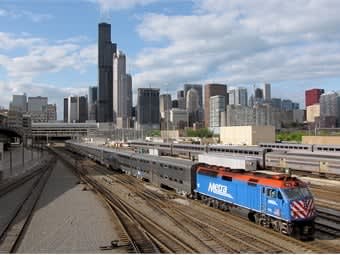
With an average fleet age of 24 years, Metra’s revenue vehicles are four years older than the peer average and rank fifth place compared to peers.
Amtrak Russ
CTA
CTA bus remained a top performer, exceeding or equaling the peer average in eight of 11 measures.
For the eighth consecutive year, CTA bus retained its top-ranked performance for operating cost per vehicle revenue hour.
CTA rail was top-ranked for two service efficiency and effectiveness measures: operating cost per vehicle revenue hour (for the eighth consecutive year) and operating cost per passenger mile (for the sixth consecutive year).
Metra
Metra retained its second-place ranking for operating cost per passenger trip for the sixth consecutive year. Metra moved up one rank position for two other measures of efficiency and effectiveness: operating cost per vehicle revenue hour and operating cost per passenger mile, for which Metra achieved top ranking.
With an average fleet age of 24 years, Metra’s revenue vehicles are four years older than the peer average and rank fifth place compared to peers.
Pace
Pace retained its first-place ranking for operating cost per vehicle revenue hour for the eighth consecutive year and second-place rank for operating cost per passenger mile for the fifth year, measures of service efficiency and effectiveness.
Pace vanpool performed favorably to the peer average for operating cost per vehicle revenue hour and operating cost per passenger trip.
Pace ADA paratransit performed as well as or better than the peer average for nine of ten performance measures.
More Management

METRO Opens Submissions for 2026 Motorcoach Awards
Nominations are now being accepted for METRO Magazine’s Operator of the Year and Innovative Operator of the Year awards.
Read More →
New York MTA Advances Final Contract for Second Avenue Subway Expansion
Contract Four is the largest in the Second Avenue Subway Phase 2 project and includes construction of station infrastructure, tracks, and signals for the subway expansion, MTA officials said. Work on Contract Four will begin in 2027.
Read More →
Transit Agencies Highlight Safety Gains at National Summit
Leaders from 15 major transit systems shared crime-reduction results and safety initiatives while discussing the role of continued federal support.
Read More →

NITA Names New Leadership, Expands Reduced-Fare Program at First Board Meeting
The new regional transit authority appointed its first board chair and interim executive director while extending reduced fares across CTA, Metra, and Pace for eligible riders.
Read More →
Beyond the Checklist: A Structured Approach to Transit Maintenance
Reliability-Centered Maintenance helps transit agencies move beyond routine checklists to focus limited resources on the assets and failures that have the greatest impact on safety, reliability, and service.
Read More →
APTA 2026 Nominating Committee Selects Leadership Slate, Names Chair and Vice Chair Nominees
Leadership changes will help shape the association’s priorities and its representation of the transportation industry during the 2026–2027 term.
Read More →
DART Launches Major Security, Fare Enforcement Initiative
The 90-day demonstration will deploy coordinated security teams at five light rail stations while testing controlled access and gathering data to guide future investments.
Read More →
Sponsored•September 9, 2026
Advancing Fare Collection Through Technology and Innovation
Learn about delivering 1300 gates at 91 stations while managing fare evasion. Explore the large scale deployment, solution customization and real-world results that affect the region. Prepare for deployment in your region now.
Read More →
Game Day in Motion: Moving Millions During the 2026 World Cup
Between packed transit stations and team motorcoaches, see how agencies and operators across North America tackled the transportation demands of the 2026 FIFA World Cup.
Read More →
Surface Transportation Extension Averts Shutdown, Leaves Transit Funding Gap
The stopgap keeps federal transportation programs moving, but missing advance funding could complicate the transit and rail projects agencies are planning next.
Read More →