



SEPTA Budget Signals New Evolution for Agency
For the first time, the authority’s Operating and Capital Budget Proposals are being presented as an integrated document on a modern web platform, which is ADA compliant to ensure that people with visual or hearing impairments can navigate SEPTA’s budget data.

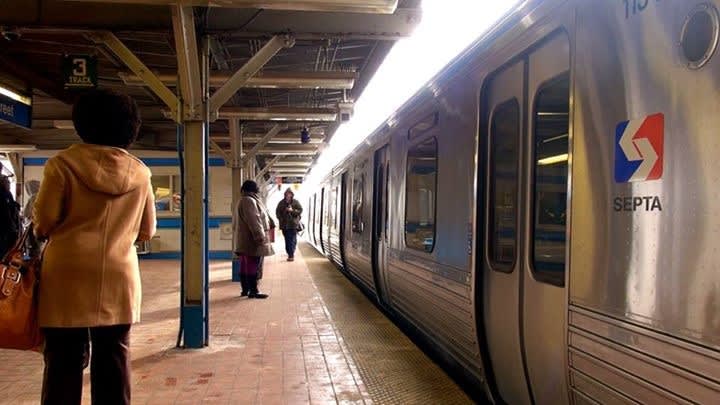
Since November 2021, SEPTA has secured $524.3 million of the $957 million in IIJA discretionary funding awarded to the region.
Photo: SEPTA
SEPTA is proposing a total budget of $2.6 billion for Fiscal Year 2025 — a $1.74 billion Operating Budget and $922.8 million Capital Budget.
For the first time, the authority’s Operating and Capital Budget Proposals are being presented as an integrated document on a modern web platform, which is ADA compliant to ensure that people with visual or hearing impairments can navigate SEPTA’s budget data.
Infusion in SEPTA’s Budget
Gov. Josh Shapiro’s proposed $283 million annual statewide operating investment in public transportation, including $161 million for SEPTA, would be Pennsylvania’s largest transit funding increase in more than a decade.
SEPTA’s budget assumes the state funding plan passes the General Assembly as proposed, and with a historic increase of $24 million in local match tied to it, SEPTA would avoid devastating service cuts and fare increases that would cripple mobility across southeastern Pennsylvania.
“With the additional funding in place, SEPTA is poised to make historic investments,” said SEPTA CEO/GM Leslie S. Richards. “These investments will propel SEPTA forward and help continue to grow ridership, with more than 700,000 daily customers representing 70% of pre-COVID ridership levels — and climbing.”
SEPTA’s Budget Proposal
The $1.74 billion Operating Budget Proposal includes a doubling in funding for safe, clean, and secure initiatives since Fiscal Year 2022 — a total of $72 million that includes funding for 40 more police officers, 30 more safety professionals, and 100 more cleaners.
The proposal also features the ongoing expansion of SEPTA Key Advantage, which now has 50 partners and 91,000 participants, as well as SEPTA’s Efficiency and Accountability Program, which has already recognized $50.2 million in annual recurring benefits.
The $922.8 million Capital Budget Proposal is part of an all-time high $14 billion 12-year Capital Program, enabling the largest-ever investments in improved safety, cleanliness, and security — supported by the Infrastructure Investment & Jobs Act (IIJA). The proposal includes new full-length fare gates to reduce fare evasion and new cleaning equipment to support the expanded cleaning staff.
By the end of the 12-year program, all Broad Street Line, Market-Frankford Line, and Trolley trips will be through an accessible station — compared to 61% today.
SEPTA continues to operate one of the oldest rail fleets in the country, and for the first time, this budget funds at least a partial replacement of each aging fleet. The Broad Street Line, Market-Frankford Line, and Trolley fleet replacements are all fully funded, while the Regional Railcar fleet replacement is partially funded.
The investments are bolstered by historic success in competitive grant programs, including a recent $317 million grant from the Federal Transit Administration to replace the Market-Frankford Line fleet, which is more than three times larger than any competitive grant that SEPTA has ever received.
Since November 2021, SEPTA has secured $524.3 million of the $957 million in IIJA discretionary funding awarded to the region.
“Despite higher-than-ever funding levels, SEPTA remains significantly below peer regions in annual transit capital investment,” said Richards. “Southeastern Pennsylvania is leaving money on the table. Additional local funding is needed as a match on the highly competitive federal grant opportunities that are available through the IIJA.”
More Management

METRO Opens Submissions for 2026 Motorcoach Awards
Nominations are now being accepted for METRO Magazine’s Operator of the Year and Innovative Operator of the Year awards.
Read More →
New York MTA Advances Final Contract for Second Avenue Subway Expansion
Contract Four is the largest in the Second Avenue Subway Phase 2 project and includes construction of station infrastructure, tracks, and signals for the subway expansion, MTA officials said. Work on Contract Four will begin in 2027.
Read More →
Transit Agencies Highlight Safety Gains at National Summit
Leaders from 15 major transit systems shared crime-reduction results and safety initiatives while discussing the role of continued federal support.
Read More →

NITA Names New Leadership, Expands Reduced-Fare Program at First Board Meeting
The new regional transit authority appointed its first board chair and interim executive director while extending reduced fares across CTA, Metra, and Pace for eligible riders.
Read More →
Beyond the Checklist: A Structured Approach to Transit Maintenance
Reliability-Centered Maintenance helps transit agencies move beyond routine checklists to focus limited resources on the assets and failures that have the greatest impact on safety, reliability, and service.
Read More →
APTA 2026 Nominating Committee Selects Leadership Slate, Names Chair and Vice Chair Nominees
Leadership changes will help shape the association’s priorities and its representation of the transportation industry during the 2026–2027 term.
Read More →
DART Launches Major Security, Fare Enforcement Initiative
The 90-day demonstration will deploy coordinated security teams at five light rail stations while testing controlled access and gathering data to guide future investments.
Read More →
Advancing Fare Collection Through Technology and Innovation
Learn about delivering 1300 gates at 91 stations while managing fare evasion. Explore the large scale deployment, solution customization and real-world results that affect the region. Prepare for deployment in your region now.
Read More →
Game Day in Motion: Moving Millions During the 2026 World Cup
Between packed transit stations and team motorcoaches, see how agencies and operators across North America tackled the transportation demands of the 2026 FIFA World Cup.
Read More →
Surface Transportation Extension Averts Shutdown, Leaves Transit Funding Gap
The stopgap keeps federal transportation programs moving, but missing advance funding could complicate the transit and rail projects agencies are planning next.
Read More →