




Keep Reading: How TriMet is Leading the Way with Solar-Powered Digital Signage
Survey, Open Houses to Guide TriMet Service Reductions
According to the agency, taking action now to close a $300 million budget gap will enable TriMet to continue providing safe and reliable public transit service.
September 26, 2025
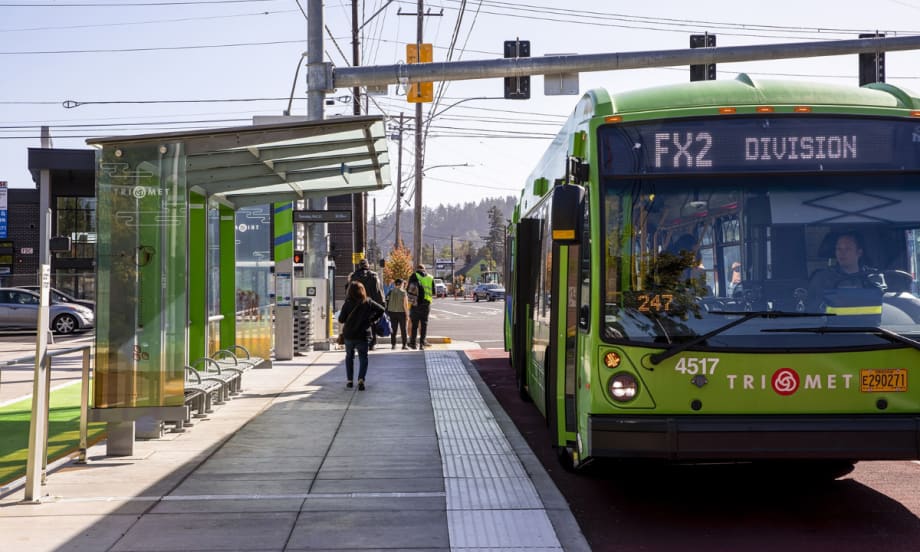
Starting on November 30, TriMet will begin reducing the frequency of bus arrivals on a handful of lines during times when fewer people are riding.
Photo: TriMet
2 min to read
TriMet is aiming to reduce its spending to close a $300 million annual budget gap, due to years of rising costs and decreased revenue from fares. The agency has begun making administrative cuts that may include layoffs, but "we also need to cut service to bring expenses in line with our revenue."
By taking action now, TriMet is ensuring it has sufficient funds to cover bus and rail service in the future, which allows it to continue providing transit to its riders who rely on it to access jobs, schools, services, and other destinations across its 533-square-mile service district.
According to a release from TriMet Public Information Officer Mark Miller, starting on November 30, and again on March 1, the agency will reduce the frequency of bus arrivals on a select number of lines. Larger cuts will be needed to reduce service by at least 10%.
TriMet has launched an online survey and will be holding open houses in October. The online survey, accessed through trimet.org/servicecuts, asks people to weigh in on several options for TriMet to cut service and save money.
TriMet Faces Fiscal Cliff Without Action
Starting on November 30, TriMet will begin reducing the frequency of bus arrivals on a handful of lines during times when fewer people are riding. Reducing bus or MAX service would also impact some LIFT Paratransit riders.
Similar frequency cutbacks are planned for March 2026 on a few more bus lines, ahead of deeper cuts in late 2026 and late 2027. Feedback received through the online survey and open houses will help TriMet shape its future service.
TriMet is seeking respondents to weigh in on options that involve:
Reducing the frequency of bus or MAX train arrivals, all day or during specific hours.
Eliminating or reducing service during lower ridership times or in areas with fewer riders.
Removing lines that overlap with other services.
Ending support to other transit providers that connect with TriMet service.
TriMet's Service Priorities Survey will stay open through October 31, 2025. Feedback will help inform service proposals that we will share for another comment period in January/February 2026.
"Unless we take action now to reduce spending — including by cutting some transit service — TriMet will hit a 'fiscal cliff' in the coming years," Miller wrote in a statement. "To avoid a worst-case scenario, we're cutting our internal spending and cutting service to match our expenses with our revenues now. If we allow our budget gap to keep growing, we would be forced to make more drastic cuts in the future."
More Management

LIT Marks 10-Year Milestone at Annual Summit
Hosted by the COTA from September 10 to 13, the Summit carried the theme “Celebrating 10 Years of Excellence, Leadership, and Impact,” with every part of the program honoring the people, agencies, and partners who built LIT over its first decade.
Read More →
People Movement: Dan Dipert Coaches Adds Third-Generation Leader, Keolis Names New Valley Metro VP/GM, and More
In this edition, we also cover recent appointments and announcements at the Wabtec, SilverRide, HNTB, and more, showcasing the individuals helping to shape the future of transportation.
Read More →
METRO Opens Submissions for 2026 Motorcoach Awards
Nominations are now being accepted for METRO Magazine’s Operator of the Year and Innovative Operator of the Year awards.
Read More →

New York MTA Advances Final Contract for Second Avenue Subway Expansion
Contract Four is the largest in the Second Avenue Subway Phase 2 project and includes construction of station infrastructure, tracks, and signals for the subway expansion, MTA officials said. Work on Contract Four will begin in 2027.
Read More →
Transit Agencies Highlight Safety Gains at National Summit
Leaders from 15 major transit systems shared crime-reduction results and safety initiatives while discussing the role of continued federal support.
Read More →
NITA Names New Leadership, Expands Reduced-Fare Program at First Board Meeting
The new regional transit authority appointed its first board chair and interim executive director while extending reduced fares across CTA, Metra, and Pace for eligible riders.
Read More →
Beyond the Checklist: A Structured Approach to Transit Maintenance
Reliability-Centered Maintenance helps transit agencies move beyond routine checklists to focus limited resources on the assets and failures that have the greatest impact on safety, reliability, and service.
Read More →
APTA 2026 Nominating Committee Selects Leadership Slate, Names Chair and Vice Chair Nominees
Leadership changes will help shape the association’s priorities and its representation of the transportation industry during the 2026–2027 term.
Read More →
DART Launches Major Security, Fare Enforcement Initiative
The 90-day demonstration will deploy coordinated security teams at five light rail stations while testing controlled access and gathering data to guide future investments.
Read More →
Sponsored•September 9, 2026
Advancing Fare Collection Through Technology and Innovation
Learn about delivering 1300 gates at 91 stations while managing fare evasion. Explore the large scale deployment, solution customization and real-world results that affect the region. Prepare for deployment in your region now.
Read More →