




Read More: TransLink Announces 3 BRT Corridors for Metro Vancouver
TransLink Receives Approval for First Phase of Transit Expansion Plan
The federal budget submission requests funding to support the building of three new Bus Rapid Transit (BRT) projects, expansion of TransLink’s bus fleet, and more.
November 27, 2023
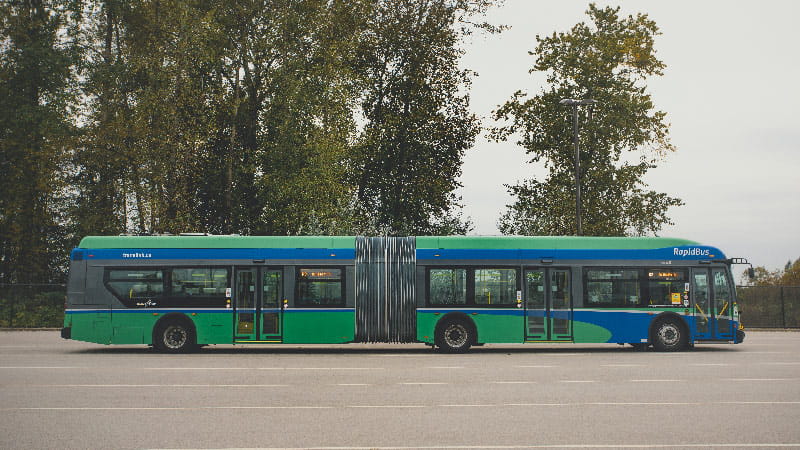
Metro Vancouver’s transit services are essentially frozen at 2019 levels even as the region’s population has grown by almost 200,000 between 2019 and 2023.
Photo: TransLink
3 min to read
The TransLink Mayors’ Council confirmed the projects and investments to be included in the first phase of the Access for Everyone plan and approved a submission to the federal Minister of Finance calling for the government to join the region and the province in developing a new funding model for TransLink, according to the agency's news release.
The federal budget submission requests funding to support the building of three new Bus Rapid Transit (BRT) projects, expansion of TransLink’s bus fleet, additional bus depot capacity, active transportation, and road safety projects, as well as initial funding for the Golden Ears Way BRT-readiness and goods-movement project.
The Mayors’ Council said it is urging the federal government to join the provincial government and TransLink in developing a more sustainable and equitable funding model for transit that shifts away from regressive funding sources such as fares and property taxes.
“The Mayors’ Council has agreed on a plan for the new and expanded transit services we will need to accommodate population growth and put affordable housing within reach for everyone in our communities,” said Mayor Brad West, chair of the Mayors’ Council. “Transit-oriented development is a key component of the province’s and region’s plan to respond to the housing affordability crisis, but without federal financial support and a sustainable funding model to help deliver additional transit into the future, we won’t be successful.”
Access for Everyone Plan
Metro Vancouver’s transit services are essentially frozen at 2019 levels even as the region’s population has grown by almost 200,000 between 2019 and 2023. The Access for Everyone plan is designed to deliver new rapid transit routes and additional bus service to support growth, affordability, and climate action.
In its submission ahead of the 2024-2025 federal budget, the Mayors’ Council is asking the Government of Canada to:
Support the building of three new Bus Rapid Transit (BRT) projects in the region, to be completed by 2027. Initial cost estimates for the BRT projects are $250-$300 million each (to be confirmed in final business cases in early 2025), with additional funding also needed to expand TransLink’s bus fleet and associated maintenance facilities.
Commit new capital funding by mid-2024 from the Permanent Transit Fund to support the immediate delivery of the first phase of the Access for Everyone Plan.
Join the working group between the Province of British Columbia and TransLink which launched in mid-2022 to develop a new transit funding model for TransLink.
“Time is running out. For TransLink to reduce overcrowding as soon as possible, and enable the substantial service expansion we need in the coming years, we must have both federal and provincial funding commitments for this first phase of Access for Everyone, no later than mid-2024,” said Mayor West. “Provincial and federal governments are calling on municipalities to accelerate the approval of new housing to address the affordability crisis, but we need additional transit infrastructure to serve residents moving into new housing developments.”
More Management

METRO Opens Submissions for 2026 Motorcoach Awards
Nominations are now being accepted for METRO Magazine’s Operator of the Year and Innovative Operator of the Year awards.
Read More →
New York MTA Advances Final Contract for Second Avenue Subway Expansion
Contract Four is the largest in the Second Avenue Subway Phase 2 project and includes construction of station infrastructure, tracks, and signals for the subway expansion, MTA officials said. Work on Contract Four will begin in 2027.
Read More →
Transit Agencies Highlight Safety Gains at National Summit
Leaders from 15 major transit systems shared crime-reduction results and safety initiatives while discussing the role of continued federal support.
Read More →

NITA Names New Leadership, Expands Reduced-Fare Program at First Board Meeting
The new regional transit authority appointed its first board chair and interim executive director while extending reduced fares across CTA, Metra, and Pace for eligible riders.
Read More →
Beyond the Checklist: A Structured Approach to Transit Maintenance
Reliability-Centered Maintenance helps transit agencies move beyond routine checklists to focus limited resources on the assets and failures that have the greatest impact on safety, reliability, and service.
Read More →
APTA 2026 Nominating Committee Selects Leadership Slate, Names Chair and Vice Chair Nominees
Leadership changes will help shape the association’s priorities and its representation of the transportation industry during the 2026–2027 term.
Read More →
DART Launches Major Security, Fare Enforcement Initiative
The 90-day demonstration will deploy coordinated security teams at five light rail stations while testing controlled access and gathering data to guide future investments.
Read More →
Sponsored•September 9, 2026
Advancing Fare Collection Through Technology and Innovation
Learn about delivering 1300 gates at 91 stations while managing fare evasion. Explore the large scale deployment, solution customization and real-world results that affect the region. Prepare for deployment in your region now.
Read More →
Game Day in Motion: Moving Millions During the 2026 World Cup
Between packed transit stations and team motorcoaches, see how agencies and operators across North America tackled the transportation demands of the 2026 FIFA World Cup.
Read More →
Surface Transportation Extension Averts Shutdown, Leaves Transit Funding Gap
The stopgap keeps federal transportation programs moving, but missing advance funding could complicate the transit and rail projects agencies are planning next.
Read More →