




Looking Back:TriMet's 9 Tips for Returning Riders
TriMet Announces Service Cuts, Other Reductions to Address Budget Shortfall
See how the agency’s budget reduction aims to preserve service and jobs as much as possible.
July 24, 2025
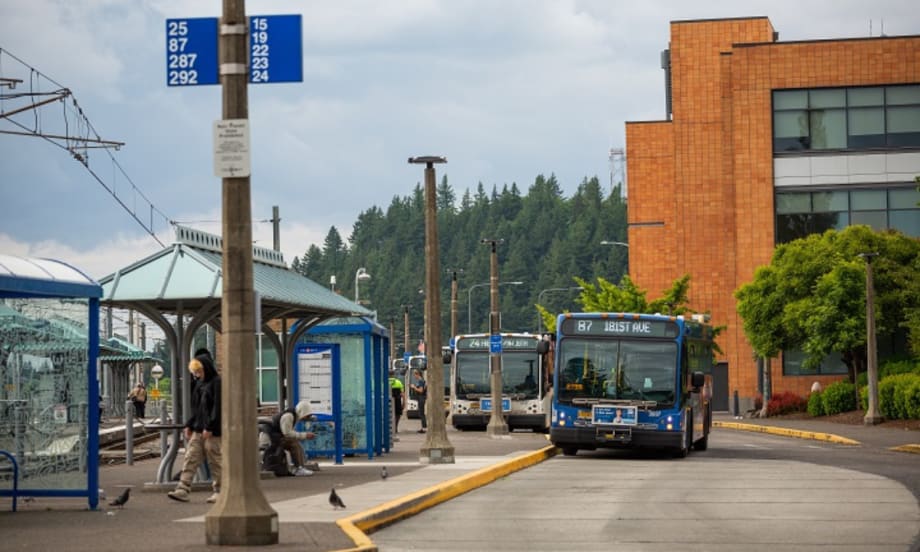
Without funding from HB2025, TriMet faces a growing deficit and will begin cutting service this year.
Photo: TriMet
3 min to read
In the wake of the Oregon Legislature’s failure to pass House Bill 2025 — the Oregon Transportation Reinvestment Package (TRIP) — TriMet will make a series of budget reductions beginning this year, including service cuts, to address a significant, growing fiscal challenge.
According to an agency release, the service cuts are necessary to avoid drastic fiscal cuts in the future. The failure of HB2025 leaves many of Oregon’s transit agencies without sufficient funding to sustain service levels in the years ahead.
TriMet will make service cuts this November and March 2026, with additional reductions necessary in the years ahead to begin closing a projected $300 million gap between the agency’s annual expenditures and revenues.
“We are facing a fiscal cliff in 2030, so we must act now to balance our budget for the long term,” said TriMet General Manager Sam Desue Jr. “As Oregon’s largest public transit provider, we have a tremendous responsibility to keep people in our region moving. Cutting service now means avoiding sudden, catastrophic cuts in the future.”
Funding Gap Forces TriMet to Cut Routes, Reduce Frequencies
TriMet’s fiscal year 2026 budget, adopted in May 2025, did not include expected funding from HB2025 and the Statewide Transportation Improvement fund. TriMet identified $24.2 million in discretionary spending cuts to address the resulting shortfall and plans further internal savings and reductions. The agency aims to balance its budget by July 1, 2028.
TriMet announced they “must” reduce their service this winter, with a series of further cuts over the next few years, resulting in a 10% overall cut to service by the end of August 2027. Without an increase in revenue, TriMet will be forced to cut another $48 million in service and other spending.
Initially, service cuts will focus on reducing frequencies on some bus lines. Following that, TriMet will need to eliminate some bus lines, adjust some bus routes, and adjust MAX service. Because of the bus and MAX service changes, the agency’s LIFT paratransit service will also be reduced.
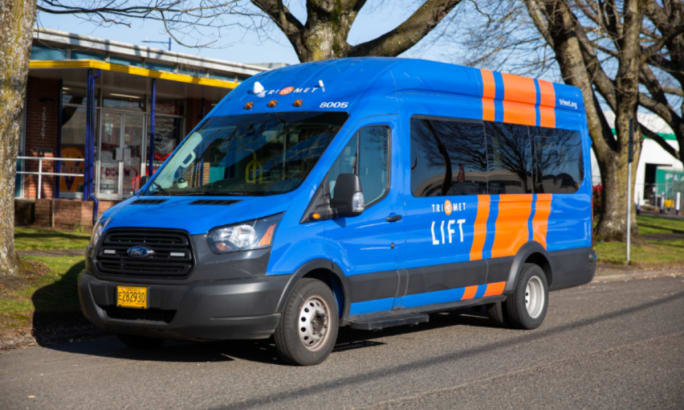
Planned bus and MAX service changes will also reduce TriMet’s LIFT paratransit service.
Photo: TriMet
TriMet Plans Staggered Service Cuts Starting November 2025
If TriMet is unsuccessful in increasing our revenue by fall 2027, more service cuts will be needed. Service cuts include:
November 2025
TriMet will reduce service on November 30, 2025, by cutting the frequency, or how often buses run, on the following:
Some Frequent Service lines during evenings and mornings.
FX2-Division bus line at night.
Up to eight other bus lines during all service hours.
March 2026:
TriMet will need to make additional service cuts, effective March 1, 2026. We will be engaging our riders and the public this fall to discuss these cuts, but the proposed cuts would include:
Eliminating some low ridership bus lines.
Eliminating evening service on lower ridership bus lines.
Changing routes on some bus lines to increase efficiency.
Reducing the MAX Green Line route. Green Line trains would only serve stations between Clackamas Town Center and Gateway Transit Center. Riders would need to transfer to other trains at Gateway Transit Center.
May 2026 Through August 2027
Further service cuts will be required between May 2026 and August 2027 to reach the needed 10% service reduction. Without an increase in revenue, TriMet will have to cut additional service above that 10% to balance our budget.
These service reductions will likely include:
Additional cuts to frequency on at least a dozen bus lines.
Eliminating other bus lines or portions of lines.
Reducing the frequency on all MAX lines during some parts of the day.
The anticipated service cuts outlined above add up to about an 18% overall reduction in MAX service — the largest cut to MAX in its history — and about an 8% reduction in bus service — the third largest cut since at least 1986.
TriMet will launch a dedicated web page at trimet.org/budget in the weeks ahead.
More Management

METRO Opens Submissions for 2026 Motorcoach Awards
Nominations are now being accepted for METRO Magazine’s Operator of the Year and Innovative Operator of the Year awards.
Read More →
New York MTA Advances Final Contract for Second Avenue Subway Expansion
Contract Four is the largest in the Second Avenue Subway Phase 2 project and includes construction of station infrastructure, tracks, and signals for the subway expansion, MTA officials said. Work on Contract Four will begin in 2027.
Read More →
Transit Agencies Highlight Safety Gains at National Summit
Leaders from 15 major transit systems shared crime-reduction results and safety initiatives while discussing the role of continued federal support.
Read More →

NITA Names New Leadership, Expands Reduced-Fare Program at First Board Meeting
The new regional transit authority appointed its first board chair and interim executive director while extending reduced fares across CTA, Metra, and Pace for eligible riders.
Read More →
Beyond the Checklist: A Structured Approach to Transit Maintenance
Reliability-Centered Maintenance helps transit agencies move beyond routine checklists to focus limited resources on the assets and failures that have the greatest impact on safety, reliability, and service.
Read More →
APTA 2026 Nominating Committee Selects Leadership Slate, Names Chair and Vice Chair Nominees
Leadership changes will help shape the association’s priorities and its representation of the transportation industry during the 2026–2027 term.
Read More →
DART Launches Major Security, Fare Enforcement Initiative
The 90-day demonstration will deploy coordinated security teams at five light rail stations while testing controlled access and gathering data to guide future investments.
Read More →
Sponsored•September 9, 2026
Advancing Fare Collection Through Technology and Innovation
Learn about delivering 1300 gates at 91 stations while managing fare evasion. Explore the large scale deployment, solution customization and real-world results that affect the region. Prepare for deployment in your region now.
Read More →
Game Day in Motion: Moving Millions During the 2026 World Cup
Between packed transit stations and team motorcoaches, see how agencies and operators across North America tackled the transportation demands of the 2026 FIFA World Cup.
Read More →
Surface Transportation Extension Averts Shutdown, Leaves Transit Funding Gap
The stopgap keeps federal transportation programs moving, but missing advance funding could complicate the transit and rail projects agencies are planning next.
Read More →