



WMATA revised budget restores some service, maintains 'balanced sacrifice'
GM Paul J. Wiedefeld’s revised plan would increase rail, bus, and parking fares for the fiscal year that begins July 1, as originally proposed.

Larry Levine
Larry Levine
Washington Metropolitan Area Transit Authority (WMATA) GM Paul J. Wiedefeld released a revised Fiscal Year 2018 budget plan that lessens the impact of bus and rail service changes for riders, while maintaining “balanced sacrifice” by distributing contributions between the funding partners, WMATA management and employees, and customers.
“[We] listened very carefully to our customers who said they would prefer to pay a little more than lose key rail and bus services,” said Wiedefeld. “I recognize that even with some relief for customers, this proposal is tough medicine for the region, jurisdictions, riders, and Metro employees, all of whom must contribute to balance this budget.”
More than 11,000 members of the public participated in WMATA’s budget surveys and public hearing, and 54% of them rated the GM’s original proposal as “very” or “somewhat” fair. By a margin of more than two-to-one, participants said they prefer fare increases over service cuts.
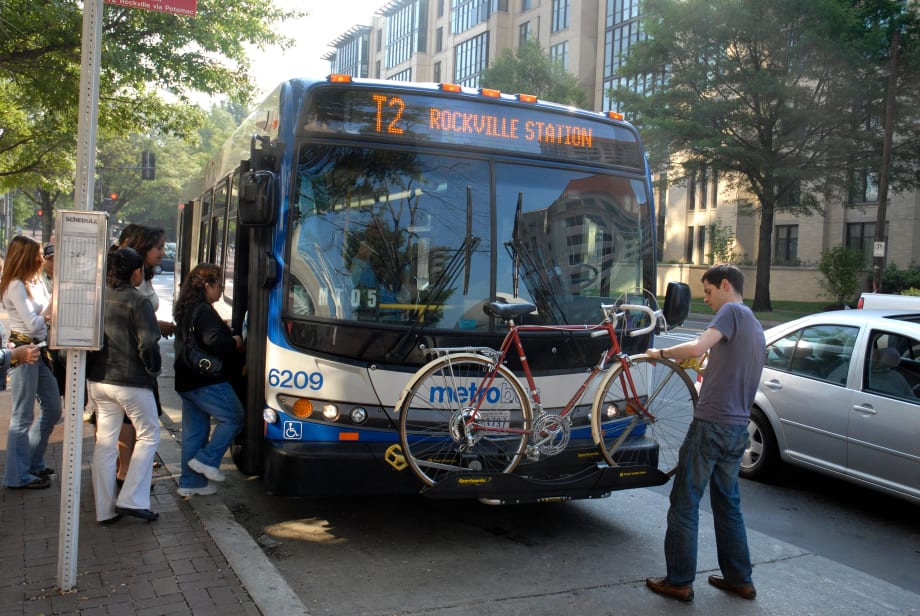
Wiedefeld’ s revised plan would increase rail, bus, and parking fares for the fiscal year that begins July 1, as originally proposed; however, in response to concerns from riders, WMATA would keep its seven-day bus pass priced at $17.50, thereby allowing frequent bus riders to avoid the quarter per trip fare increase.
Larry Levine
Other changes in the $1.82 billion revised proposal include:
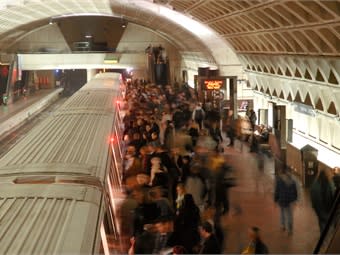
Rail service proposal would only reduce frequency in peak travel periods, such that trains would operate about every eight minutes on all lines.
Off-peak rail service reductions originally proposed would not be implemented.
More than $5 million in bus service changes have been withdrawn from the revised plan, mostly adding back routes in MD and VA that had been proposed for reduction or elimination.
No paratransit rider is left behind. All MetroAccess riders whose home address is eligible for service today, would continue to receive paratransit service. No bus routes are eliminated that would leave paratransit customers outside the current service zone.
Lifeline bus service is added to support riders impacted by the change in late-night rail service hours.
These revisions were made possible by funding some eligible rail car parts through the capital budget, thereby reducing pressure on the operating budget. Under the revised plan, WMATA is seeking increased support from the funding jurisdictions, from about $845 million in Fiscal Year 2017 to about $976 million in Fiscal Year 2018.
Notably, the budget would also enable Wiedefeld to use savings from his employee absenteeism initiative to establish a trust of up to $3 million for OPEB (unfunded retiree health care benefits).
The revised budget plan includes $1.25 billion for Fiscal Year 2018 capital investments as originally proposed to support WMATA’s safety and reliability improvements. The capital budget would invest in 7000-series cars to replace 1000-, 4000-, and 5000- series cars; rehabilitation and maintenance of the better-performing legacy fleet; investments in station escalators, elevators, and lighting; and new buses and paratransit vehicles.
The GM’s revised budget proposal will be considered by the Board’s Finance Committee at its meeting on Thursday, March 9. It is anticipated that the full board will vote on the FY18 budget at its meeting on March 23.
More Management

METRO Opens Submissions for 2026 Motorcoach Awards
Nominations are now being accepted for METRO Magazine’s Operator of the Year and Innovative Operator of the Year awards.
Read More →
New York MTA Advances Final Contract for Second Avenue Subway Expansion
Contract Four is the largest in the Second Avenue Subway Phase 2 project and includes construction of station infrastructure, tracks, and signals for the subway expansion, MTA officials said. Work on Contract Four will begin in 2027.
Read More →
Transit Agencies Highlight Safety Gains at National Summit
Leaders from 15 major transit systems shared crime-reduction results and safety initiatives while discussing the role of continued federal support.
Read More →

NITA Names New Leadership, Expands Reduced-Fare Program at First Board Meeting
The new regional transit authority appointed its first board chair and interim executive director while extending reduced fares across CTA, Metra, and Pace for eligible riders.
Read More →
Beyond the Checklist: A Structured Approach to Transit Maintenance
Reliability-Centered Maintenance helps transit agencies move beyond routine checklists to focus limited resources on the assets and failures that have the greatest impact on safety, reliability, and service.
Read More →
APTA 2026 Nominating Committee Selects Leadership Slate, Names Chair and Vice Chair Nominees
Leadership changes will help shape the association’s priorities and its representation of the transportation industry during the 2026–2027 term.
Read More →
DART Launches Major Security, Fare Enforcement Initiative
The 90-day demonstration will deploy coordinated security teams at five light rail stations while testing controlled access and gathering data to guide future investments.
Read More →
Advancing Fare Collection Through Technology and Innovation
Learn about delivering 1300 gates at 91 stations while managing fare evasion. Explore the large scale deployment, solution customization and real-world results that affect the region. Prepare for deployment in your region now.
Read More →
Game Day in Motion: Moving Millions During the 2026 World Cup
Between packed transit stations and team motorcoaches, see how agencies and operators across North America tackled the transportation demands of the 2026 FIFA World Cup.
Read More →
Surface Transportation Extension Averts Shutdown, Leaves Transit Funding Gap
The stopgap keeps federal transportation programs moving, but missing advance funding could complicate the transit and rail projects agencies are planning next.
Read More →