



Zero-Emission buses, other vehicles on track for 78% rise in models in 2020
Number expected to double by 2023.

By the end of 2020, there will be 169 different zero-emission medium- and heavy-duty vehicle models in commercial production compared to 95 models in 2019.
King County Transit
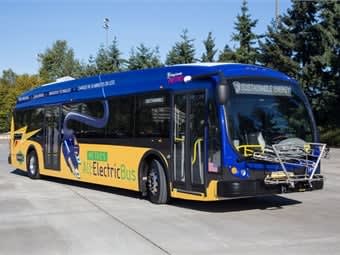
By the end of 2020, there will be 169 different zero-emission medium- and heavy-duty vehicle models in commercial production compared to 95 models in 2019.
King County Transit
The number of available and announced models of zero-emission buses, trucks, and off-road equipment in the U.S. and Canada is on track to rise nearly 78% by the end of 2020 compared to year-end 2019 — and that figure is expected to more than double by 2023. By the end of 2020, there will be 169 different zero-emission (ZE) medium- and heavy-duty vehicle models in commercial production compared to 95 models in 2019. That figure is expected to increase to 195 models by 2023 (full findings here).
The figures come from the Zero-Emission Technology Inventory (ZETI), a product of CALSTART’s Global Commercial Vehicle Drive to Zero program (Drive to Zero). Launched in March of 2020, ZETI is an interactive online tool that tracks the growth of the ZE commercial vehicles globally, as measured by model availability.
Additional new data from ZETI shows that ZE commercial models across nearly all vehicle types currently demonstrate driving range capabilities commensurate with user needs, and that longer ranges — including extreme ranges — are coming in the next two-to-three years.
“We are already seeing a healthy number of zero-emission transit and school buses rated for at least 100 miles, and the zero-emission trucks currently on the market offer similar ranges,” said Ben Mandel, CALSTART’s Northeast Regional Director who leads the ZETI team. “In the coming two-to-three years, we expect to see a growing number of zero-emission medium- and heavy-duty trucks in the 200-mile or greater range, with a few extra long-distance models greater than 600 miles by 2023.”
In addition to the new data from ZETI, CALSTART’s Drive to Zero program is releasing an updated version of its Policies and Actions Toolkit. The Toolkit, unveiled in 2019 at the Tenth Clean Energy Ministerial and Fourth Mission Innovation Ministerial in Vancouver, is a portfolio of the key policies, incentives and investments governments and industry can take to spur faster near- and zero-emission commercial vehicle deployment. Since its inception, the Toolkit has grown by roughly 50%, adding new policies, actions, and categories of drivers for ZE commercial vehicles.
ZETI and the Policies and Actions Toolkit are among the first set of tools developed by CALSTART’s Drive to Zero program. Drive to Zero unites key regions of change, along with leading manufacturers and fleet users, to collaboratively speed development and adoption through policies, financial incentives, infrastructure investments, and pilot projects that support early market success and create conditions for organic growth.
Drive to Zero’s goal is to make ZE commercial vehicles commercially viable by 2025 and dominant by 2040 in specific vehicle segments and regions through a strategy, the Beachhead Strategy, designed to catalyze the ZE commercial vehicle segment.
Industry leaders such as (but not limited to) BYD Motors, Siemens, The Lion Electric Co., New Flyer Industries, and governments in cities around the world have agreed to work collaboratively to achieve Drive to Zero’s goal to drive market viability for the ZE commercial vehicle sector in key applications and regions by 2025 and achieve full market penetration by 2040.
More Zero Emissions

Caltrain’s Electrification Drives a New Era of Ridership Growth
The railroad’s shift to electric service has brought more frequent trains, stronger customer satisfaction, and increased ridership, earning it APTA’s Outstanding Public Transportation System award.
Read More →
Building a Flexible Path to Transit Electrification with BAE's John Hroncich
John Hroncich discusses BAE Systems’ modular and scalable approach, lessons learned from decades of real-world operations, and how agencies can identify electrification strategies that fit their fleets.
Read More →
LA Metro Board Awards 220 Battery-Electric Bus Contract to ENC
The contract, which is the largest base award of battery-electric buses by a U.S. transit agency, will be built in Southern California, sustaining good jobs as LA prepares to welcome the world in 2028
Read More →
Public Transit Conference Returning to GFX in 2027, Call for Papers Now Open
The Call for Papers is now open, allowing transit agency professionals and industry experts to help shape the PTC educational program by submitting session ideas for consideration.
Read More →
Report: Transit Bus Manufacturing Supports 34,100 Jobs, $5.1B in GDP
The “Buses Mean Business” report examines the transit bus manufacturing industry’s economic footprint, supply chain, and rising demand for vehicle replacements.
Read More →
Ohio’s METRO RTA Turns Electric Buses into Mobile Power Sources at PorchROKR
See how three Gillig battery-electric buses powered festival stages while the agency’s new Park & Ride service carried approximately 1,000 attendees, demonstrating another potential use for transit agencies’ electric fleets.
Read More →
CALSTART and Forth Combine to Form Catalyst Mobility
The new name represents a renewed vision for the nonprofit focused on advancing clean, equitable, and affordable transportation solutions that move people and goods.
Read More →
Building a Flexible Path to Transit Electrification
John Hroncich discusses BAE Systems’ modular and scalable approach, lessons learned from decades of real-world operations, and how agencies can identify electrification strategies that fit their fleets.
Read More →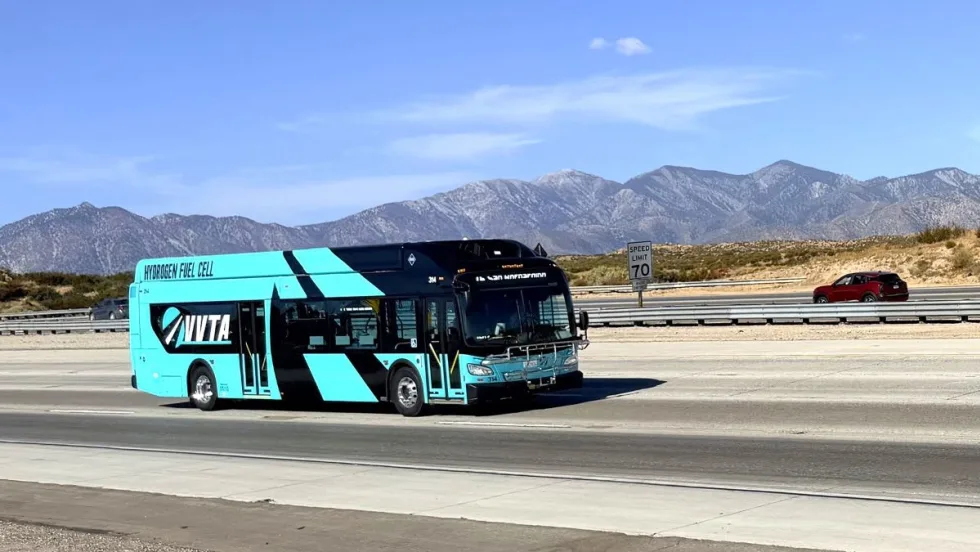
California's VVTA Begins Phased Rollout of Hydrogen Fuel Cell Buses
The agency is introducing 13 zero-emission buses into revenue service while evaluating performance across its urban, rural, and long-distance routes.
Read More →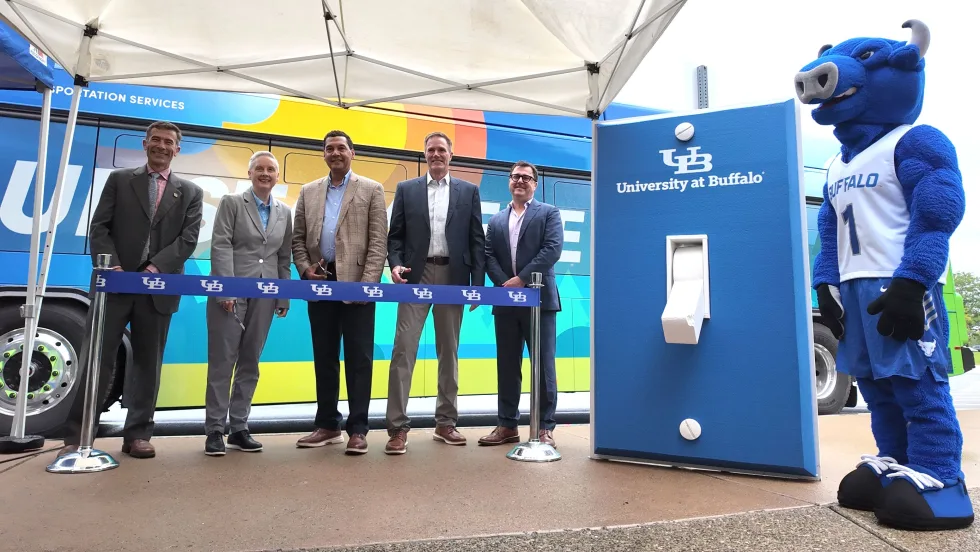
Inside Look: University at Buffalo Puts First 8 Electric Buses Into Stampede Service
UB, transportation solutions provider WeDriveU, and fleet electrification specialist Zenobē marked the deployment in the presence of students, university administrators, and local officials.
Read More →