Study Finds Robust Investment Benefits Chicago Transit, Non-Transit Users
The research, led by the U.S. Department of Energy’s ANL, found a robust investment in transit service would result in a 53% increase in transit boardings in the region, with a 9% travel time savings and 11% reduction in greenhouse gas emissions.
ANL modeling shows a robust investment in transit creates a huge, generative effect for the region with nearly $19 billion in annual household savings, a 13-time return on the investment in service provided.
Photo: Canva
3 min to read
Investments in regional transit service would create 13-times the return in value in household and travel times savings, according to new research made public at the Chicago Transit Board of Directors’ monthly meeting.
The research, led by the U.S. Department of Energy’s Argonne National Laboratory (ANL), found a robust investment in transit service would result in a 53% increase in transit boardings in the region (CTA, Metra, and Pace), with a 9% travel time savings and 11% reduction in greenhouse gas emissions.
Ad Loading...
“Transit has profound effects on the daily lives of Chicagoans, whether they travel by bus, rail, or car,” CTA President Dorval R. Carter Jr., said. “Investing in transit service supports equitable outcomes for Chicago’s diverse communities, spurring changes in activities, vehicle miles traveled, and pollution reduction across the city’s neighborhoods.”
The ANL Study
ANL modeled policy changes and infrastructure investments along with an increase in transit service in line with the investment levels proposed by the Chicago Metropolitan Agency for Planning’s PART study.
ANL considered changes in service (like completing the Red Line Extension project in south Chicago), infrastructure supportive of transit (bus rapid transit and bus priority lanes, speed policy), increasing overall service frequencies, and regional development (transit-oriented population shift).
The new research shows that with additional funding, at amounts that are currently in discussion among state legislators, will grow transit ridership through added service while also reducing travel times for all travel modes, including cars.
“Transit ridership increase is critical in supporting the economy and improving mobility and equity,” said Aymeric Rousseau, Argonne Vehicle and Mobility Systems Department Director. “Considering the transportation system as a whole, including technologies, policies, land use, and travel behavior is necessary to help guide future decisions.”
Ad Loading...
Delivering ROI
The modeling shows a robust investment in transit creates a huge, generative effect for the region with nearly $19 billion in annual household savings, a 13-time return on the investment in service provided.
The data additionally shows:
12% increase in activities (Chicago).
11% reduction in particulate matter emissions (PM2.5).
Equitable share of benefits experienced across race, gender, and Chicago neighborhoods.
The analysis provides powerful conclusions, that it is possible to benefit all transportation modes by investing in transit, which is a win for the mobility of everyone.
ANL’s modeling showed a 43% increase in mode share for transit in the long term, with an additional 16% mode share for active modes (like walking and biking), and a 14% reduction in driving, dispelling the notion that investing in transit is to the detriment of other mobility choices.
Ad Loading...
“A region with robust, consistent transit investment and policies that prioritize transit is truly visionary, and ANL's data shows that if given a chance, there can be meaningful mode shift and equitable mobility outcomes, without hurting walking, biking, or cars,” Carter said.
Previous research from ANL and the Massachusetts Institute of Technology showed the Chicago region would face severe consequences if its public transportation system was eliminated.
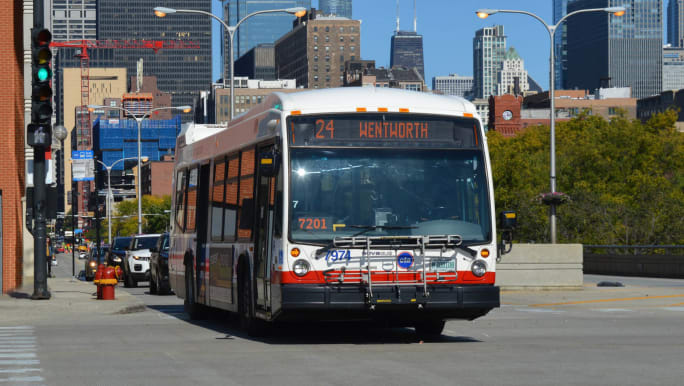
Photo: CTA/Nova Bus
Reinforcing Previous Studies
Previous research from ANL and the Massachusetts Institute of Technology (MIT) showed the Chicago region would face severe consequences if its public transportation system was eliminated, including increased vehicle congestion, reduced economic activity, and a disproportionate impact on underserved communities and minorities.
The removal of public transit would also have public health repercussions. Increased vehicle traffic would lead to higher emissions of a type of particulate matter demonstrated to increase respiratory disease, heart attacks and strokes.
The research by ANL and MIT showed the region’s transit system saves households over $35 billion in avoided costs per year — and without the robust transit system we have today, over two million household activities would be cancelled annually.
The project was funded through DOE’s Office of Policy and Vehicle Technologies Office in the Office of Energy Efficiency and Renewable Energy.
The new microtransit zone connects residents to key destinations as Charlotte Area Transit System rolls out the first phase of its 2055 Transit System Plan.
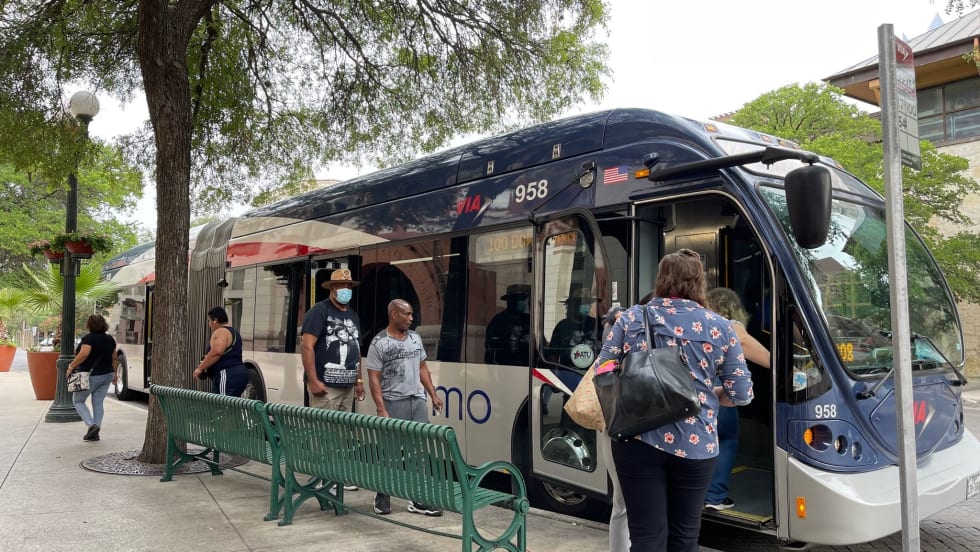
San Antonio's VIA Metropolitan Transit reported the highest bus ridership growth among major Texas transit systems. Federal Transit Administration data ranked it second among the nation's 50 largest transit systems.
Developed with support from the Standards Council of Canada, CSA D700 guides assessing climate-related risks and planning adaptation measures for transit and passenger rail systems.
ETA founder and CEO John Maglio explores the evolution of transit technology, the importance of reliable systems, and how stronger partnerships can help agencies improve operations and the passenger experience.
The new plan outlines improvements to service reliability, accessibility, communication, and the overall rider experience across Central Ohio's transit system.
Innovations in autonomous and zero-emission transportation, standout transit systems, and industry leadership took center stage among this year's honorees.
Transit leaders, manufacturers, and industry professionals gathered in Chicago to explore new technologies, share ideas, and discuss the future of public transportation.