




Denver RTD Reports Strong Gains in Customer Satisfaction and Service Performance
RTD Outlines Cost-Saving Measures and Debt Strategy in 2026 Budget
The agency will implement cost-saving measures in 2026 to maintain service levels, fulfill core functions, and retain its workforce.
October 16, 2025
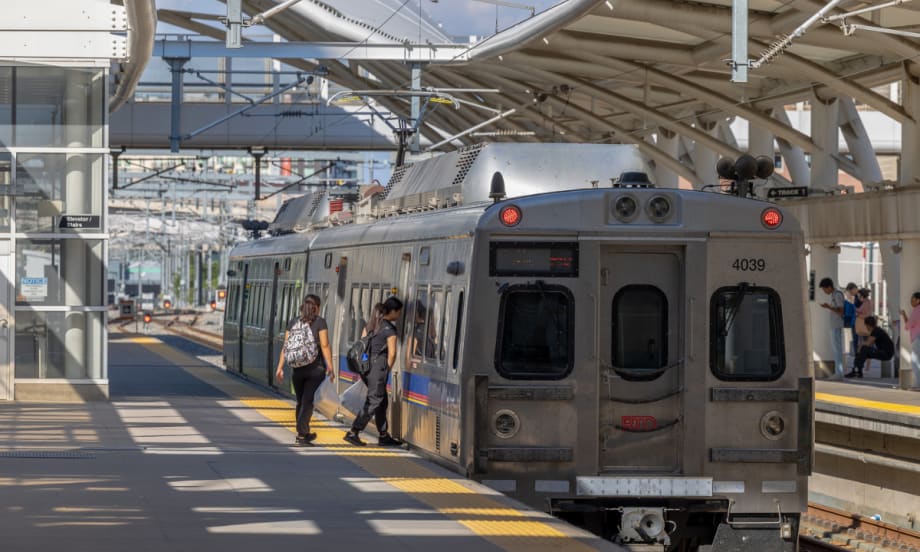
RTD is proposing a $1.3 billion budget for FY 2026, an amount that includes appropriations for operating expenses, state of good repair work, and debt service before carryforwards.
Photo: Regional Transportation District
4 min to read
The Regional Transportation District (RTD) is proposing a $1.3 billion budget for Fiscal Year 2026, which includes appropriations for operating expenses, state-of-good-repair work, and debt service before carryforwards.
The proposed 2026 budget was made available on Oct. 10 and presented during the RTD Board's Finance and Planning Committee on Tuesday evening. According to an agency release, the proposed budget aligns expenses with RTD's Strategic Plan, minimizes impacts to transit service delivery, and retains the agency's people power needed to deliver on its mission.
Tuesday's committee discussion included an overview of cost-saving recommendations under consideration in the 2026 proposed budget to "align expenditures to projected revenue."
"In the region and across the country, several businesses, organizations, and municipalities are navigating significant financial uncertainty," General Manager and CEO Debra A. Johnson said. "For many public transit agencies, including RTD, the near-term financial outlook is challenging and will require a deliberate and forward-thinking approach to balance expenses and revenue.
RTD Projects 6.4% Revenue Growth for 2026
Excluding the impact and timing of East Colfax Bus Rapid Transit (BRT), RTD's revenue budget is expected to increase 6.4% to $1,141 million over the 2025 budget. The agency's labor and purchased transportation expenses comprise more than two-thirds of the operating expenses in next year's proposed budget.
RTD's primary source of revenue, approximately three-fourths in the 2026 proposed budget, comes from the collection of a one-percent sales and use tax in the Denver metro area. The sales and use tax is subject to external market factors, including inflation, recessions, and the availability of goods and services.
The agency's finance team has been closely and regularly monitoring financial forecasts, year-to-date expenses, and revenue projections to guide the 2026 fiscal year budget development. The proposed budget also accounts for uncertainties in the financial climate for government agencies and private businesses alike.
The Business Research Division (BRD) of the University of Colorado Boulder's Leeds School of Business conducted independent third-party research to provide semi-annual sales and use tax forecast models to RTD in September 2025. The BRD projects a 1.2% increase in sales and use tax revenue in 2026, with a forecast of $877 million versus their latest forecast for 2025; $877 million in 2026 is 2.9% lower than the 2025 budget, as their projections for 2025 have declined since the 2025 budget was adopted in November 2024.
In the year ahead, this revenue amount is forecasted to comprise 77% of RTD's expected funding sources before the impact of East Colfax BRT. RTD uses BRD's medium forecast financial models to develop its annual budget and five-year financial forecast.
Budget Cuts, Savings, and Debt Management
Funding for service contracts that did not meet the anticipated budget costs for 2025 will be pared back in 2026, resulting in a projected $17 million savings. The agency's partnership program may also be streamlined for a $2 million savings.
The agency's closed (legacy) pension plan contribution for salaried employees is budgeted at $7 million in 2026, down from $15 million in 2025, since the plan is considered adequately funded. Other reductions in the proposed budget include delayed hiring for 81 vacant positions to yield $7 million in savings, and modifications to overtime are projected to deliver savings of $5 million.
RTD is not planning a reduction in force for 2026. However, the proposed budget does not include an allotment for a cost-of-living adjustment or merit increase for non-represented employees. In October 2025, the agency implemented a cost-saving measure impacting non-represented RTD employees who received a merit increase. The one-time lump sum distribution in 2025 resulted in $4 million in savings for 2026.
The 2026 proposed budget includes a recommended $20 million in debt financing for cutaway vehicles that are used for paratransit and FlexRide services. The plan proposes a defeasance, or prepayment, of $57 million in 2026 debt obligations to strengthen the agency's fiscal outlook.
The 2026 proposed budget includes no change to the FasTracks Internal Savings Account balance, which is currently $192 million. The capital replacement fund is proposed at $166 million, though it is not expected to be sufficient to cover capital requirements through 2030. The operating reserve of $227 million is set to cover three months of operating expenses according to fiscal policy.
The board will consider taking action on the proposed budget on Dec. 2 at 5:30 p.m., following a public hearing.
More Management

METRO Opens Submissions for 2026 Motorcoach Awards
Nominations are now being accepted for METRO Magazine’s Operator of the Year and Innovative Operator of the Year awards.
Read More →
New York MTA Advances Final Contract for Second Avenue Subway Expansion
Contract Four is the largest in the Second Avenue Subway Phase 2 project and includes construction of station infrastructure, tracks, and signals for the subway expansion, MTA officials said. Work on Contract Four will begin in 2027.
Read More →
Transit Agencies Highlight Safety Gains at National Summit
Leaders from 15 major transit systems shared crime-reduction results and safety initiatives while discussing the role of continued federal support.
Read More →

NITA Names New Leadership, Expands Reduced-Fare Program at First Board Meeting
The new regional transit authority appointed its first board chair and interim executive director while extending reduced fares across CTA, Metra, and Pace for eligible riders.
Read More →
Beyond the Checklist: A Structured Approach to Transit Maintenance
Reliability-Centered Maintenance helps transit agencies move beyond routine checklists to focus limited resources on the assets and failures that have the greatest impact on safety, reliability, and service.
Read More →
APTA 2026 Nominating Committee Selects Leadership Slate, Names Chair and Vice Chair Nominees
Leadership changes will help shape the association’s priorities and its representation of the transportation industry during the 2026–2027 term.
Read More →
DART Launches Major Security, Fare Enforcement Initiative
The 90-day demonstration will deploy coordinated security teams at five light rail stations while testing controlled access and gathering data to guide future investments.
Read More →
Sponsored•September 9, 2026
Advancing Fare Collection Through Technology and Innovation
Learn about delivering 1300 gates at 91 stations while managing fare evasion. Explore the large scale deployment, solution customization and real-world results that affect the region. Prepare for deployment in your region now.
Read More →
Game Day in Motion: Moving Millions During the 2026 World Cup
Between packed transit stations and team motorcoaches, see how agencies and operators across North America tackled the transportation demands of the 2026 FIFA World Cup.
Read More →
Surface Transportation Extension Averts Shutdown, Leaves Transit Funding Gap
The stopgap keeps federal transportation programs moving, but missing advance funding could complicate the transit and rail projects agencies are planning next.
Read More →