



A Closer Look: Cultivating Marketing Campaigns for Transit Success
At the heart of the industry, marketing campaigns are what ultimately help build service awareness, promote safety, and boost accessibility, all while maintaining efficient ridership levels for transit agencies.

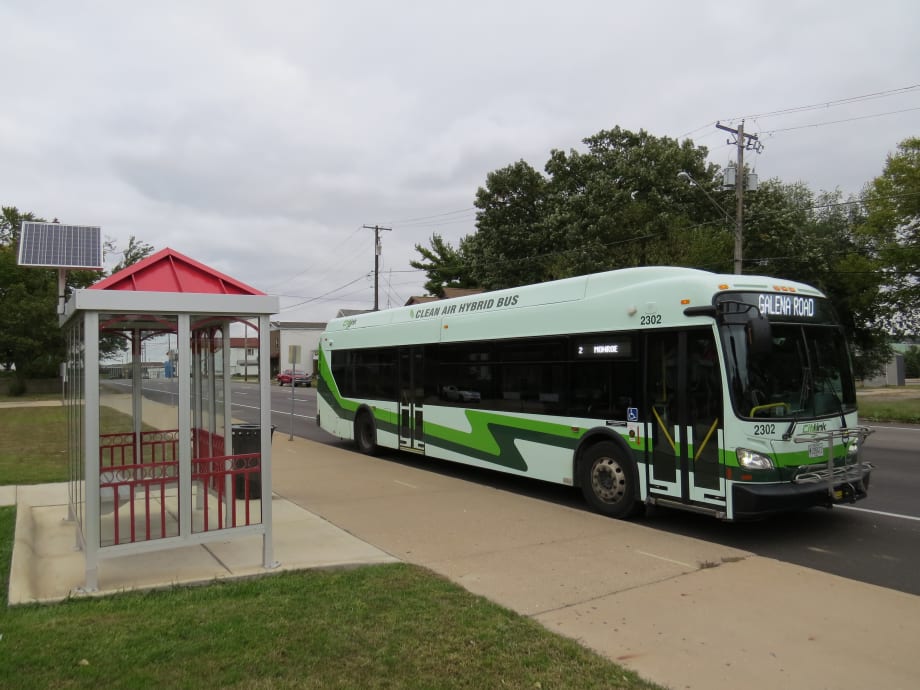
One of the first steps to creating a focused marketing campaign is knowing your target audience and creating opportunities for feedback.
CityLink
These days, marketing campaigns are not just about general advertising; they can include demonstrations, video conferencing, and other interactive techniques to engage current and potential customers. At the heart of the public transit industry, these campaigns are what ultimately help build service awareness, promote safety, and boost accessibility, all while maintaining efficient ridership levels for transit agencies.
“It all boils down to ridership and increased services,” says Glenn Miller, director, marketing, for Fort Worth, Texas’ Trinity Metro. “When we add digital or social media efforts to a campaign, of course we’ll factor in engagement clicks, open rates, and your standard key performance indicators, but ridership truly is our best gauge of success.”
That’s clearly been the case for Trinity Metro’s “We Got You!” campaign spurred by the COVID-19 pandemic, in which Trinity Metro worked with its ad agency, J.O. Agency, to tackle community concerns about riding public transit during this time.
From enhanced cleaning to social distancing to implementing a face-mask policy, Trinity Metro, like many other agencies in the industry, applied additional safety measures to help reduce the spread of the coronavirus and ensure the safety of both its passengers and employees.
From the marketing standpoint, Miller says the challenge was to reassure prospective riders that using the agency's service was safe through video and digital advertising. From the lowest ridership statistics posted in April 2020, total ridership of all Trinity Metro services increased 6% by May, and by the end of the fiscal year (September 2020), total rides increased by 20%.
So, how are public transit systems seeing these results from marketing alone? METRO spoke with Miller and several other industry marketing professionals to discuss what it takes to create successful, ridership-based campaigns — pandemic or no pandemic — and how to find new and innovative ways to cater and connect to their communities.
Targeted, but broad audiences
For the Greater Peoria Mass Transit District (CityLink) in Illinois, one of the first steps to creating a focused campaign is knowing your target audience and creating opportunities for consumer feedback, Emily Watson, CityLink’s director, marketing and public relations, says.
In April 2019, CityLink joined forces with transit agencies across Illinois for #GetOnBoardIL, a campaign featuring a press conference and rally at the agency’s Downtown Peoria Transit Center.
Sponsored by the American Public Transportation Association (APTA), the inaugural Get on Board Day became a national awareness and advocacy day that was all about generating awareness of and increasing support for public transportation among riders and non-riders, elected officials, and stakeholders.
To commemorate the event, CityLink created a video highlighting #GetOnBoardIL to be shared among attendees and the special dignitaries who attended and/or spoke during the event.
Even though the video didn’t get as much of a reach as Watson would have liked (approximately 165 combined views on Facebook and YouTube), she said the targeted feedback gained from the video and event was a plus for the transit agency.
“I determine if a campaign is successful when we receive feedback, whether that’s positive or negative, from the public or even our own employees,” she says. “Most of the campaigns we run are branding and general awareness. Even if someone isn’t a regular bus rider, we still think it’s a positive for them to see our messaging. You never know when you might need to ride the bus in the future.”
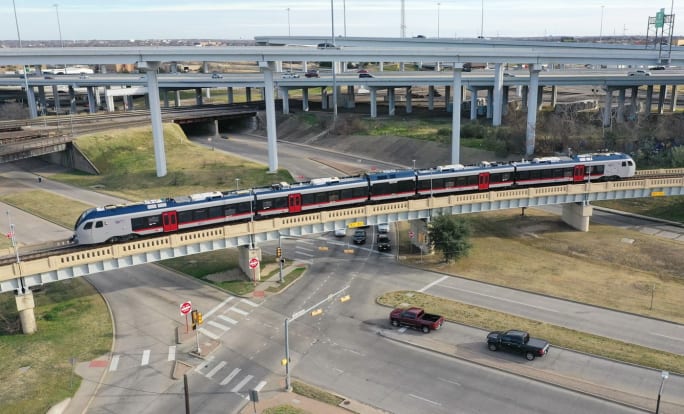
Having unlimited creative assets for campaigns can be useful in driving forward other initiatives that have similar marketing objectives, whether that's to promote safety, awareness, or accessibility.
Trinity Metro
Assessing delivery options
Since working with its ad agency in 2017, Trinity Metro employs a three-step process to its marketing campaigns. The first step, as Watson also previously mentioned for CityLink, is selecting a target audience. Who is going to benefit from the campaign objective and how will you get them on board? The second step is finding the “reason to believe” essentially why the campaign is important for riders and the agency — is it promoting general awareness, safety, and/or accessibility? The third step in the process is assembling the creative direction, which Miller says takes the most time and effort.
Some campaigns may fare better with traditional advertising methods while others require a host of components such as targeted digital advertising, social media, and even community partnerships.
For the “We Got You!” campaign, Trinity Metro made an investment in securing imagery that shows its newly implemented safety protocols: riders and operators wearing masks, showing the transparent barrier between the operator and the farebox, and the latest cleaning equipment being used.
“We had a feeling that once we launched the campaign, it wasn't going to be something that would pass quickly,” Miller says. “So, that’s why we decided on the need for more robust photo and video sessions. From there, once the creative was assembled, we were able to repurpose and resize it for whichever media was needed, lead distribution efforts, and then follow that with campaign measurement and evaluation.”
Pandemic or not, Miller encourages other transit agencies to not be afraid of having unlimited creative assets, as oftentimes you’ll discover a need for more options over the course of a campaign’s lifecycle. He also says agencies can use that additional material as the grounds for starting another campaign that has similar “reasons to believe,” especially in the realm of safety.
In the midst of the “We Got You!” campaign, Trinity Metro launched its “See Say Now” campaign, focused on providing a downloadable app for riders to report any safety or security incidents they see while out on the agency’s vehicles or facilities. Using the “See Say Now” mobile app, riders can anonymously send safety reports directly to the agency’s operations and security teams. Additionally, riders can use a texting option to submit their concerns.
“We're promoting this through a lot of our collateral as well as on our vehicles,” Miller says. “We've also got promotional monitors and TV monitors on our trains, our electric bus service, and in our primary downtown Transfer Center, encouraging people to download it and report any issues that they see.”
While Trinity Metro is only tracking app downloads for the campaign, Miller says the agency is looking into other avenues and delivery methods to help spread the word.
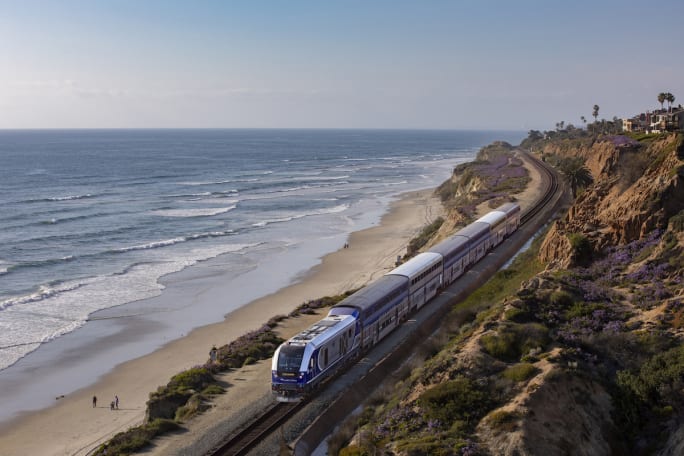
The LOSSAN Rail Corridor Agency, which oversees the Amtrak Pacific Surfliner service, is a relatively small marketing team that has seen benefits in working with multiple community outreach partners.
Amtrak Pacific Surfliner/LOSSAN Rail Corridor Agency
Building beneficial partnerships
In addition to traditional marketing and advertising efforts, growing community outreach programs serve as another way to increase market share and brand awareness, ultimately driving key audiences to public transit.
Finding the right community partners can help agencies understand how to determine when an opportunity is “a good fit,” while also increasing accessibility and ways to optimize budgets and resources, says Emilia Doerr, marketing and communications manager for The Los Angeles – San Diego – San Luis Obispo (LOSSAN) Rail Corridor Agency, which oversees the Amtrak Pacific Surfliner service.
As a relatively small marketing team consisting of four in-house specialists, she adds that “Participating in cross-promotional opportunities with strategic partners such as convention and visitors’ bureaus, collegiate and professional sports franchises, live event promoters, and local event producers along our route helps to decrease advertising costs and provide added value for Pacific Surfliner customers.”
Since working with the Disneyland Resort to promote taking alternative transportation options to the company’s theme parks and partnering with Major League Baseball and Operation Lifesaver for rail safety education, LOSSAN focuses on building broad awareness of the Pacific Surfliner service first, and then targets an experiential consumer through the lens of what the agency calls an “unconventional adventurer.”
“One of the largest hurdles for new riders is unfamiliarity with public transportation and the lack of control that comes with traveling without a personal vehicle,” she says. “We address this early on in our marketing campaigns, focusing on the ease of booking a trip, ticketing flexibility, boarding procedures, and sources of information that travelers can refer to during their trip.”
Additionally, LOSSAN looks at overall industry travel trends to help inform strategies to grow and connect with the large leisure segment of its ridership. The key is learning the value of customized messaging and promotional offers to help maximize effectiveness.
One example of this, Doerr says, has been the usage of LOSSAN’s student discount, which dramatically increased following the agency’s partnership with collegiate sports teams that promoted riding the train to colleges along its route across Southern California.
In the wake of COVID-19, LOSSAN began ramping up its efforts with regional tourism partners to assess customer sentiment and willingness to travel.
At the same time, Doerr says the agency continued to provide its online communities with engaging content, from videos and photos of scenic views along its corridor to creating Pacific Surfliner-themed backgrounds for consumer video conferencing calls.
“We feel that it is important to stay engaged with our riders through positive content like this that supplements our critical service information,” she says. “Remaining agile and continuing to effectively address evolving public health concerns, various service scenarios, and public sensitivities remains critical to building confidence in our service as well as establishing a foundation for recovering ridership in the future.”
More Management

LIT Marks 10-Year Milestone at Annual Summit
Hosted by the COTA from September 10 to 13, the Summit carried the theme “Celebrating 10 Years of Excellence, Leadership, and Impact,” with every part of the program honoring the people, agencies, and partners who built LIT over its first decade.
Read More →
People Movement: Dan Dipert Coaches Adds Third-Generation Leader, Keolis Names New Valley Metro VP/GM, and More
In this edition, we also cover recent appointments and announcements at the Wabtec, SilverRide, HNTB, and more, showcasing the individuals helping to shape the future of transportation.
Read More →
METRO Opens Submissions for 2026 Motorcoach Awards
Nominations are now being accepted for METRO Magazine’s Operator of the Year and Innovative Operator of the Year awards.
Read More →

New York MTA Advances Final Contract for Second Avenue Subway Expansion
Contract Four is the largest in the Second Avenue Subway Phase 2 project and includes construction of station infrastructure, tracks, and signals for the subway expansion, MTA officials said. Work on Contract Four will begin in 2027.
Read More →
Transit Agencies Highlight Safety Gains at National Summit
Leaders from 15 major transit systems shared crime-reduction results and safety initiatives while discussing the role of continued federal support.
Read More →
NITA Names New Leadership, Expands Reduced-Fare Program at First Board Meeting
The new regional transit authority appointed its first board chair and interim executive director while extending reduced fares across CTA, Metra, and Pace for eligible riders.
Read More →
Beyond the Checklist: A Structured Approach to Transit Maintenance
Reliability-Centered Maintenance helps transit agencies move beyond routine checklists to focus limited resources on the assets and failures that have the greatest impact on safety, reliability, and service.
Read More →
APTA 2026 Nominating Committee Selects Leadership Slate, Names Chair and Vice Chair Nominees
Leadership changes will help shape the association’s priorities and its representation of the transportation industry during the 2026–2027 term.
Read More →
DART Launches Major Security, Fare Enforcement Initiative
The 90-day demonstration will deploy coordinated security teams at five light rail stations while testing controlled access and gathering data to guide future investments.
Read More →
Advancing Fare Collection Through Technology and Innovation
Learn about delivering 1300 gates at 91 stations while managing fare evasion. Explore the large scale deployment, solution customization and real-world results that affect the region. Prepare for deployment in your region now.
Read More →