




The Benefits of Rethinking Resilient Infrastructure for Transit
How C-TRAN's Mass Timber Campus Expansion Reimagines Transit Infrastructure
See how C-TRAN's eco-conscious campus in Vancouver, Washington, uses mass timber to meet climate goals, support staff, and model future-ready design.
June 16, 2025
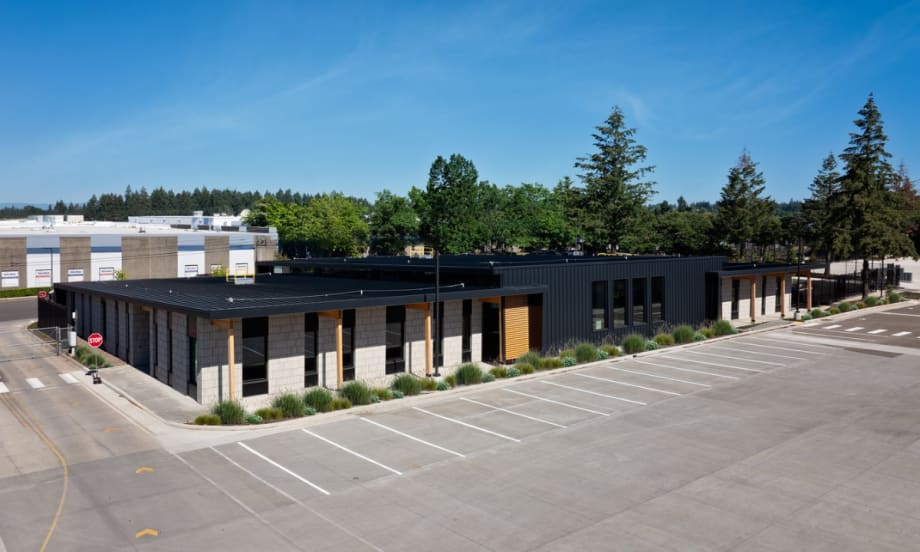
C-TRAN's investment in mass timber for its campus expansion is not just about sustainability — it's about enhancing its workforce's long-term functionality, efficiency, and well-being.
Photo: Shelsi Lindquist
5 min to read
- C-TRAN's campus in Vancouver, Washington, integrates mass timber in its construction to align with climate objectives.
- The design of the campus is tailored to support the needs of staff while also demonstrating sustainable architecture.
- The project serves as a prototype for future transit infrastructure with its innovative use of eco-friendly materials.
*Summarized by AI
As urban centers nationwide pursue carbon reduction goals and zero-emission infrastructure, C-TRAN's new campus expansion in Vancouver, Wash., offers a new example of what public service complexes can do to support growing populations and climate-conscious objectives.
According to the U.S. Greenhouse Gas Center and the Intergovernmental Panel on Climate Change, cities and metropolitan areas account for roughly 70% of greenhouse gas emissions.
So, what makes C-TRAN's expansion so eco-friendly? One word: Timber
Designed by Portland-based architecture and design firm Ankrom Moisan, the C-TRAN operations building is the firm's first completed mass timber project, which uses plywood panels to sequester carbon, reduce energy use during production, enhance durability, and sustain economic growth.
According to Mariah Kiersey, office, retail, and community studio co-leader/senior. principal at Ankrom Moisan, mass timber construction can be an ideal choice for transit environments. Its properties can support operator well-being while improving air quality, reducing noise, and lowering carbon emissions, making it a sustainable and user-friendly alternative to traditional materials.
A Facility Designed for Growth and Green Goals
C-TRAN saw a need to modernize its aging facilities while maximizing the potential of newly acquired land. The expansion, which provides space for transit operators to lounge and host training sessions, followed an eight-phase approach to optimize land use and plan for future growth.
The project's construction was tailored to avoid disrupting daily operations, such as fleet maintenance, bus circulation, and staff workspace, so the campus remained fully operational while integrating the new facilities.
However, cost and time are among the most significant variables that can quickly stall a project's progress. Working with their cost estimator, the architecture firm determined that wood was cheaper than steel at the time and could be installed faster.
"This was constructed on an active campus, so the faster it went up, the better," said Kiersey.
They quickly found that C-TRAN's commitment to reducing its environmental footprint aligned with the carbon-sequestering properties of mass timber and its acoustic and biophilic properties (more on that later), which improved the workspace for their operators and administrative staff. Plus, who knew that exposed wood cuts down on long-term maintenance.

Mass timber is often used for roof structures, canopies, and interior finishes, creating "inviting" and "durable" public spaces while reducing embodied carbon.
Photo: Shelsi Lindquist
Outside of C-TRAN, the new facility directly supports the City of Vancouver's sustainability goals and green-building initiatives by using renewable, low-carbon building materials, such as mass timber. Timber helps lower embodied carbon through carbon sequestration, reducing its environmental impact compared to traditional steel or concrete construction.
"Freres Engineered Wood provides locally manufactured mass plywood panels (MPP), which utilize efficient wood fiber use and sustainable forestry practices, further strengthening the regional economy," she said.
Mass timber also enhances energy efficiency, as its natural insulating properties improve thermal performance and reduce energy consumption.
The Human Benefits of Mass Timber in Transit
According to Kiersey, mass timber construction offers several benefits for transit environments, particularly in spaces designed for bus operators who are the frontline to the public, good and bad.
"Wood has been shown to reduce stress and promote relaxation, making it an excellent material for operator break areas, where employees need a calming retreat from the high-pressure demands of public interaction," she said.
Another characteristic is its natural "warmth and texture," which can create a welcoming atmosphere that may positively contrast with urban environments. Plus, the material can provide acoustic benefits by absorbing sound, and it has those aforementioned biophilic qualities, which is a fun way of saying that exposure to natural materials and light can help lower stress and improve mental health.
Kiersey reports that mass timber construction is evident at the airport entry, operator areas, and administrative areas in regions like the Pacific Northwest.
The wood's strength, sustainability, and aesthetic warmth make it ideal for airports, train stations, bus stop shelters, and bus terminals. In these settings, mass timber is often used for roof structures, canopies, and interior finishes, creating "inviting" and "durable" public spaces while reducing embodied carbon.

Mass timber construction can be ideal for transit environments. Its properties can support operators' well-being while improving air quality, reducing noise, and lowering carbon emissions.
Photo: Shelsi Lindquist
"We looked at it for the maintenance building at C-TRAN, but with the location in the center of the campus and at a corner, it was decided to go concrete," said Kiersey.
On the sustainability front, mass timber can mitigate poor indoor air quality by regulating humidity and offer a lower carbon footprint through efficient construction.
"Cities aiming for carbon-neutral transit systems increasingly consider mass timber a key element in their infrastructure upgrades. With C-TRAN switching to electric buses, this aligns with their sustainability goals," said Kiersey.
These factors combine to make timber a strong contender for transit infrastructure, balancing durability, sustainability, and user comfort.
Efficient, Local, and Future-Ready
Overall, mass timber offered an optimal balance of cost, availability, and sustainability compared to traditional materials.
"Recognizing the importance of cost efficiency, C-TRAN leveraged the advantages of prefabricated mass plywood panels (MPP), which enabled faster construction, reduced labor costs, and minimized waste through efficient on-site assembly," said Kiersey.
Strategically placed, mass timber could be used in a maintenance facility, depending on the desired bay sizes for small vehicles. Still, as Kiersey explains, that doesn't work well for articulated buses.
MPP was readily available for C-TRAN's needs, and mass timber is increasingly accessible, particularly in the Pacific Northwest, where locally sourced materials reduce reliance on the volatile global market and lower transportation costs. The mass timber's lighter weight translated to foundation cost savings and improved seismic resilience.
"Due to some of the poor soils found at the campus, the lighter-weight wood was an ideal choice," said Kiersey.
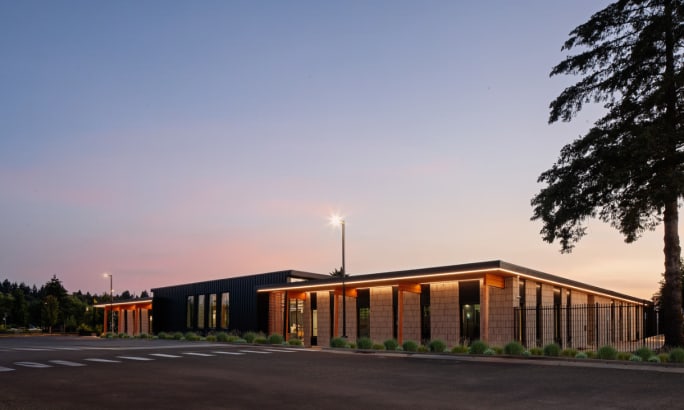
Mass timber also enhances energy efficiency, as its natural insulating properties contribute to better thermal performance and reduced energy consumption.
Photo: Shelsi Lindquist
A Blueprint for Resilient Public Infrastructure
C-TRAN's investment in mass timber for its campus expansion is not just about sustainability — it's about enhancing its workforce's long-term functionality, efficiency, and well-being.
"This project demonstrates how innovative materials and thoughtful design can support transit agencies in achieving their operational, environmental, and employee wellness goals," said Kiersey.
C-TRAN's use of mass timber reflects a forward-thinking approach to sustainable transit infrastructure. By combining environmental responsibility, regional collaboration, and thoughtful design that benefits employees and the community, C-TRAN sets an example for other agencies.
Quick Answers
Mass timber is an eco-friendly building material that helps reduce the carbon footprint of construction projects. By utilizing mass timber, C-TRAN is supporting sustainability and climate goals while achieving a modern infrastructure.
*Summarized by AI
Subscribe to Our Newsletter
More Management

METRO Opens Submissions for 2026 Motorcoach Awards
Nominations are now being accepted for METRO Magazine’s Operator of the Year and Innovative Operator of the Year awards.
Read More →
New York MTA Advances Final Contract for Second Avenue Subway Expansion
Contract Four is the largest in the Second Avenue Subway Phase 2 project and includes construction of station infrastructure, tracks, and signals for the subway expansion, MTA officials said. Work on Contract Four will begin in 2027.
Read More →
Transit Agencies Highlight Safety Gains at National Summit
Leaders from 15 major transit systems shared crime-reduction results and safety initiatives while discussing the role of continued federal support.
Read More →

NITA Names New Leadership, Expands Reduced-Fare Program at First Board Meeting
The new regional transit authority appointed its first board chair and interim executive director while extending reduced fares across CTA, Metra, and Pace for eligible riders.
Read More →
Beyond the Checklist: A Structured Approach to Transit Maintenance
Reliability-Centered Maintenance helps transit agencies move beyond routine checklists to focus limited resources on the assets and failures that have the greatest impact on safety, reliability, and service.
Read More →
APTA 2026 Nominating Committee Selects Leadership Slate, Names Chair and Vice Chair Nominees
Leadership changes will help shape the association’s priorities and its representation of the transportation industry during the 2026–2027 term.
Read More →
DART Launches Major Security, Fare Enforcement Initiative
The 90-day demonstration will deploy coordinated security teams at five light rail stations while testing controlled access and gathering data to guide future investments.
Read More →
Sponsored•September 9, 2026
Advancing Fare Collection Through Technology and Innovation
Learn about delivering 1300 gates at 91 stations while managing fare evasion. Explore the large scale deployment, solution customization and real-world results that affect the region. Prepare for deployment in your region now.
Read More →
Game Day in Motion: Moving Millions During the 2026 World Cup
Between packed transit stations and team motorcoaches, see how agencies and operators across North America tackled the transportation demands of the 2026 FIFA World Cup.
Read More →
Surface Transportation Extension Averts Shutdown, Leaves Transit Funding Gap
The stopgap keeps federal transportation programs moving, but missing advance funding could complicate the transit and rail projects agencies are planning next.
Read More →