




RELATED: How Transit Managers Can Stop the Blame Game to Create a Culture of Safety
A Creative Approach to Establishing a Transit System's Safety Culture
Safety must be the top priority of all transportation organizations. Establishing an environment in which everyone — employees and the public — makes safety their first thought before performing any task requires creativity.
July 25, 2018
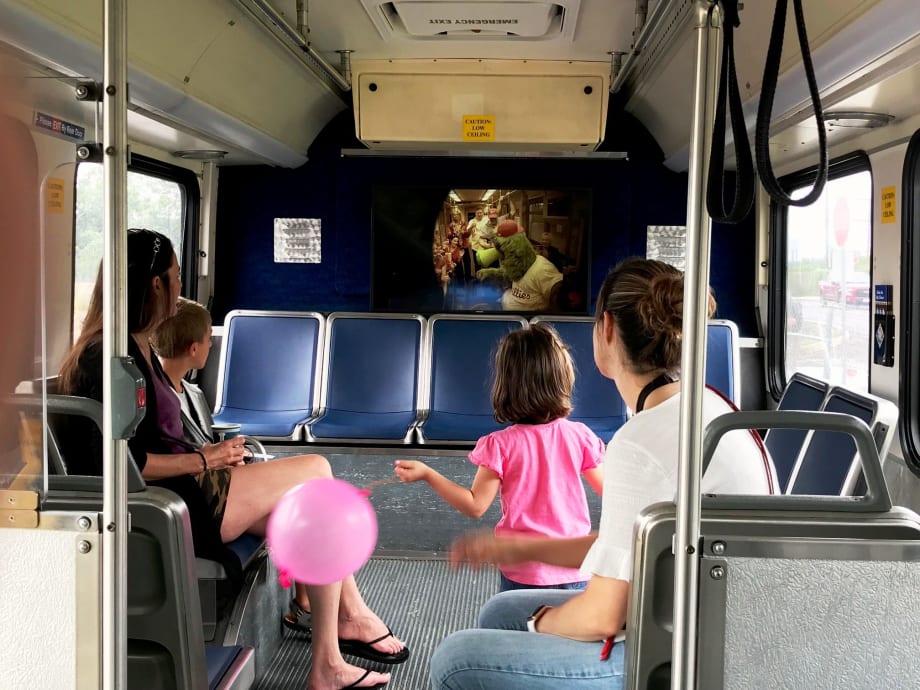
Visitors watch a safety video inside SEPTA's Safety Education Bus. Photo: SEPTA
4 min to read
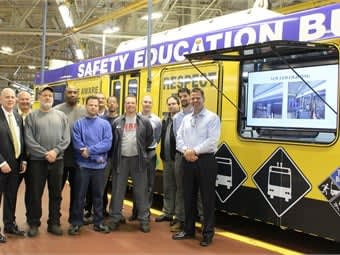
SEPTA GM Jeff Knueppel (far left), Assistant GM Ron Hopkins (second from left) and Assistant GM Jim Fox (far right) with the Berridge Shop staff that created the bus. Photo: SEPTA
Safety must be the top priority of all transportation organizations. Establishing an environment in which everyone — employees and the public — makes safety their first thought before performing any task requires creativity.
In January 2016, 80 members of the Southeastern Pennsylvania Transportation Authority’s (SEPTA) senior management gathered for the Authority’s second annual Safety Summit, where they discussed how to continue to build and strengthen the safety culture at SEPTA — for employees and customers. A result of that summit was the creation of SEPTA’s Safety Culture Innovation Team by the Authority’s Office of Innovation to take the ideas presented at the Safety Summit and put them into action.
“Rather than send everyone back to their departments with another list of items to read to their employees, we established the Safety Culture Team to explore the concepts that were presented in the Safety Summit,” said SEPTA Assistant GM of System Safety Jim Fox. “This group is comprised of 12 staff members whose areas of expertise and responsibilities encompass the Authority.”
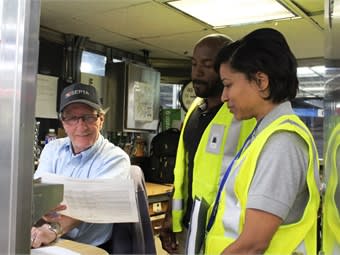
System Safety representatives Jason Connor and Carrie Givhan discussing SEPTA's safety survey results with Market-Frankford Line cashier Frank Gailey. Photo: SEPTA
Fox likens the group to a think tank, brainstorming ways to better communicate and promote safety among SEPTA employees. “Representatives from our engineering, maintenance & construction division, railroad and transit operations, vehicle maintenance, finance, and supply chain departments are among the members of the Team,” said Fox. “They work with employees that deal with a variety of safety situations, from frontline operators to track and power crews and office staff. Having insight from across the Authority is invaluable.”
To get a sense of employees’ understanding of the Authority’s safety culture, the Team and SEPTA’s System Safety Division developed surveys tailored to jobs and locations. “With new regulations coming from the FRA and the FTA, we knew we needed to have a baseline assessment of where our employees stood on safety awareness in their areas,” said Fox. “While there are general safety guidelines all employees should follow, someone who works third shift bus maintenance faces different issues than someone working in an office in our headquarters or someone working first shift on the wire train. We felt that we were more likely to get responses to the surveys if the questions were relevant to specific workplace.”
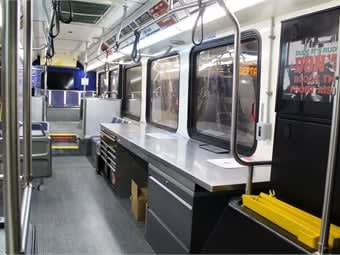
Interior of the Safety Education Bus. Photo: SEPTA
Surveys were distributed via intranet link or hard copy (at locations where employees don’t have their own computers) this past February as part of SEPTA’s biannual Employee Safety Day. Approximately 5,000 responses were received.
“While not the entire employee population this is a significantly significant sample size that will give us a good indication and base line of our Safety Culture,” Fox adds.
Once the results of the surveys were tabulated (receiving fair rankings and forthcoming responses), the team worked out how to disseminate the outcomes. In order to effectively communicate the results of the survey to the entire employee population, SEPTA would use its annual Safety Summit to review the results. However this year’s Summit would include more than just the top 80 managers.
“The Safety Culture Team knew that in order to have buy-in from all of our employees on our safety initiatives, we needed to go to our locations and engage our staff, to listen to their concerns and make them aware of the resources that are available to them,” said Fox. “The team used this as an opportunity to debut SEPTA’s new Safety Education Bus, a unique tool that came about as a result of the Safety Culture Team’s brainstorming. The bus captures the employees’ attention and draws them in to hear our messages.”
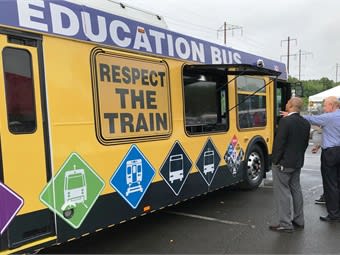
Safety signage displayed on the outside of SEPTA's Safety Education Bus. Photo: SEPTA
A passenger bus once slated for retirement from SEPTA’s fleet, the vehicle was overhauled by employees at SEPTA’ s Berridge Shop in just six months and is now used exclusively for the Authority’s internal and external safety awareness events.
The bus was completely reconfigured by the in-house crews. Seats were removed and replaced with a table, counters and TV mounts; lighting and batteries were upgraded to support new electronic needs; and additional circulation fans were installed for cooling and ventilation of new batteries and electronics. The reimaged bus is now equipped with the Safe Turn Alert System; two TV monitors to play safety videos; and educational brochures and posters. The bus is covered with a custom wrap designed by SEPTA’s Communications Department.
Throughout June, SEPTA’s designated Safety Awareness and Safety Summit Month, the authority’s System Safety officers took the bus to various shops, talking to employees on all shifts. In addition to internal events, the bus will support SEPTA’s System Safety Division’s Operation Lifesaver events, monthly station safety blitz outreach programs, as well as the Authority’s annual system-wide Public Safety Day.
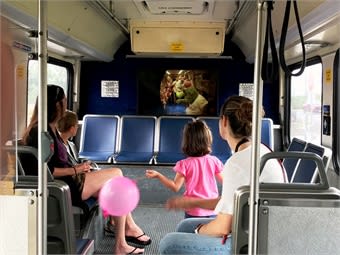
Visitors watch a safety video inside SEPTA's Safety Education Bus. Photo: SEPTA
The challenge for SEPTA’s Safety Innovation Culture Team and System Safety is to continue to build upon the success of the initial surveys and site visits. “We’ve identified our strengths and the areas in which we need to improve,” said Fox. “We’ll continue our outreach and communications programs and then re-evaluate our performance with future surveys.”
Heather Redfern is the Public Information Manager for the Southeastern Pennsylvania Transportation Authority.
Subscribe to Our Newsletter
More Blog Posts
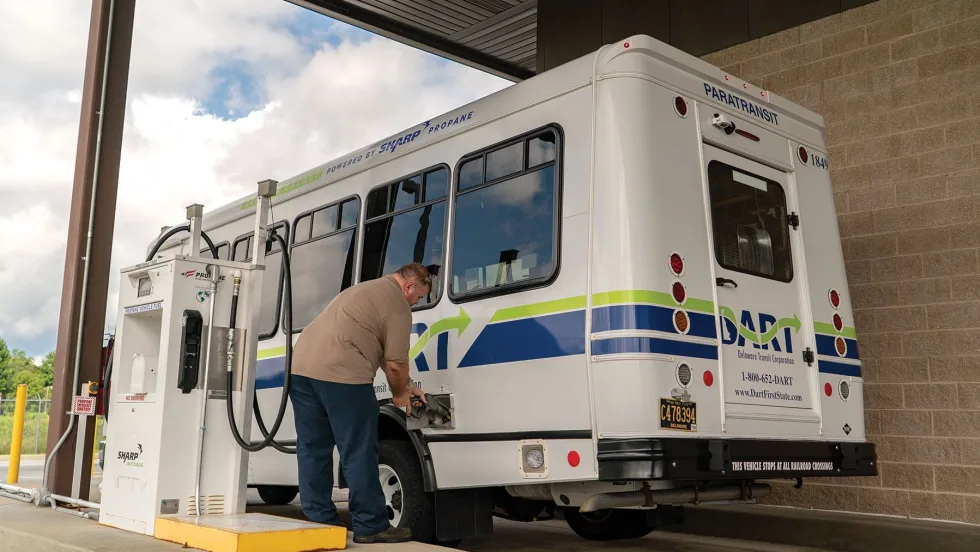
Building a Winning FTA Grant Proposal: Why Propane Autogas is the Pragmatic Choice for Fleet Resilience
With $610 million available through the FY 2026 Buses and Bus Facilities Competitive Program and the Low or No Emission Grant Program, agencies must build a compelling case before the September 21 deadline that balances environmental compliance with operational feasibility.
Read More →
Velo-city Conference 2026: Latest Trends in Cycling as Part of Urban Mobility
The global cycling conference highlighted how cities are integrating bicycles into multimodal transportation networks, expanding cycle tourism and reshaping urban mobility.
Read More →
Kindness Isn’t Soft...It’s Strategic.
Mike Bismeyer — often known as “The Kindness Guy” — has spent more than 17 years in public transit and mobility, serving in industry leadership roles, speaking across North America, and advocating for stronger workplace cultures. But his message doesn’t come from theory. It comes from lived experience.
Read More →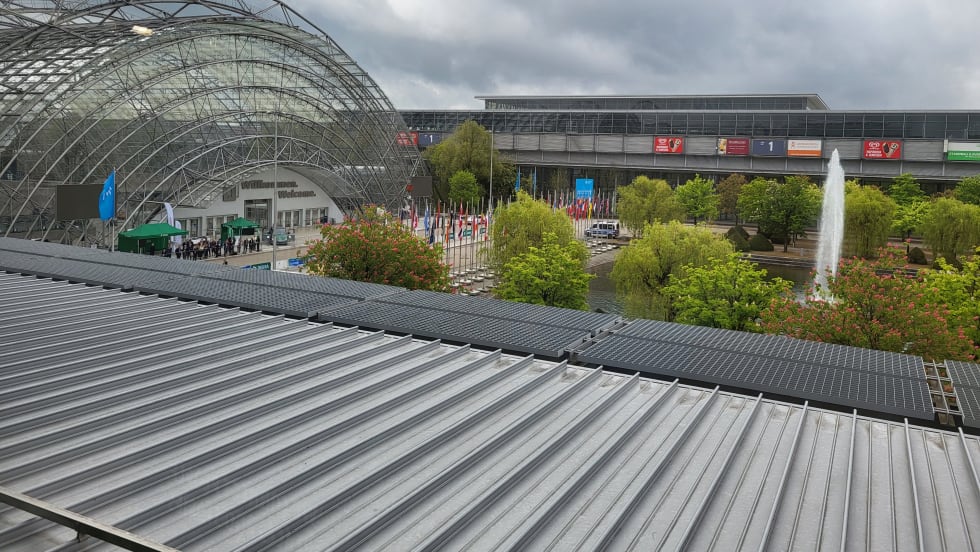
Inside ITF 2026: Transport Reacts to A Challenging World
Transport leaders from around the world gathered in Leipzig, Germany, for the 2026 International Transport Forum to discuss resilience, climate impacts, supply chains and the future of sustainable mobility.
Read More →
Every Ride Tells a Story — But You’re Not Just Selling the Ride
You’re selling the moment, the meaning, and the emotion behind it.
Read More →
How Digital Signage is Reshaping the Traveler Experience at Transportation Hubs
What was once a landscape of static signs has evolved into a responsive, immersive environment powered by real-time visual communication.
Read More →
Latest Trends in Urban Mobility from Polis Conference 2025
Polis comprises cities and regions, as well as corporate partners, from across Europe, promoting the development and implementation of sustainable mobility. This year’s event had over a thousand attendees across various policy forums and an exhibition.
Read More →
Why Transit Leaders Require Better Tools for Operational Clarity In Today’s Tech-Fragmented Environment
Across North America and beyond, transit agency officials are contending with a perfect storm of operational headaches and strategic challenges that hamper daily service and long-term progress.
Read More →
The Powerless Brokers: Why California Can’t Build Transit
It is no secret that transit in the U.S. is slow and expensive to build.
Read More →
Why Transport Sustainability Should Focus on People Instead of Cars
Simply incentivizing electrification is not enough to make a meaningful impact; we must shift our focus toward prioritizing public transportation and infrastructure.
Read More →