Barcelona's Mobility Picture As It Hosts UITP Congress
The UITP Global Congress was in Barcelona in early June 2023. It has been a long journey to get to get to the 64th UITP Congress, with a number of postponements, and ultimately, the cancellation of the last Congress that was scheduled to be held in Melbourne due to the pandemic.
Barcelona is an excellent showcase of history, urbanism, style, a modern economy, and mobility.
Photo: Giles Bailey
8 min to read
The UITP Global Congress was in Barcelona in early June 2023. It has been a long journey to get to get to the 64th UITP Congress, with a number of postponements, and ultimately, the cancellation of the last Congress that was scheduled to be held in Melbourne due to the pandemic. Thus, the last full Congress was in Stockholm, Sweden in 2019.
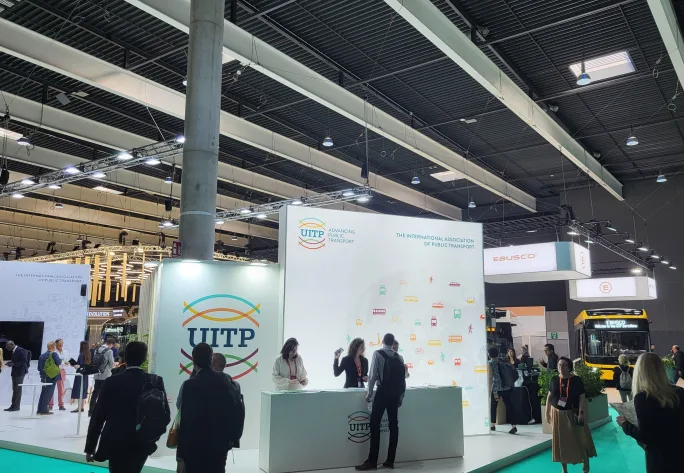
The Barcelona event, hosted by the City, and supported by the Region of Catalunya and Spanish government, was a joyous event and the largest UITP Congress ever held. Over 2,700 attendees and 330 exhibitors from 41 countries were in attendance over the four days.
Ad Loading...
While there are many public transport and mobility events globally, UITP holds a unique place as the focus for the public transport operators and cities authorities on a global basis both directly as UITP members and via partnership with other regional public transport associations. While UITP runs various ongoing training programs and events, the Global Congress remains their key biennial showcase.
There is much to consider regarding the evolution of the public transport industry in the post-COVID, decarbonizing, and globalizing world. In this article, I will concentrate on some of the key themes from the Congress, Barcelona as a mobility showcase, and the Spanish high-speed rail industry.
In her welcome address, the Mayor of Barcelona highlighted that global institutions are often lagging the initiative being progressed by cities such as Barcelona in their thinking about mobility, sustainability, and decarbonization.
Photo: Giles Bailey
UITP in Barcelona
For various reasons, I ended up travelling from the UK to Madrid, rather than directly to Barcelona. However, this provided the welcome opportunity to sample the competitive high-speed rail industry being developed in Spain. This is truly remarkable.
In summary, the European Union has for many years been trying to foster competition in high-speed rail services within and across member states as the high-speed infrastructure has been constructed. Primarily, this has been through separating the high-speed rail infrastructure from the services operated on this infrastructure and discouraging the “national/ state” rail operators from monopolizing service provision. This has been a mixed success.
In Spain, which now has the world’s second longest high-speed rail infrastructure behind China, an interesting version of this policy has been pursued. As the rail infrastructure has, and continues to be developed in Spain, usage per mile has been below other European countries, such as Italy and France. While not a reason to delay the infrastructure expansion, the market needed to be stimulated regarding additional demand.
Ad Loading...
Capacity on the new high-speed rail infrastructure is generally ample and has been parceled into various types of “pools” with competitive bids taken against these pools leading up to 2020. Unsurprisingly, the national operator — Renfe — had been allocated the largest set of services in this allocation. However, two competitive operators were allowed to enter the market with smaller sets of allocated train paths. These competitors began operating services in 2021.
The Madrid to Barcelona high-speed route, which is about 380 miles, opened in 2008 and offers travel times of just over 2.5 hours, versus eight-plus hours on the classic route. The route had historically been one of the world’s busiest short-haul air corridors and remains a major air route. Service on the route is now provided by Renfe’s AVE — full service and Avlo — low-cost operations; Iryo — part owned by TrenItalia (the Italian state operator) as well as Air Nostrum and GlobalVia; and Ouigo Espana — owned by SNCF (the French state operator) and concentrating on low-cost travel in the Spanish market.
Journeying Through Spain
I traveled on the Iryo service from Madrid to Barcelona and back after the conference. A number of reflections, but I could have easily also used either of the other two operators as I was provided with significant service choice — as one would typically expect with an air service.
Adif, the Spanish state-owned rail infrastructure operator, has also carefully considered its role in the rail market and has made a number of interventions to offer a neutral station environment for the various operators.
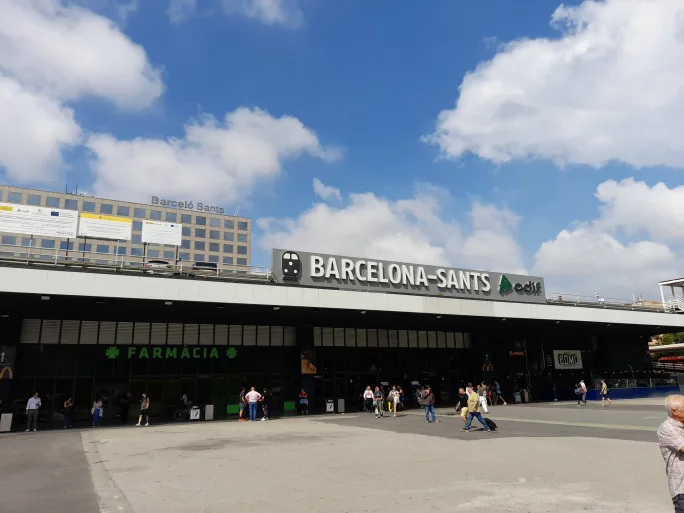
In Spain, airport style baggage screening is used prior to access to high-speed rail services. High-speed rail stations are also typically relatively newly built or extensively rebuilt older stations and are thus spacious in design. A secure, extensive airport-style waiting area with retail was provided at both Madrid Atocha station, as well as Barcelona Sants. Each operator was then provided with space to separately welcome, ticket check, and board its own passengers, but on multiple use station platforms. Separate passenger flows for arriving and embarking passengers were also in place.
Ad Loading...
In the end, a train is a train, but Iryo has chosen to offer an enhanced service offering. Four classes of ticket are offered — differentiated by price and ticket flexibility, etc.; extremely spacious and comfortable seating in all classes; available catering offers; and a service and design style. As a frequent global user of trains, the Alstom (Bombardier)/ Hitachi eight-car Frecciarossa 1000 rolling stock was a joy to experience and at a reasonable price. The pre- and post-journey communication was also excellent.
The balance between choice and coherence of service, while not unleashing needless competition, seems to work well in this rail market.
The city is serviced by a mix of transport operators from the core city of Barcelona (TMB), the wider province (AMB), region (FGC), and a national operator (Renfe).
Photo: Giles Bailey
Barcelona’s Mobility Picture
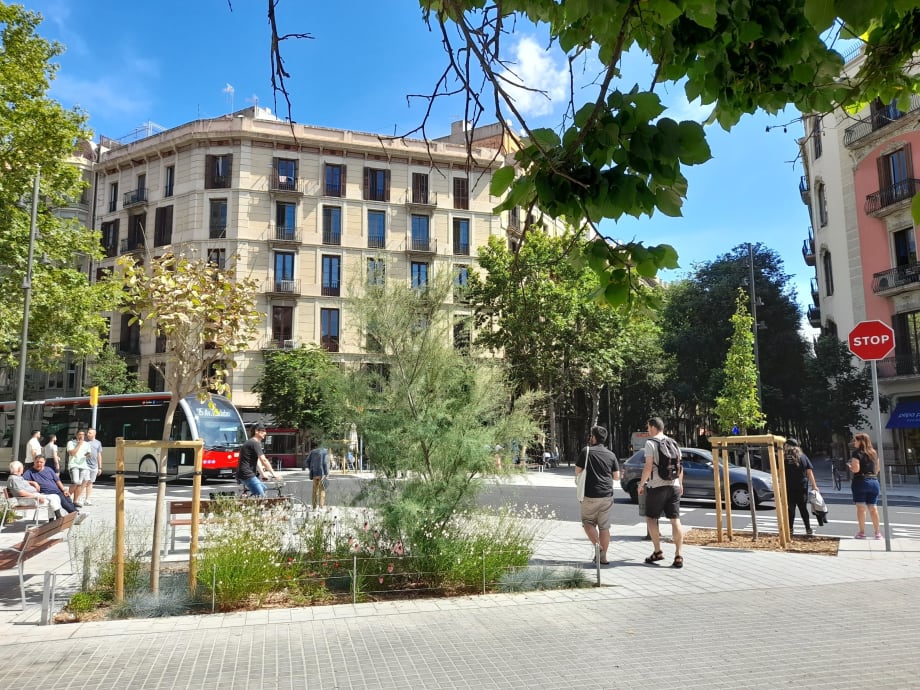
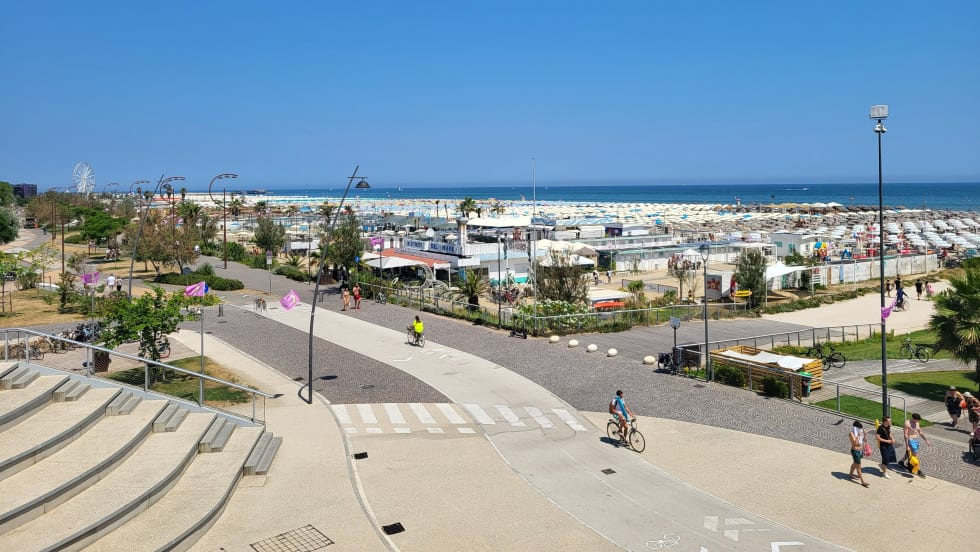
Barcelona is an excellent showcase of history, urbanism, style, a modern economy, and mobility. It is amongst a few large European cities to combine a big city, Mediterranean weather, and be located immediately upon beautiful and extensive sand beaches. The city is doing very well, and if anything is struggling with the vast numbers of tourist visitors — both for leisure and business.
While the city still has, surprisingly, quite a few multi-lane, very busy arterial roads crossing the urban area, it is progressing a process of massive expansion in public transport capacity, traffic calming, such as via the development of its “superblocks” proposals, and progressive expansion of micromobility. As mentioned, it is being linked by high-speed rail to other Spanish cities to the south and west, as well as eventually to through high-speed services to the rest of France, on to Italy, and beyond. Thus, it will evolve into much more of a key high speed rail hub on the Mediterranean over time.
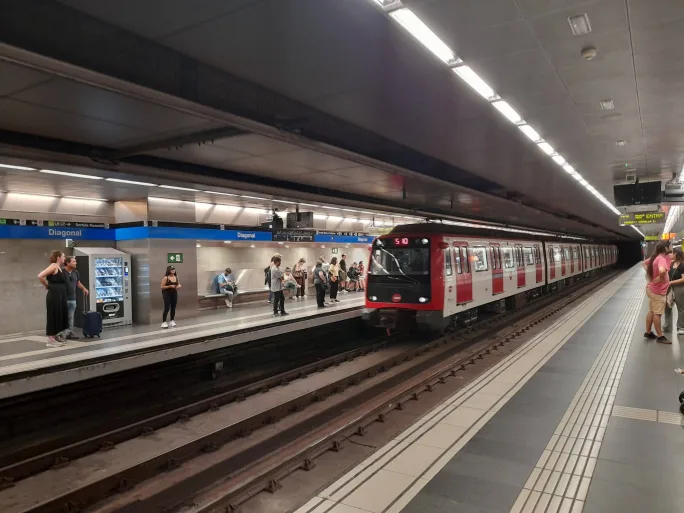
The city is serviced by a mix of transport operators from the core city of Barcelona (TMB), the wider province (AMB), region (FGC), and a national operator (Renfe). Many of these services operate within the core of Barcelona and could be considered confusing to the casual user.
Ad Loading...
However, as evidenced at the UITP Congress, the operators and authorities seem to be working together to integrate and improve the service offered to all regional users and significantly support improved sustainability and decarbonization of mobility. It seems relatively easy to move around the urban area through an increasing and comprehensive multimodal mobility service offering.
In her welcome address, the Mayor of Barcelona highlighted that global institutions are often lagging the initiative being progressed by cities such as Barcelona in their thinking about mobility, sustainability, and decarbonization.
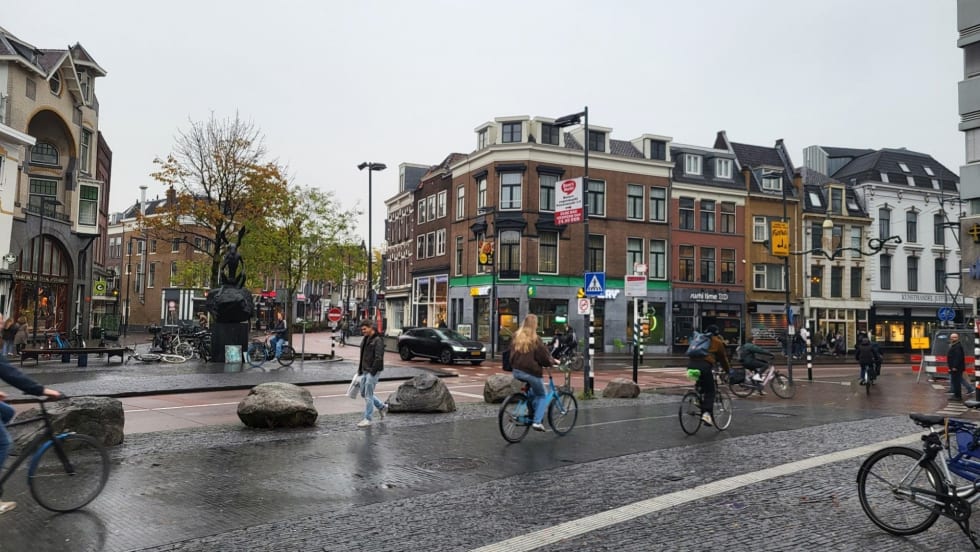
Of note is that although cycling and private e-scooters are present and common, cycling in particular is not as common as one would probably expect in a comparable (European) city with its geography and weather.
The public transport community, as represented at UITP, has a number of challenges and successes it now faces.
Photo: Giles Bailey
The UITP Congress
The public transport community, as represented at UITP, has a number of challenges and successes it now faces.
Firstly, it has survived the last few years of the pandemic and has confirmed its role as a central actor in progressing sustainable, accessible, and comprehensive mobility in cities around the world and with global stakeholders. In particular, in meeting the agenda of decarbonization throughout the world. In a changing world, where the pandemic changed behaviors, expectations, economics and continual progression of technology, the right of public transport to be central to the debate, was not, and is not, guaranteed.
Ad Loading...
In cities around the world investment in (classic) public transport is substantial, and we are witnessing cities developing new light and heavy rail infrastructure and continuing to support existing bus services — while deploying electrification. While the details vary from market to market, certainly across most of Europe and Asia and as witnessed in Barcelona and mentioned in welcoming addresses from city, Catalan, and Spanish keynotes at the Congress, expansion of classic public transport is clearly in evidence. The effectiveness of this public investment must be managed well and delivered effectively. The need to ensure that these investments are deepening and widening access to quality public transport in our communities is crucial.
This is becoming a larger challenge, as the needs for comprehensive mobility spread from concentrated city centers in a post-COVID world to more decentralized — in time, purpose, and location spaces as nature of work changes.
These issues were weaved throughout the talks, panels, presentations, and conversations at the UITP Congress. The core need and reason for public transport is the decarbonization of universal mobility in our global societies. This is a pressing and remains a complex challenge.
While, classic public transport will be a core of much of this decarbonization agenda, a number of other stakeholders are required to be engaged. It was noticeable that while conversations at the Congress discussed the need for this wider partnership, the presence of other partners was limited in the Congress conversations, as well as the accompanying exhibition. This remains an area of concern whether these partners are automotive OEMs, cycle manufacturers, or micromobility providers. Classic public transport alone simply cannot deliver the breadth of required mobility in our cities and suburbs.
As part of the UITP Congress a new UITP president was selected. The previous president, Khalid Alhogail, who was from Saudi Arabia, had been in post since 2021. This is a part-time, somewhat ceremonial, position as the president is typically a leader in one of the UITP members and the role has to be combined with their existing duties.
Ad Loading...
With great pride, UITP has selected Renee Amilcar — the GM at OC Transport in Ottawa, Canada, as its new president. Amilcar will be the first female UITP president in their history, as well as furthers the agenda of making public transport reflect and respond to the needs of all communities globally in their thinking about the needs of comprehensive, accessible, and sustainable mobility.
The UITP Global Congress will return in 2025 in the German city of Hamburg. As part of a new Congress process, Hamburg has also been selected as host of the 2027 Congress. Immediately after the Congress, Dubai was announced as host of a Congress in 2026, which will now operate on an annual basis from the 2025 event.
With $610 million available through the FY 2026 Buses and Bus Facilities Competitive Program and the Low or No Emission Grant Program, agencies must build a compelling case before the September 21 deadline that balances environmental compliance with operational feasibility.
The global cycling conference highlighted how cities are integrating bicycles into multimodal transportation networks, expanding cycle tourism and reshaping urban mobility.
Mike Bismeyer — often known as “The Kindness Guy” — has spent more than 17 years in public transit and mobility, serving in industry leadership roles, speaking across North America, and advocating for stronger workplace cultures. But his message doesn’t come from theory. It comes from lived experience.
Transport leaders from around the world gathered in Leipzig, Germany, for the 2026 International Transport Forum to discuss resilience, climate impacts, supply chains and the future of sustainable mobility.
Polis comprises cities and regions, as well as corporate partners, from across Europe, promoting the development and implementation of sustainable mobility. This year’s event had over a thousand attendees across various policy forums and an exhibition.
Across North America and beyond, transit agency officials are contending with a perfect storm of operational headaches and strategic challenges that hamper daily service and long-term progress.
Simply incentivizing electrification is not enough to make a meaningful impact; we must shift our focus toward prioritizing public transportation and infrastructure.