




Research: Best (and Worst) Cities for Commuting on Public Transportation in the U.S.
An International Case Study: Public Transport in Geneva, Switzerland
As a prosperous wealthy country there have been persistent shortages of labor for many decades, and this remains the case today, which causes significant impacts on thinking about regional mobility.
September 29, 2021
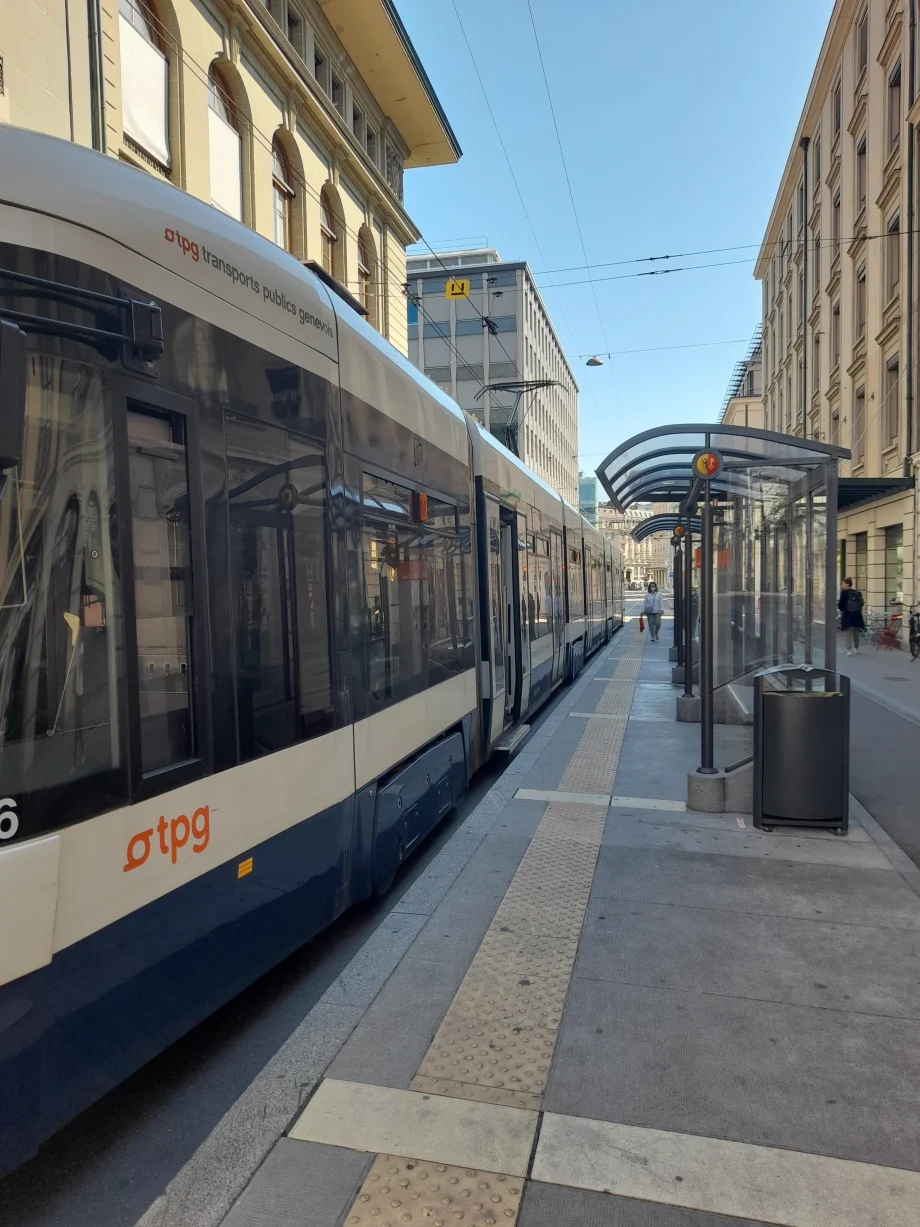
As a prosperous wealthy country there have been persistent shortages of labor for many decades, and this remains the case today, which causes significant impacts on thinking about regional mobility.
Photo: Giles Bailey
5 min to read
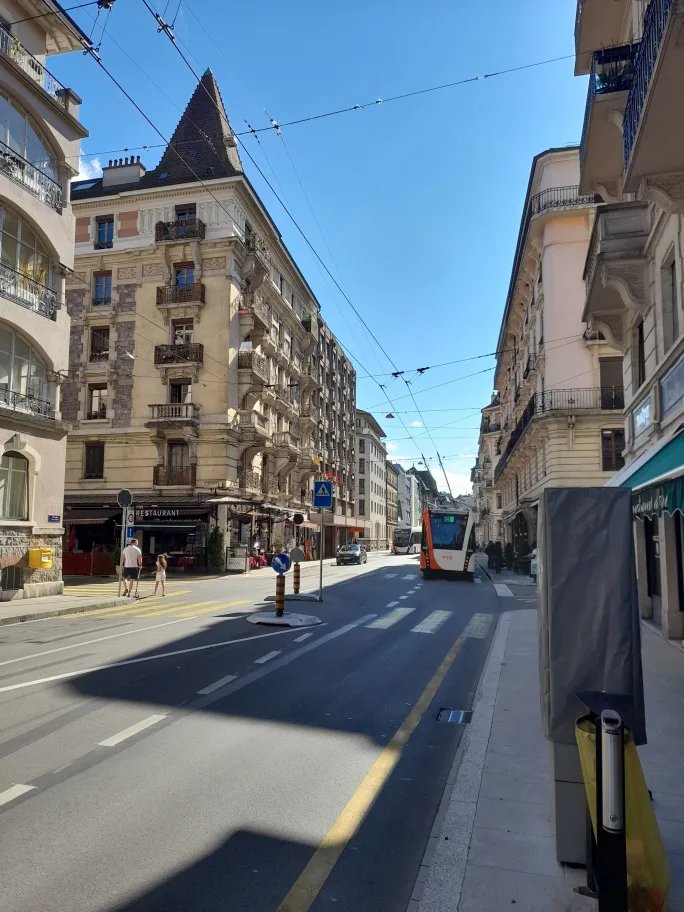
Geneva is a relatively small city of 200,000 in an urban region of just under one million people but has a long history as an important regional center in the western Alps for hundreds of years.
Photo: Giles Bailey
Geneva is an historic and prosperous global city in the west of Switzerland. A city of banking, finance, universities and research, and global organizations, such as the United Nations, World Trade Organization, and International Federation of the Red Cross. And, of course, tourism and skiing.
Geneva is a relatively small city of 200,000 in an urban region of just under one million people but has a long history as an important regional center in the western Alps for hundreds of years. It is the principal city in the francophone region of western Switzerland. The city has historically been independent of any nation, been part of France, and now part of Switzerland. This history has led to the international border with France sitting across the wider urban area with the outer suburbs to the west and south sitting within France. This cross-border nature is typical of several other Swiss cities such as Basle and Lugano.
Switzerland is not part of the European Union, although several agreements have put in place to facilitate cross-border movement of people and goods.
As a prosperous wealthy country there have been persistent shortages of labor for many decades, and this remains the case today, which causes significant impacts on thinking about regional mobility. Unlike other regions of Switzerland, the trans-alpine movement of goods (and people) between north and south Europe is less of an issue in the Geneva region.
Mobility in the region
Like most European cities, Geneva has developed a dense network of contemporary multimodal public transport options. Meanwhile, car traffic in the core of the city has been progressively suppressed to the point where today it forms only a small part of the urban mobility mix.
As part of this evolution, particularly in recent years, micromobility has been encouraged and personal, as well as now shared, cycling is a pervasive part of the mobility mix. While the city is ringed by high mountains and progressively rises from the shore of Lake Geneva, for the most part the city is relatively flat. Shared e-scooters remain a very limited option.
Quality, integration, and comprehensiveness pervade the Geneva transport system: train — provided by the national operator SBB; a widespread tram network; a modernized trolleybus system; ferry; and bus, including local microbuses in selected areas. Most of the public transport system is powered electrically. As in most Swiss cities, the public transport network is heavily focused on the main railway station, Cornavin in Geneva, which acts as an urban center for shopping and other activities. Due to the nature of the heavy rail network, fast cross-urban area rail services have, up until recently, been limited.
Of note, like in most Swiss cities, as a guest at a hotel you are provided with a free public transport card during your stay. This is funded via a city guest tax. The public transport card is personalized to the visitor and only valid for the length of your stay at that hotel. It may seem an extravagant option, but it is extremely useful in placing public transport first and foremost in the mind of the visitor as a means of mobility and without the consideration of the typical visitor issues of fare information, obtaining tickets, etc. Shared micromobility is not included in the free public transport offer.
Solving Mobility Issues
While the public transport offer is very good in the city, issues remain. One of these issues is the earlier mentioned general labor shortage in Switzerland. As Geneva’s economy continues to develop, the local employment market has developed into a wider regional employment market. Living costs and wages are higher in Switzerland than in neighboring France, and thus, many workers in Geneva choose to live in France and commute to the city.
Facilitating, and in fact encouraging, this cross-border commuting from the border suburbs, but also from further into France is a key part of enabling Geneva’s economy to develop. While public transport options already exist for these trips, connections were historically relatively poor.
Thus, since the early 2000s, the Geneva region has developed the CEVA rail system. Like several other European cities — Paris’s RER, London’s Crossrail, Stockholm’s CityLine — CEVA has connected rail routes on opposing sides of the urban area with a central tunnel to create new through routes that avoid the need for interchange and reduce travel time.
The $1.5 billion scheme had been considered for many years in the city. But, it became more relevant with the ongoing growth in the city. The core of the route connects the main railway station in the city — Cornavin in the north of the city center with Annemasse just over the border into France in the south of the city via an 8.5-mile surface and tunnel route through the city and five new or redeveloped stations. It creates a network of over 45 regional stations over 140 miles.
The stations have been designed by leading Paris-based architect Jean Nouvel who has created a unifying modern and simple glass and steel design. The new stations are quite large and utilize entrances at each end of the long platforms, and thus, provide multiple entrances to each station. The scheme has taken the opportunity to introduce new retail and community service areas above several of the new stations and improve the local public realm.
While the CEVA route is mainly used by the newly branded local Leman Express trains introduced as part of the scheme, it is also used by regional SBB trains from further afield in Switzerland to increase regional connectivity and network efficiency. Construction of the scheme began in 2012 and the service formally launched in December 2019.
The Benefits of CEVA
The CEVA scheme has improved the already comprehensive and high-quality public transport system in the Swiss city of Geneva. It has enabled Geneva to increase the pool of labor for the robust labor market in the city. It has also provided fast cross-city rail services to complement the existing slower speed tram and trolleybus routes.
Overall, Geneva represents many of the best aspects of contemporary urban transport planning practice in Europe. The compact city has limited traffic in the central areas and provided a wide, comprehensive, and quality range of public transport options, as well as enabled easy use of micromobility. The region is also using investment in public transport to significantly grow the local and regional economy by enabling many more workers to be able to access the city by sustainable means of transport, via the new CEVA rail system, and also using this as an opportunity to improve the local public realm in the context of new station developments.
Subscribe to Our Newsletter
More Blog Posts
Building a Winning FTA Grant Proposal: Why Propane Autogas is the Pragmatic Choice for Fleet Resilience
With $610 million available through the FY 2026 Buses and Bus Facilities Competitive Program and the Low or No Emission Grant Program, agencies must build a compelling case before the September 21 deadline that balances environmental compliance with operational feasibility.
Read More →
Velo-city Conference 2026: Latest Trends in Cycling as Part of Urban Mobility
The global cycling conference highlighted how cities are integrating bicycles into multimodal transportation networks, expanding cycle tourism and reshaping urban mobility.
Read More →
Kindness Isn’t Soft...It’s Strategic.
Mike Bismeyer — often known as “The Kindness Guy” — has spent more than 17 years in public transit and mobility, serving in industry leadership roles, speaking across North America, and advocating for stronger workplace cultures. But his message doesn’t come from theory. It comes from lived experience.
Read More →
Inside ITF 2026: Transport Reacts to A Challenging World
Transport leaders from around the world gathered in Leipzig, Germany, for the 2026 International Transport Forum to discuss resilience, climate impacts, supply chains and the future of sustainable mobility.
Read More →
Every Ride Tells a Story — But You’re Not Just Selling the Ride
You’re selling the moment, the meaning, and the emotion behind it.
Read More →
How Digital Signage is Reshaping the Traveler Experience at Transportation Hubs
What was once a landscape of static signs has evolved into a responsive, immersive environment powered by real-time visual communication.
Read More →
Latest Trends in Urban Mobility from Polis Conference 2025
Polis comprises cities and regions, as well as corporate partners, from across Europe, promoting the development and implementation of sustainable mobility. This year’s event had over a thousand attendees across various policy forums and an exhibition.
Read More →
Why Transit Leaders Require Better Tools for Operational Clarity In Today’s Tech-Fragmented Environment
Across North America and beyond, transit agency officials are contending with a perfect storm of operational headaches and strategic challenges that hamper daily service and long-term progress.
Read More →
The Powerless Brokers: Why California Can’t Build Transit
It is no secret that transit in the U.S. is slow and expensive to build.
Read More →
Why Transport Sustainability Should Focus on People Instead of Cars
Simply incentivizing electrification is not enough to make a meaningful impact; we must shift our focus toward prioritizing public transportation and infrastructure.
Read More →