




RELATED: Cultivating the Next Generation of Transit Employees
High school intern today…transportation employee tomorrow?
Internship programs that provide real-world learning and hands-on training can be beneficial employment recruitment tools for the organizations that extend them and the participating students.
June 4, 2019
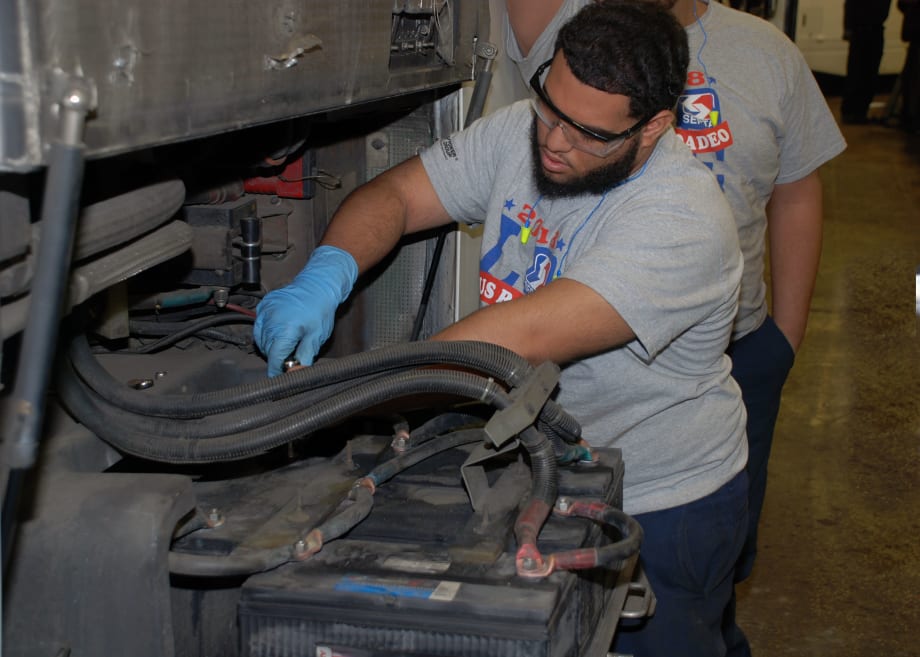
Angel Maldonado, removing cables prior to servicing a bus battery at SEPTA’s Midvale Shop.
SEPTA
4 min to read
Angel Maldonado, removing cables prior to servicing a bus battery at SEPTA’s Midvale Shop.
SEPTA
High school students don’t always have access to real-world learning and hands-on training. These kinds of experiences can be invaluable for students when making post-secondary education and career-path decisions. Internship programs that provide such experiences can be beneficial employment recruitment tools for the organizations that extend them and the participating students.
The Southeastern Pennsylvania Transportation Authority (SEPTA) has offered summer internships for high school students for almost all of its 55-year existence. During the 2018-19 academic year, SEPTA welcomed Philadelphia students from three technical schools as part of the High School Business Education Partnership (BEP)—the Authority’s first-ever school-year maintenance program (also the first internship program offered by the SEPTA’s Facilities Maintenance Division). Seven students recently celebrated their graduation from the program — four in Bus Automotive Technology and three in Elevator- Escalator Maintenance.
“The unemployment rate is low right now,” said SEPTA GM Jeffrey D. Knueppel. “I always say SEPTA is competing for customers and employees. As we face an aging workforce and a loss of expertise in our skilled trades, we must engage tomorrow’s workers early on in their education.”
The BEP grant was awarded to Philadelphia Works in partnership with the Philadelphia Youth Network, School District of Philadelphia, SEPTA and Rhoads Industries and designed to give high school students the opportunity to obtain career related work-based learning experiences. Students who met the academic criteria were recommended by their teachers and endorsed by the School District of Philadelphia before being interviewed by SEPTA. From November–May, students worked one eight-hour day a week, from 6 a.m.-3 p.m., and were not allowed to be absent or late more than three times.
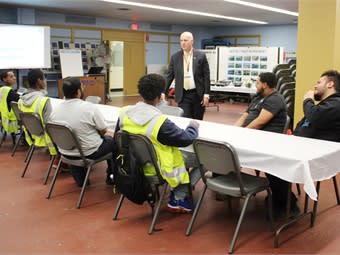
GM Jeff Knueppel talking to students about their experiences.
SEPTA
“The fact that the students were here at 6 a.m. speaks to their dedication,” said Stephanie Deiger, SEPTA assistant GM of Employee Development and Relations.
Students received classroom and on-the-job training. They were each assigned an instructor as they demonstrated inspections and maintenance procedures for the designated departments. Instructors combined theory and practical applications including electrical and shop safety, usage of hand tools and preventative maintenance inspection training.
All of the program participants may have just found their professional calling. At their program graduation ceremony, students took to the podium to express their gratitude toward SEPTA and the staff, as well as their desire to work for the Authority in the future.
“I enjoyed my time here and I learned a lot from the instructors. It was a good experience.” said David Valentin, a student at Philadelphia’s Jules E. Mastbaum Area Vocational/Technical School who participated in the Automotive Technology Program.
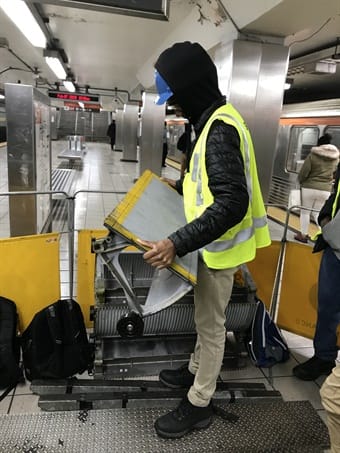
Abdul-Zahir Duncan, inspecting an escalator step assembly at SEPTA’s Oregon Broad Street Line station.
SEPTA
Valentin’s fellow Automotive Technology graduate Angel Maldonado [from A. Philip Randolph Career and Technical High School] took his employment aspirations right to the top, telling GM Knueppel that he was “looking for a career.”
Becoming a full-time SEPTA employee is not an unattainable goal for the graduates. John Miller, the Authority’s Chief Technical Instructor for Bus, still has his 1970 SEPTA student internship identification card. Irving Then, who attended the graduation ceremony, once found himself in the same position at the BEP participants.
“Irving attended our High School Summer Internship Program at our Berridge Shop after graduating from Philadelphia’s Swenson Arts and Technology High School in 2010,” said Miller. “In 2012, Irving was hired as bus apprentice. He successfully completed that program, passed the performance test and was promoted to first class vehicle equipment maintenance mechanic in 2015. Since then, Irving completed Bus HVAC Specialist School and passed the performance test. He was promoted to HVAC specialist in 2017.”
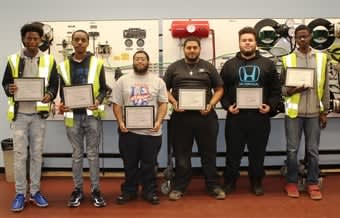
Students with their certificates after completing program.
SEPTA
Being involved in partnerships such as BEP helps organizations like SEPTA create pipelines to jobs. The success of these programs relies on the commitment of students and employee instructors.
“The students put in many hours learning about their crafts and are well on their way to becoming the next generation of transportation professionals,” said Knueppel. “The efforts of our Elevator Escalator and Automotive Technology instructors made this program possible. Their support of the students ensures that SEPTA will have a pool of skilled workers ready to join us so that we continue to provide quality transportation to the people of Southeastern Pennsylvania.”
Heather Redfern is the Public Information Manager for the Southeastern Pennsylvania Transportation Authority.
Subscribe to Our Newsletter
More Blog Posts
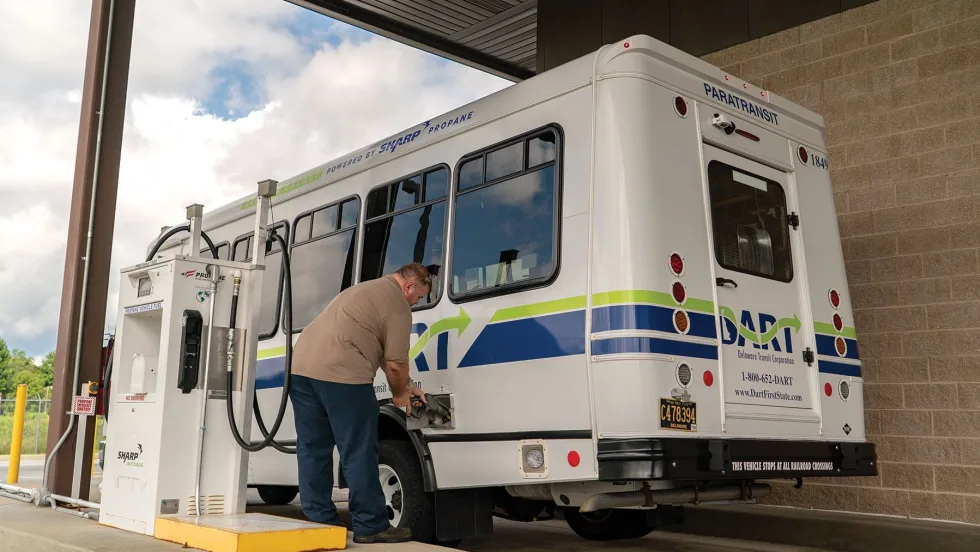
Building a Winning FTA Grant Proposal: Why Propane Autogas is the Pragmatic Choice for Fleet Resilience
With $610 million available through the FY 2026 Buses and Bus Facilities Competitive Program and the Low or No Emission Grant Program, agencies must build a compelling case before the September 21 deadline that balances environmental compliance with operational feasibility.
Read More →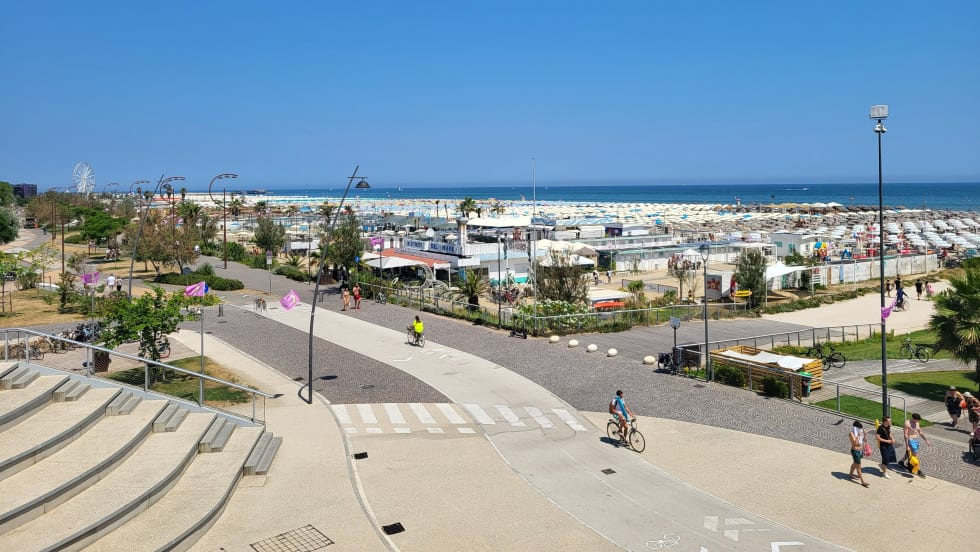
Velo-city Conference 2026: Latest Trends in Cycling as Part of Urban Mobility
The global cycling conference highlighted how cities are integrating bicycles into multimodal transportation networks, expanding cycle tourism and reshaping urban mobility.
Read More →
Kindness Isn’t Soft...It’s Strategic.
Mike Bismeyer — often known as “The Kindness Guy” — has spent more than 17 years in public transit and mobility, serving in industry leadership roles, speaking across North America, and advocating for stronger workplace cultures. But his message doesn’t come from theory. It comes from lived experience.
Read More →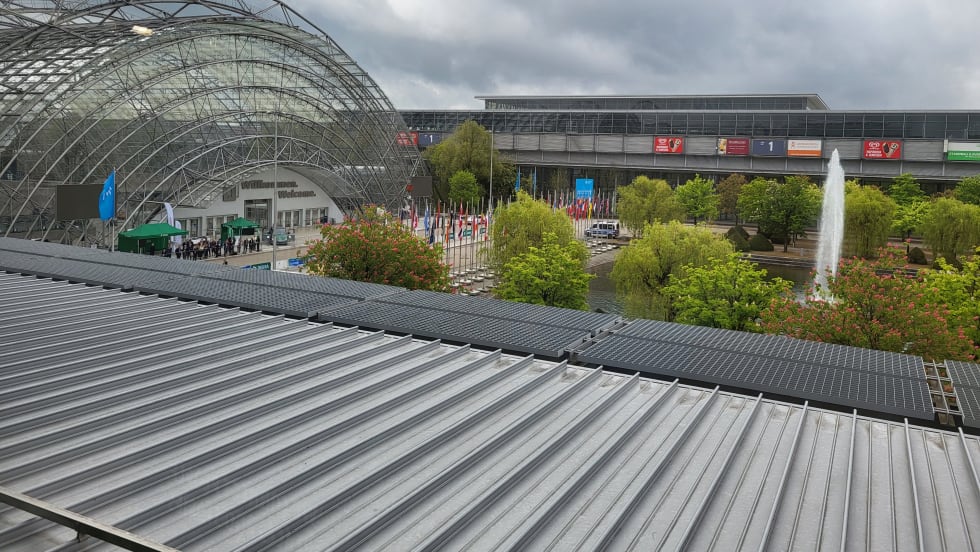
Inside ITF 2026: Transport Reacts to A Challenging World
Transport leaders from around the world gathered in Leipzig, Germany, for the 2026 International Transport Forum to discuss resilience, climate impacts, supply chains and the future of sustainable mobility.
Read More →
Every Ride Tells a Story — But You’re Not Just Selling the Ride
You’re selling the moment, the meaning, and the emotion behind it.
Read More →
How Digital Signage is Reshaping the Traveler Experience at Transportation Hubs
What was once a landscape of static signs has evolved into a responsive, immersive environment powered by real-time visual communication.
Read More →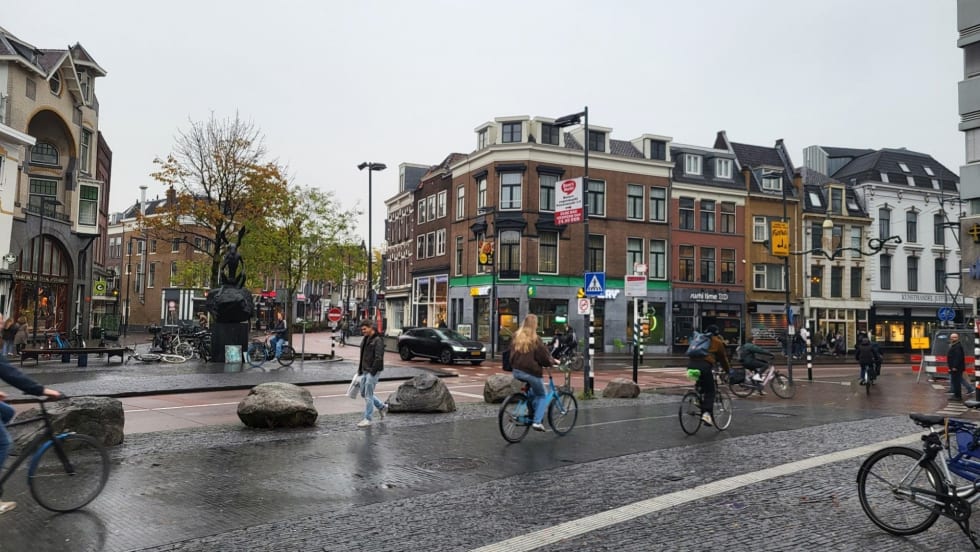
Latest Trends in Urban Mobility from Polis Conference 2025
Polis comprises cities and regions, as well as corporate partners, from across Europe, promoting the development and implementation of sustainable mobility. This year’s event had over a thousand attendees across various policy forums and an exhibition.
Read More →
Why Transit Leaders Require Better Tools for Operational Clarity In Today’s Tech-Fragmented Environment
Across North America and beyond, transit agency officials are contending with a perfect storm of operational headaches and strategic challenges that hamper daily service and long-term progress.
Read More →
The Powerless Brokers: Why California Can’t Build Transit
It is no secret that transit in the U.S. is slow and expensive to build.
Read More →
Why Transport Sustainability Should Focus on People Instead of Cars
Simply incentivizing electrification is not enough to make a meaningful impact; we must shift our focus toward prioritizing public transportation and infrastructure.
Read More →