



RELATED: How Billions of Dollars in Transportation Spending Can Transform Communities
How an Innovative Plan Helped a Veteran Find Work Building Railcars
It is the early 2000s, and as the sun rises over Southern California, most people are still fast asleep. Kristian Mendoza, however, is up and getting ready for work. He doesn’t have to be in until eight, but his commute can sometimes take up to an hour-and-a-half each way. This job pays so little that he can barely afford the gas to commute to it, let alone provide the time and care he would like for his two young children.

Alaa Milbes・Senior Communications Specialist, Jobs to Move America

Marines march in 2011 New York Veterans Day Parade. Photo: DVIDSHUB/Wikimedia Commons
4 min to read
.jpg)
Marines march in 2011 New York Veterans Day Parade. Photo: DVIDSHUB/Wikimedia Commons
It is the early 2000s, and as the sun rises over Southern California, most people are still fast asleep. Kristian Mendoza, however, is up and getting ready for work. He doesn’t have to be in until eight, but his commute can sometimes take up to an hour-and-a-half each way. This job pays so little that he can barely afford the gas to commute to it, let alone provide the time and care he would like for his two young children.
He would have liked to work a higher paying job closer to home, but for the first decade since returning to civilian life from the Marines in 2000, he had a hard time finding work. “I chose the military path because I wanted to have something to fall back on when I got out, but that wasn’t the case at all,” he said. “It took me six months to find my first job after getting out.”
Kristian's story is not uncommon. Many veterans struggle to find good-paying jobs after their service. Kristian was hoping to find a manufacturing job, but the industry that fueled the middle class for so many decades is a shell of what it once was, leaving people like him with few options.

A 2014 photo of Kinkisharyo International's first light rail car delivered to Los Angeles Metro under the company's P3010 contract. Photo: Business Wire
However, in Los Angeles, that’s starting to change. For the past five years, the Los Angeles County Metropolitan Transportation Authority (LA Metro) has been using an innovative approach to its purchase of bus and rail vehicles called the U.S. Employment Plan. The plan aims to create good, well-paying jobs through recruitment and training for people who have been historically excluded from the manufacturing industry.
LA Metro worked with Jobs to Move America; the International Brotherhood of Electrical Workers, Local 11; and Los Angeles Mayor Eric Garcetti to pilot the program in 2012. Kinkisharyo International, the company that was awarded the bid, committed to creating 235 U.S. jobs based on the employment plan guidelines. To date, the company has delivered 50 railcars, 38 of which are already in operation on the LA Metro's light rail lines.
The agreement includes a community-labor partnership, as well as a commitment to explore additional skills training and assistance for disadvantaged U.S. workers. To date, the company has exceeded its commitments, employing around 400 workers, most of whom are people of color.

Kristian Mendoza
Today, Kristian is one of the 400, working for Kinkisharyo as a Tool Crib Coordinator. “I keep inventory and distribute all consumables and personal protective equipment for the company. I also purchase those items and make sure all damaged tools are sent out for repair or warranty,” he said.
Kristian is a powerful example of how our economy can improve when we invest in U.S. workers. After struggling for years, he has been able to move out of his family’s home and into a place close to the factory in the Antelope Valley. He finally gets to use the skills he learned in the Marines so many years ago and continues to grow professionally through training offered to employees.
The U.S. Employment Plan is one of many things that Jobs to Move America is pushing for to make our transit dollars go the distance — to build cleaner public transit systems, create and retain good U.S. jobs, and generate opportunities for unemployed Americans like veterans, single parents, and residents of low-income neighborhoods.
More recently, LA Metro included a local version of the U.S. Employment Plan in its recent RFP for up to 1,200 buses, potentially worth $805 million. If adopted, the plan has the potential to create or retain thousands of jobs for U.S. workers up and down the supply chain.
“My son Alex is now 18 and my daughter Sophie is 16. This job has allowed me to take care of them,” Kristian said, “The Jobs to Move America program helped me do that.”
Governmental and transit agencies, manufacturers, community, and labor groups need to work together so that more people like Kristian can support their families and live happy, healthy lives.
Alaa Milbes is senior communications specialist for Jobs to Move America, a national coalition uniting more than 30 community, labor, faith, civil rights, philanthropic, academic, and environmental groups.
Subscribe to Our Newsletter
More Blog Posts
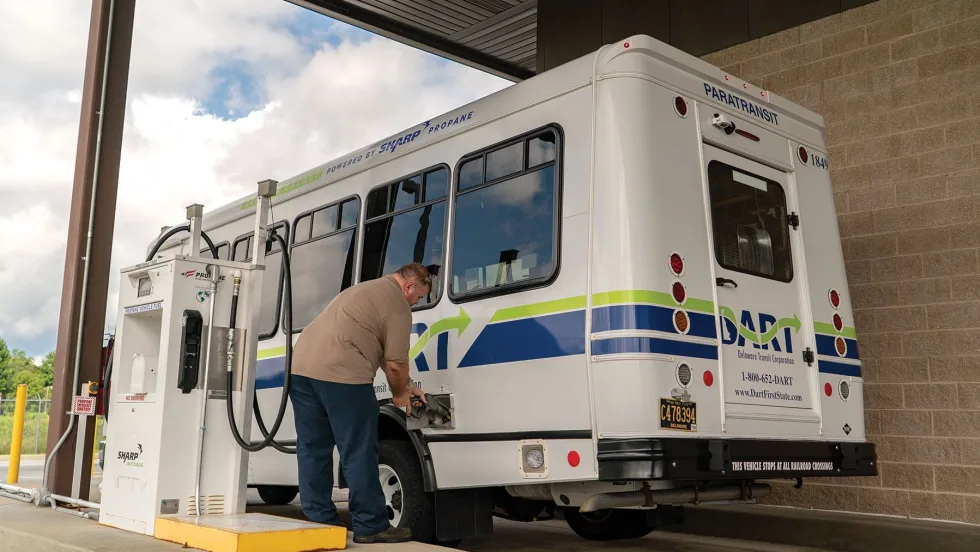
Building a Winning FTA Grant Proposal: Why Propane Autogas is the Pragmatic Choice for Fleet Resilience
With $610 million available through the FY 2026 Buses and Bus Facilities Competitive Program and the Low or No Emission Grant Program, agencies must build a compelling case before the September 21 deadline that balances environmental compliance with operational feasibility.
Read More →
Velo-city Conference 2026: Latest Trends in Cycling as Part of Urban Mobility
The global cycling conference highlighted how cities are integrating bicycles into multimodal transportation networks, expanding cycle tourism and reshaping urban mobility.
Read More →
Kindness Isn’t Soft...It’s Strategic.
Mike Bismeyer — often known as “The Kindness Guy” — has spent more than 17 years in public transit and mobility, serving in industry leadership roles, speaking across North America, and advocating for stronger workplace cultures. But his message doesn’t come from theory. It comes from lived experience.
Read More →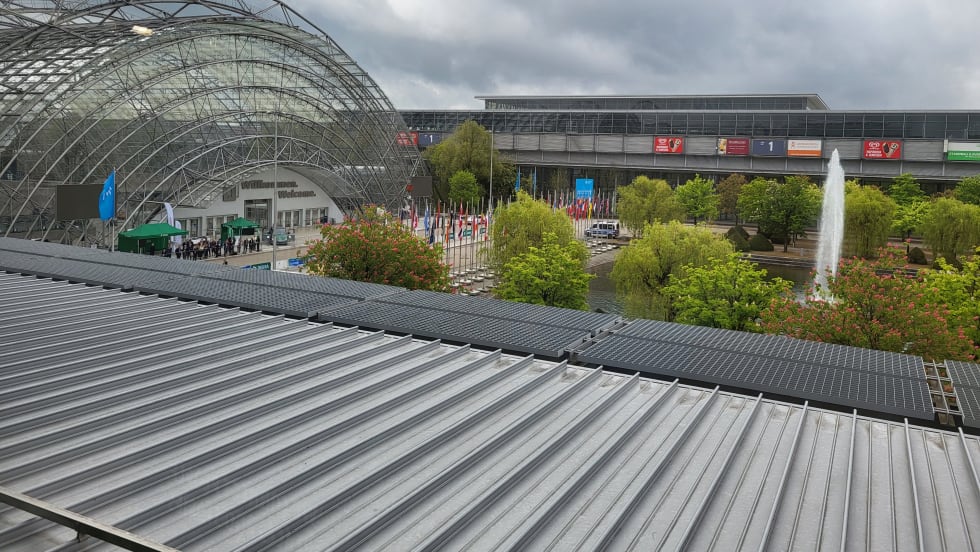
Inside ITF 2026: Transport Reacts to A Challenging World
Transport leaders from around the world gathered in Leipzig, Germany, for the 2026 International Transport Forum to discuss resilience, climate impacts, supply chains and the future of sustainable mobility.
Read More →
Every Ride Tells a Story — But You’re Not Just Selling the Ride
You’re selling the moment, the meaning, and the emotion behind it.
Read More →
How Digital Signage is Reshaping the Traveler Experience at Transportation Hubs
What was once a landscape of static signs has evolved into a responsive, immersive environment powered by real-time visual communication.
Read More →
Latest Trends in Urban Mobility from Polis Conference 2025
Polis comprises cities and regions, as well as corporate partners, from across Europe, promoting the development and implementation of sustainable mobility. This year’s event had over a thousand attendees across various policy forums and an exhibition.
Read More →
Why Transit Leaders Require Better Tools for Operational Clarity In Today’s Tech-Fragmented Environment
Across North America and beyond, transit agency officials are contending with a perfect storm of operational headaches and strategic challenges that hamper daily service and long-term progress.
Read More →
The Powerless Brokers: Why California Can’t Build Transit
It is no secret that transit in the U.S. is slow and expensive to build.
Read More →
Why Transport Sustainability Should Focus on People Instead of Cars
Simply incentivizing electrification is not enough to make a meaningful impact; we must shift our focus toward prioritizing public transportation and infrastructure.
Read More →