



How National Branding Could Boost Transit's Image
What if every single city or state had their own way of managing traffic with versions of solid/dotted/colored lines, sign shapes, and signal lights, and none of them followed a standard convention? As we consider many aspects of public transportation across the country, this scenario is somewhat the reality.
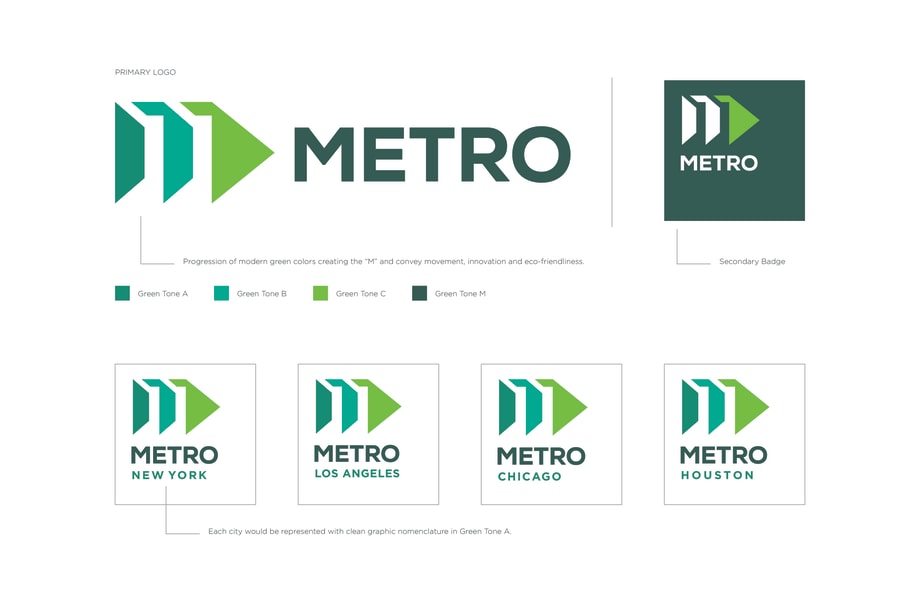
Based on the highest level of consumer recognition for tested naming, the term METRO is consistently and positively recognized as being associated with public transportation.
Imagine you are driving down the highway and as you enter the city limits of a different town, all the road signage changes: the colors, the wording, the icons. What if every single city or state had their own way of managing traffic with versions of solid/dotted/colored lines, sign shapes, and signal lights, and none of them followed a standard convention? This would undoubtedly create a sense of unease, trepidation, and confusion…or worse.
As we consider many aspects of public transportation across the country, this scenario is somewhat the reality. Each local system is unique — bus names vary, routes and street names change rapidly, signage is inconsistent, and the use of technology for trip planning and fare payment can be quite divergent. These public transportation systems — just like our highways and roads — are an essential asset for municipal structure, development, and growth for cities and towns worldwide. So, why isn’t the same consistency applied to something so very important to the best interest of people and our cities?
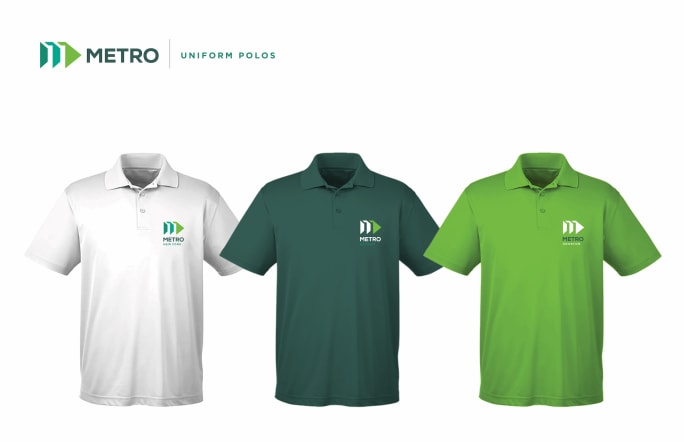
The unified name would allow for a powerful, consolidated communications dialogue to riders, potential riders, and the general public as voters as a whole.
The importance of branding
Let’s start by looking at the influence of branding.
As public transportation systems grew and expanded over the decades, local public transit systems knew that promoting awareness and creating recognition was critical to building ridership. To make the system appear to be “theirs,” the idea that infusing the local culture was considered an important aspect of successful engagement that would promote trial and usage. Sounds like a strong strategy, right? Sure, but the question is, “what real benefit does public transportation get from this unique branding?” In the bigger picture of operations and adoption of public transportation usage by the community, none. In fact, this brand individualism creates unwarranted burdens of marketing, education, and technology directly on the local agencies.
But isn’t branding important? Absolutely. Branding is essential in helping customers understand how certain products and services relate to their needs, their emotions, their preferences, and gives them details that will produce confident purchasing decisions — against other competing options. Branding is about an engineered competitive advantage.
However, public transit systems are typically the only game in town for the comprehensive services they provide with no actual in-category competitors to brand against. Public transit systems are about getting people from point A to point B for those who don’t have a vehicle or for many who choose not to use a vehicle for reasons of cost savings, ease, or environmental benefits. The decision to ride transit in one’s city has nothing to do with brand preference. Just like the name of a highway or the design of a street sign has little bearing on the route you take to get to your destination. You simply understand the rules of road travel and use the one that is quickest without any concern for the brand of the road.
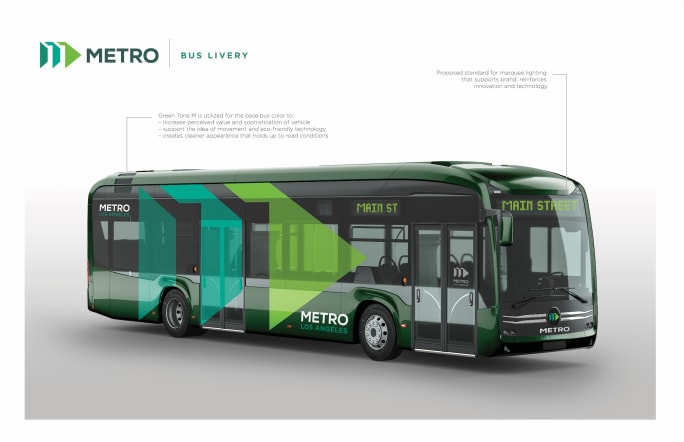
Across the world, METRO is a well-accepted term — and for a vast number of agencies, METRO is already being used as a part of their identities.
Photos Courtesy PAVLOV Advertising
Creating one brand
The real need is to brand the entire public transit category against alternatives.
THE VISION: A single, unified, universal brand presence for public transportation. A strong national identity that maximizes public transportation’s visibility across the country that efficiently and effectively promotes its contributions, and makes its services more relevant, understood, and desired.
The unified name would allow for a powerful, consolidated communications dialogue to riders, potential riders, and the general public as voters as a whole. If map icons for transfer points, fare zones, and intermodal connections for transit bus and rail were more consistent, then riders and visitors could easily adapt to different systems. The unified name would promote increased industry equity. In this day, where more and more people travel and relocate, a unified name would resolve public confusion for city-to-city users with a singular graphic identity that builds confidence. A consolidated identity for public transit would also allow for a dynamic interactive digital interface with the public — such as websites, real time trackers, and trip planners — that would open possibilities as immense as what Google Maps accomplished.
What if every system in North America was simply named, branded, and liveried as … METRO?
Based on the highest level of consumer recognition for tested naming, the term METRO is consistently and positively recognized as being associated with public transportation. Across the world, METRO is a well-accepted term — and for a vast number of agencies, METRO is already being used as a part of their identities. So, the proposed structure for the new national identity system is an easy choice — METRO. Then for organizational structure and management of the national system, a city designation would be added: METRO DALLAS, METRO NEW YORK, METRO DENVER, METRO LA, etc.

If map icons for transfer points, fare zones, and intermodal connections for transit bus and rail were more consistent, then riders and visitors could easily adapt to different systems.
THE FIVE-TO-10-YEAR METRO TRANSITION PLAN
Now wait, wait, wait! Before you stop reading and think this is crazy and impossible, hear it out. It is totally understood that a conversion like this could be disruptive and costly. But when you consider a five-to-10-year conversion plan, and all the larger financial and consumer benefits, this plan creates a perfect route to the better public transportation future that everyone in the industry really wants.
We believe every visionary transit system leader should set a brand conversion to a unified “METRO” brand as a 10-year goal.
Over time, as vehicles, signs, and materials are replaced and new ones are brought online, the switch could be practically budget neutral. Intermediate steps would involve the development of common wayfinding elements and icons.
Portions of expenses once appropriated to localized marketing could be applied to the transition, and then, long-term, would be more effectively allocated to improve operations, driver training and retention, and expansion of quality services. With a national program, communication efforts regarding public transportation would have a larger and more impactful voice at a substantially lower cost to the local authorities.
NATIONAL PROGRAM HIGHLIGHTS
For the new system, a national METRO brand book will be developed that will include:
Integrated Google-driven map website.
Templated city website graphics.
National video, print, direct mail, advertising, and radio creative with city donuts (ridership, route communication, safety, new service, park & ride, event services, etc.).
Signage, wayfinding, uniform, and bus/train/vehicle designs.
National farebox system.
Consistent operator training, support programs and uniforms.
No matter where you go, METRO is there to help you go further.
With national METRO, public transportation will be strengthened through consistency of messaging and imagery that will give current and potential new riders a much greater and deeper understanding of the far-ranging benefits of public transportation, and, most importantly, established trust in their local METRO. This is a very attainable plan to move public transit in a direction that will make a substantial impact on the competitive and environmental challenges the industry faces every day.
Khris Kesling serves as chief creative officer at Fort Worth, Texas-based PAVLOV Advertising, a full-service advertising/marketing agency with proven performance in a wide range of industries.
More Blog Posts
Building a Winning FTA Grant Proposal: Why Propane Autogas is the Pragmatic Choice for Fleet Resilience
With $610 million available through the FY 2026 Buses and Bus Facilities Competitive Program and the Low or No Emission Grant Program, agencies must build a compelling case before the September 21 deadline that balances environmental compliance with operational feasibility.
Read More →
Velo-city Conference 2026: Latest Trends in Cycling as Part of Urban Mobility
The global cycling conference highlighted how cities are integrating bicycles into multimodal transportation networks, expanding cycle tourism and reshaping urban mobility.
Read More →
Kindness Isn’t Soft...It’s Strategic.
Mike Bismeyer — often known as “The Kindness Guy” — has spent more than 17 years in public transit and mobility, serving in industry leadership roles, speaking across North America, and advocating for stronger workplace cultures. But his message doesn’t come from theory. It comes from lived experience.
Read More →
Inside ITF 2026: Transport Reacts to A Challenging World
Transport leaders from around the world gathered in Leipzig, Germany, for the 2026 International Transport Forum to discuss resilience, climate impacts, supply chains and the future of sustainable mobility.
Read More →
Every Ride Tells a Story — But You’re Not Just Selling the Ride
You’re selling the moment, the meaning, and the emotion behind it.
Read More →
How Digital Signage is Reshaping the Traveler Experience at Transportation Hubs
What was once a landscape of static signs has evolved into a responsive, immersive environment powered by real-time visual communication.
Read More →
Latest Trends in Urban Mobility from Polis Conference 2025
Polis comprises cities and regions, as well as corporate partners, from across Europe, promoting the development and implementation of sustainable mobility. This year’s event had over a thousand attendees across various policy forums and an exhibition.
Read More →
Why Transit Leaders Require Better Tools for Operational Clarity In Today’s Tech-Fragmented Environment
Across North America and beyond, transit agency officials are contending with a perfect storm of operational headaches and strategic challenges that hamper daily service and long-term progress.
Read More →
The Powerless Brokers: Why California Can’t Build Transit
It is no secret that transit in the U.S. is slow and expensive to build.
Read More →
Why Transport Sustainability Should Focus on People Instead of Cars
Simply incentivizing electrification is not enough to make a meaningful impact; we must shift our focus toward prioritizing public transportation and infrastructure.
Read More →