




RELATED: SEPTA Looks to Past Experience for Papal Visit Service Plan
How Transit Was Key to Moving the Masses During Papal Visit
In case you missed it, Pope Francis visited America — and was followed by hundreds of thousands of pilgrims during his stops in Washington, D.C., New York City and Philadelphia. It’s fitting, given Pope Francis’ penchant for public transportation, that transit played a key role in taking the masses to papal visit activities.
October 21, 2015
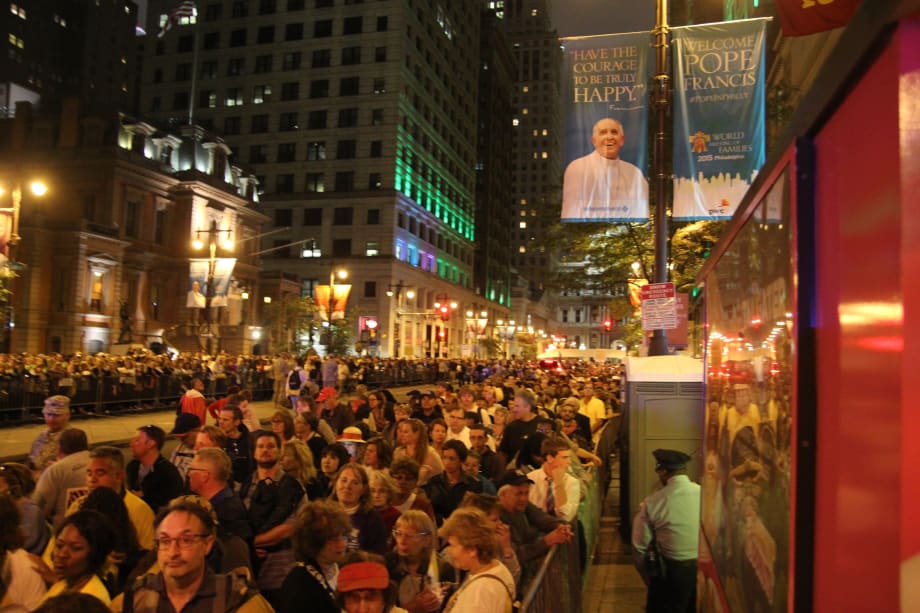
People waiting to take the Broad Street Line subway back to tour buses that were parked at AT&T Station in South Philadelphia following the Papal mass on Sunday, Sept. 27. Photo: SEPTA
3 min to read

In case you missed it, Pope Francis visited America — and was followed by hundreds of thousands of pilgrims during his stops in Washington, D.C., New York City and Philadelphia. It’s fitting, given Pope Francis’ penchant for public transportation, that transit played a key role in taking the masses to papal visit activities.
In Philadelphia, the Southeastern Pennsylvania Transportation Authority (SEPTA) started planning for Pope Francis’ first U.S. visit as soon as the Vatican announced the trip in November 2014. Operations staff met on a weekly basis from the beginning, working out logistics of the service the authority would be able to provide to transport as many people as possibly wanted to attend Papal Visit events. Accommodating SEPTA’s regular weekend ridership also had to be factored in the plan.

“We looked at our performance during big events in the past,” said SEPTA GM Jeff Knueppel. “We knew realistically how many people we were able to serve and created our Papal Visit plan based on those results.”
Eventually, every department at SEPTA was involved in the Papal Visit preparation, from police and revenue to procurement and engineering.
“This was an unprecedented event for us and we were doing things that we had not previously had to handle,” said Assistant GM, Operations Ron Hopkins. “For example, we had to create staging areas at our train stations, where customers would wait before pre-boarding the trains. Our Buildings and Bridges Department needed to determine how much fencing they needed for the waiting areas, as well as how many port-a-potties would be brought in for riders waiting at stations.”

When the weekend of Pope Francis’ visit to Philadelphia arrived (Sept. 26 to 27), it was “all hands on deck” for SEPTA. In addition to operators, conductors, engineers and dispatchers making sure vehicles were on the move, 700 employee ambassadors were located at stations throughout the SEPTA system, guiding passengers on and off trains and trolleys and answering questions. Approximately 300 staff members slept on cots at the authority’s headquarters and took showers in a trailer set up in the building’s parking lot.
“The majority of the passengers using our system that weekend were not from the Philadelphia region, or were not regular SEPTA riders,” said Hopkins. “We tapped into the knowledge our employees have of our system and of the Philadelphia region. We knew that our staff would be able to get the passengers to and from their destinations safely, would be able to answer questions about the city and would make the long hours fun.”
Many stations had a party-like atmosphere, with travelers entertained by DJs, dancing and game playing while waiting for their SEPTA rides.

When the final tickets were taken and turnstiles made their last turns, SEPTA provided approximately 750,000 rides on its Regional (commuter) Rail, Broad Street Line subway and Market-Frankford Line subway-elevated trains, trolleys and buses over the weekend.
“We transported that many people safely and without incident,” said Hopkins. “Our efforts to get the riders home at the end of the day on Sunday were phenomenal. “

Passengers came in to Center City during a six-to-seven hour time period, but at night, when the Papal mass ended around 6:30 p.m., they were leaving at the same time, from the same stations.
“Our employees had our major stations cleared before 9 p.m. on Sunday evening, long before we had anticipated,” Hopkins added. “The flow of thank-yous we received as the pilgrims made their way home, made the planning and long hours well-worth our efforts. “
Heather Redfern is the Public Information Manager for the Southeastern Pennsylvania Transportation Authority.
Subscribe to Our Newsletter
More Blog Posts
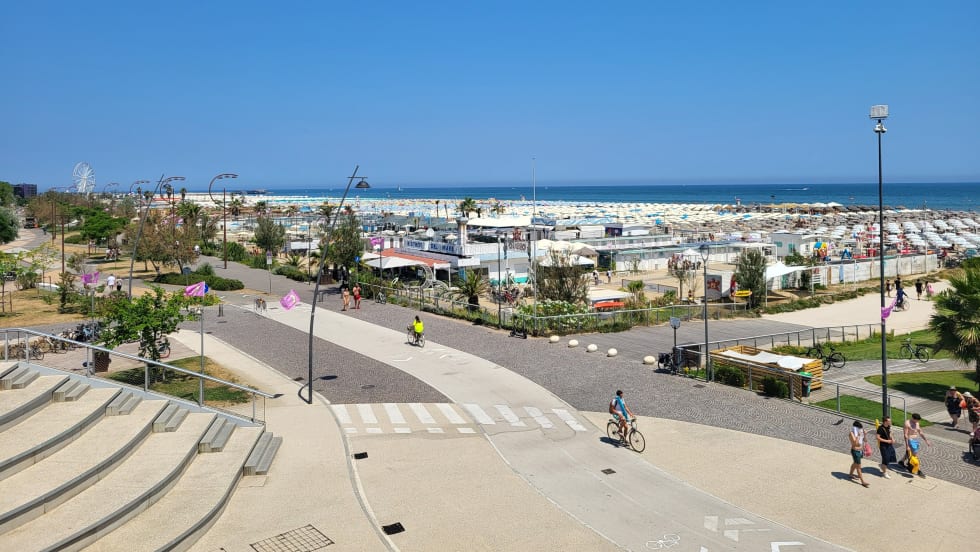
Velo-city Conference 2026: Latest Trends in Cycling as Part of Urban Mobility
The global cycling conference highlighted how cities are integrating bicycles into multimodal transportation networks, expanding cycle tourism and reshaping urban mobility.
Read More →
Kindness Isn’t Soft...It’s Strategic.
Mike Bismeyer — often known as “The Kindness Guy” — has spent more than 17 years in public transit and mobility, serving in industry leadership roles, speaking across North America, and advocating for stronger workplace cultures. But his message doesn’t come from theory. It comes from lived experience.
Read More →
Inside ITF 2026: Transport Reacts to A Challenging World
Transport leaders from around the world gathered in Leipzig, Germany, for the 2026 International Transport Forum to discuss resilience, climate impacts, supply chains and the future of sustainable mobility.
Read More →
Every Ride Tells a Story — But You’re Not Just Selling the Ride
You’re selling the moment, the meaning, and the emotion behind it.
Read More →
How Digital Signage is Reshaping the Traveler Experience at Transportation Hubs
What was once a landscape of static signs has evolved into a responsive, immersive environment powered by real-time visual communication.
Read More →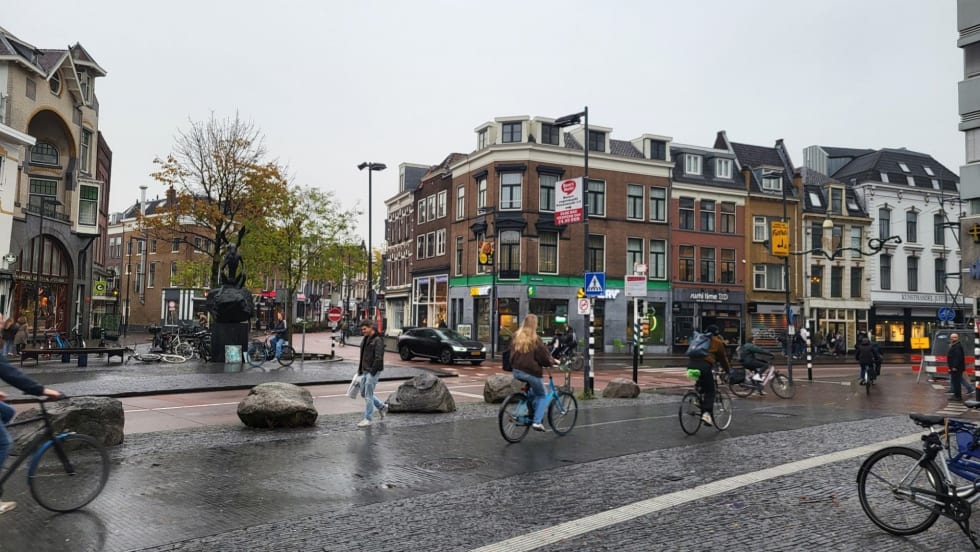
Latest Trends in Urban Mobility from Polis Conference 2025
Polis comprises cities and regions, as well as corporate partners, from across Europe, promoting the development and implementation of sustainable mobility. This year’s event had over a thousand attendees across various policy forums and an exhibition.
Read More →
Why Transit Leaders Require Better Tools for Operational Clarity In Today’s Tech-Fragmented Environment
Across North America and beyond, transit agency officials are contending with a perfect storm of operational headaches and strategic challenges that hamper daily service and long-term progress.
Read More →
The Powerless Brokers: Why California Can’t Build Transit
It is no secret that transit in the U.S. is slow and expensive to build.
Read More →
Why Transport Sustainability Should Focus on People Instead of Cars
Simply incentivizing electrification is not enough to make a meaningful impact; we must shift our focus toward prioritizing public transportation and infrastructure.
Read More →
Transit ROI & System Efficiencies Will Drive 'Big, Beautiful' Transit Funding
For many years, the narrative surrounding public transit improvements has been heavily weighted toward environmental gains and carbon reduction. While these are undeniably crucial long-term benefits, the immediate focus of this new funding environment is firmly on demonstrable system efficiencies and a clear return on investment.
Read More →