Innovation Addresses the Needs of Older Adults, ADA Passengers in Rural Areas
Access to reliable transportation ensures that older adults and people with disabilities living in rural areas are able to get the healthcare they need.
The good news is that various states are now introducing innovative transportation solutions to help seniors and people with disabilities get access to crucial healthcare.
Credit:
RTA
4 min to read
Access to reliable transportation ensures that older adults and people with disabilities living in rural areas are able to get the healthcare they need. At the moment, there are significant health disparities in rural communities as they “have limited access to public health services,” according to Rural Public Health: Improving the Health and Well-Being of Rural Populations.
People living rurally want to improve their health. One study showed that people living in rural Mexico would use a rural bus service two to three times per week for health reasons if it were available. The good news is that various states are now introducing innovative transportation solutions to help seniors and people with disabilities get access to crucial healthcare.
Ad Loading...
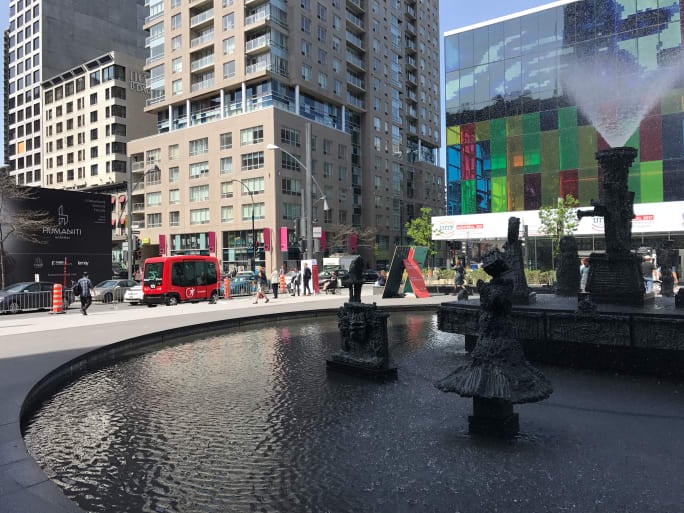
AVs are most impactful when they are accessible, shared, and complementary to a community’s public transit system.
Credit:
METRO Magazine
Autonomous Vehicles (AVs)
AVs, otherwise known as driverless vehicles, are being utilized in rural locations, including Minnesota and North Carolina.
An 18-month pilot scheme called goMARTI is currently underway in Grand Rapids, Minn. A total of five self-driving Toyota Sienna Autono-MaaS are being used across 17 square miles. Explaining the reason for using AVs, Israel Duanis, head of autonomous vehicles at Via, says “AVs are most impactful when they are accessible, shared, and complementary to a community’s public transit system.”
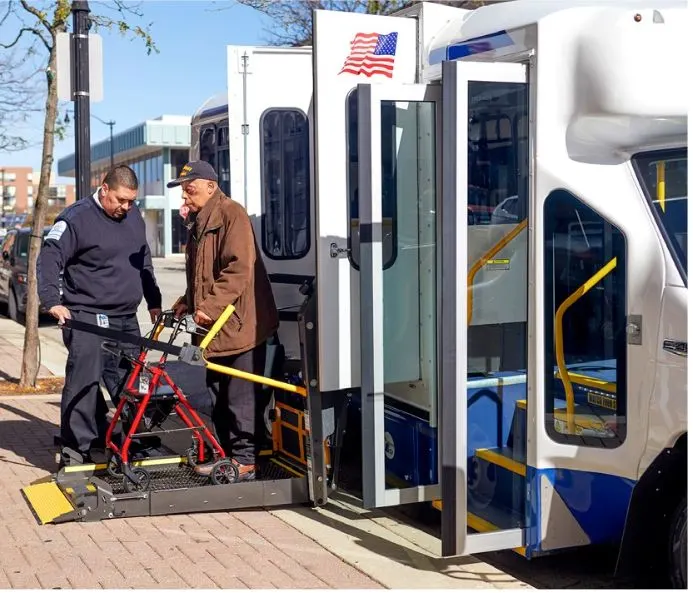
Three of the vehicles have been adapted to meet the Americans with Disabilities Act (ADA), so the scheme is ideal for aging individuals and people with disabilities needing to access healthcare. Best of all, there’s no charge for the service. This is particularly important for people with disabilities as there’s a pay gap disparity, which means they typically make just 66 cents for every dollar a fully-abled person earns.
Over in North Carolina, $10.4 million in federal grants is being used to introduce AV microtransit to 11 rural locations. AV microtransit has been chosen because it’s accessible and offers good quality service.
The solution is beneficial for older adults and people with disabilities, according to Sarah Searcy, deputy director, innovations and data, in North Carolina’s Department for Transportation Integrated Mobility Division (IMD). “There are many folks with disabilities or who are elderly that may want another option to move around. We want to make sure the network serves them.”
Ad Loading...
Community Bus Service
Not every rural transport solution is as technical as AVs. Minnesota’s answer to the problem is to utilize school buses that sit unused for the majority of the day.
The state hasn’t yet implemented this, but a recent study highlighted five key ways to improve transport in rural locations, three of which will benefit aging individuals and people living with disabilities:
Transform the volunteer driver program.
Utilize underused cars.
Create a community bus service with existing assets.
As the findings were revealed, Thomas Fisher, professor, director of the Minnesota Design Center, and Dayton Hudson, chair in Urban Design in the College of Design at the University of Minnesota, said “This research illustrates the need for a mindset shift from simply providing transit for people to building social networks to facilitate utilizing vehicle and driver assets that communities already have.”
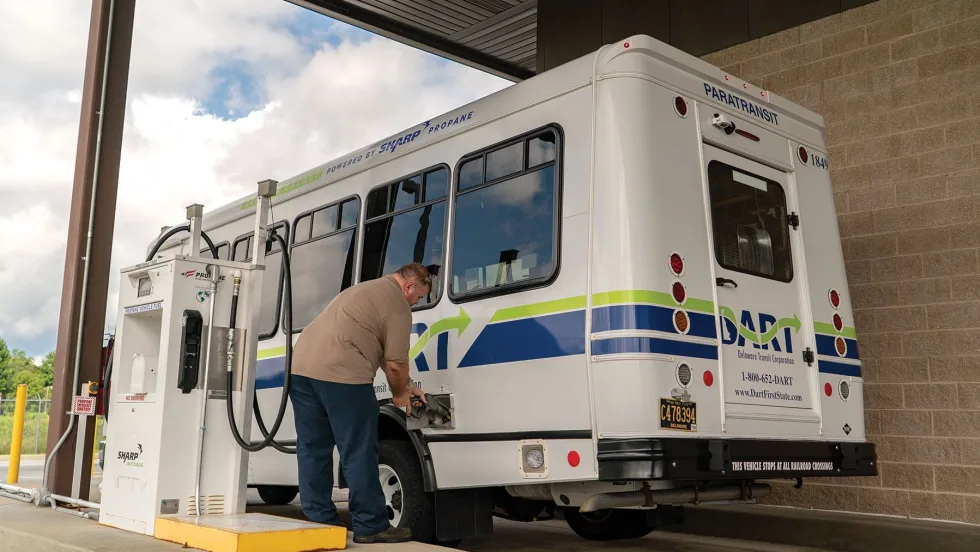
The school bus is a particularly clever idea as they can typically carry 90 passengers at a time. However, they will need to be ADA-compliant, and accessible parking spots will be needed at drop-off and pick-up locations, such as hospitals and healthcare centers. This means that an access aisle that’s at least five feet wide must be available in the parking lot.
Ad Loading...
To make life as easy as possible for transport users, accessible parking spaces for vehicles carrying disabled passengers must be clearly marked and painted with hatch lines to prevent other drivers from parking in them.
Older adults and people with disabilities living rurally have found it hard for a long time to access the transport they need to access healthcare services. But all that is changing thanks to innovative solutions, such as ridesharing.
Credit:
Via
Cut-Price Ridesharing
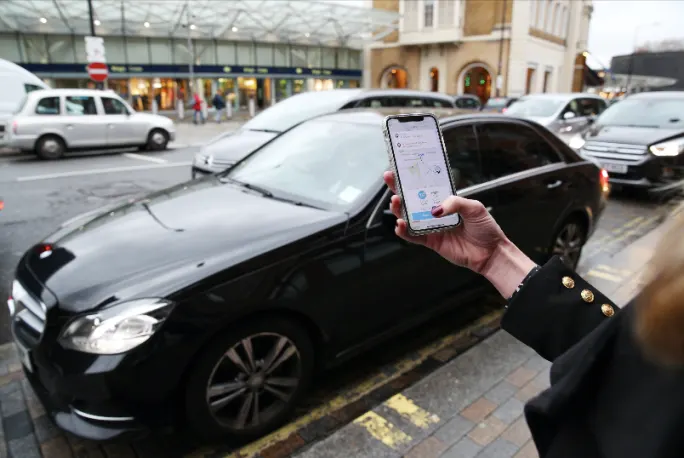
In Indiana, a cut-price ridesharing program Catch-a-Ride has been launched across five rural counties.
The program is aimed at older adults and those with disabilities, although everyone is welcome to use it. There are currently 32 vehicles in the program, all of which are wheelchair accessible. The ridesharing program is affordable and riders are charged a flat fee of $2 (or a reduced fee of $1) for the first five miles of their journey, then 25 cents per mile. Medicaid also covers the cost for some riders. Riders can request to be taken wherever they need to go.
“Our mission is working together to provide services that help people maintain their independence,” said Erin Thomas, the executive director of Lifetime Resources. “We do take people to medical trips — that's a big piece of it. But we also take them to work, we take them to the grocery shop, we take them to visit a friend, it doesn't matter.”
Older adults and people with disabilities living rurally have found it hard for a long time to access the transport they need to access healthcare services. But all that is changing thanks to innovative solutions like the ones highlighted above. So, if you're in need of transport in your rural home, check with the Department of Transport to see if there are any local schemes you can use.
With $610 million available through the FY 2026 Buses and Bus Facilities Competitive Program and the Low or No Emission Grant Program, agencies must build a compelling case before the September 21 deadline that balances environmental compliance with operational feasibility.
The global cycling conference highlighted how cities are integrating bicycles into multimodal transportation networks, expanding cycle tourism and reshaping urban mobility.
Mike Bismeyer — often known as “The Kindness Guy” — has spent more than 17 years in public transit and mobility, serving in industry leadership roles, speaking across North America, and advocating for stronger workplace cultures. But his message doesn’t come from theory. It comes from lived experience.
Transport leaders from around the world gathered in Leipzig, Germany, for the 2026 International Transport Forum to discuss resilience, climate impacts, supply chains and the future of sustainable mobility.
Polis comprises cities and regions, as well as corporate partners, from across Europe, promoting the development and implementation of sustainable mobility. This year’s event had over a thousand attendees across various policy forums and an exhibition.
Across North America and beyond, transit agency officials are contending with a perfect storm of operational headaches and strategic challenges that hamper daily service and long-term progress.
Simply incentivizing electrification is not enough to make a meaningful impact; we must shift our focus toward prioritizing public transportation and infrastructure.