




In case you missed it... Read our METRO blog, "Why transit should pay attention to Uber"
Maintaining Station Elevators & Escalators is a National Effort
For some public transit riders, the first mode of travel they take every day is not a transit authority’s trains or buses, but rather the elevators and escalators to get to a station’s platforms or vehicles. And to keep them moving, elevators and escalators require as much attention as an organization’s fleet.
November 22, 2013
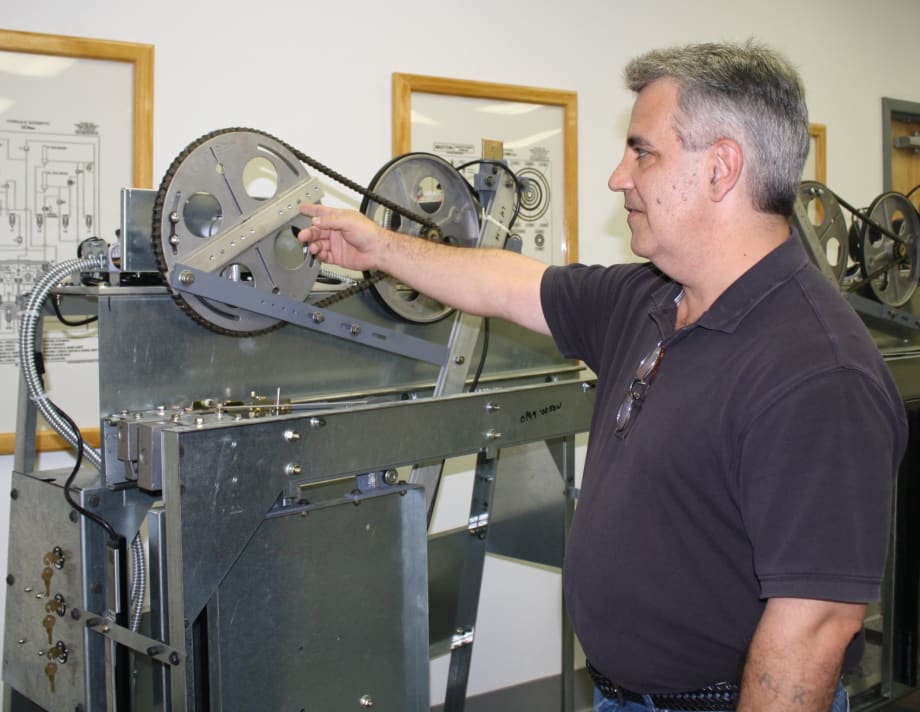
Alex Rosmondo, SEPTA mechanical maintenance manager and instructor, demonstrates the mock-ups SEPTA uses in its training facility.
Photo: SEPTA
3 min to read
For some public transit riders, the first mode of travel they take every day is not a transit authority’s trains or buses, but rather the elevators and escalators to get to a station’s platforms or vehicles. And to keep them moving, elevators and escalators require as much attention as an organization’s fleet.
Where some transit organizations outsource escalator and elevator repairs to third party contractors, other agencies like Washington Metropolitan Area Transit Authority (WMATA), New York City Transit (NYCT) and the Southeastern Pennsylvania Transportation Authority (SEPTA) have brought the work in-house, with their own dedicated mechanics, trained by the organizations.
“Elevators and escalators take a lot of abuse,” said Alex Rosmondo, SEPTA mechanical maintenance manager and instructor. “The equipment operates around the clock, in places where they are exposed to the elements or prone to acts of vandalism. Having our own crews allows us to stay on top of the elevators and escalators with daily, weekly, monthly and annual inspections.”
Getting Hands-On Maintenance Experience
To prepare employees for working on the people movers, SEPTA, as well as WMATA and NYCT, created labs to give mechanics hands-on experience with the equipment.
“We can’t take elevators and escalators in the field out of service to train our apprentices and incumbent mechanics,” said Rosmondo. “Our facility allows our team to participate in simulation training on hydraulic and electrical mock-ups, with parts they will find in the field.”
SEPTA’s training facility will also be outfitted with a full-size demonstration escalator and elevator with real-life functionality.
“Utilizing our in-house resources has been extremely beneficial for SEPTA,” said Jeff Knueppel, SEPTA’s Deputy GM. “We have the ability to respond to equipment issues quickly, which in turn has resulted in solid elevator and escalator reliability numbers.”
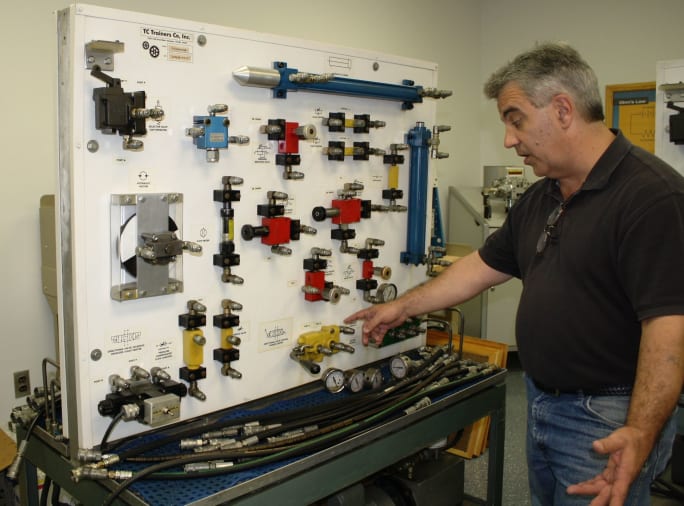
“Elevators and escalators take a lot of abuse,” said Rosmondo. “The equipment operates around the clock, in places where they are exposed to the elements or prone to acts of vandalism. Having our own crews allows us to stay on top of the elevators and escalators with daily, weekly, monthly and annual inspections.”
Photo: SEPTA
Not only does SEPTA work on its own elevator and escalator training and upkeep but, as part of an industry-wide consortium, collaborates with transit authorities across the country on the development of a national Transit Elevator/Escalator Maintenance Training and Apprenticeship Program adhering to standards set forth by the American Public Transportation Association (APTA).
The project is administered by the Transportation Learning Center and supported with matching funds from the Federal Transit Administration. Joining SEPTA, WMATA and NYCT in the consortium are Bay Area Rapid Transit (BART), Metropolitan Atlanta Rapid Transit Authority (MARTA) and Chicago Transit Authority (CTA), and their union partners.
The consortium was established in 2009 out of necessity. "New technology, like digital controls, combined with many current technicians nearing retirement age, meant that SEPTA and other agencies needed more training,” said Jack Clark, deputy director of the Transportation Learning Center. “Add to that the accessibility requirements for riders with disabilities and increasing needs for accessibility in an aging ridership, and the training needs become acute. The Consortium represented the first national effort to build the skills of the transit elevator/escalator technicians instead of relying on outside vendors.”
Ed LaGuardia, SEPTA’s recently retired chief engineering officer of bridges & buildings, was a national leader in transit elevator and escalator maintenance and played an instrumental role in gathering key people to be involved in the consortium and define industry training standards.
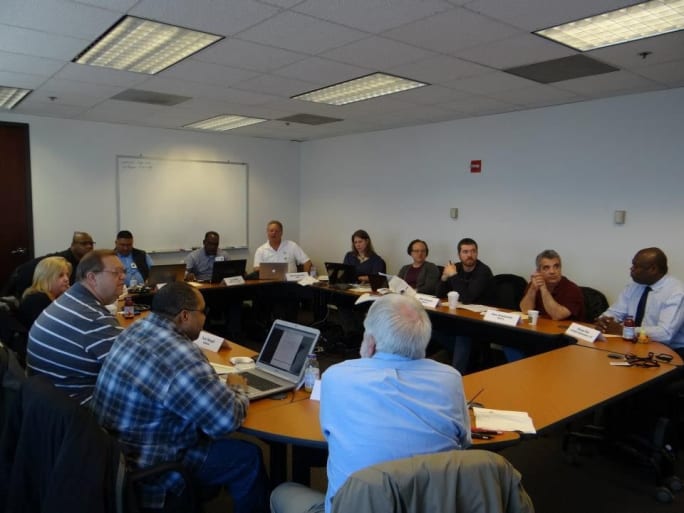
SEPTA, as part of an industry-wide consortium, collaborates with transit authorities across the country on the development of a national Transit Elevator/Escalator Maintenance Training and Apprenticeship Program adhering to standards set by APTA.
Photo: SEPTA
“In addition to Ed’s expertise, we are fortunate to have the unprecedented cooperation of labor and management,” said Clark. “We have union and management representatives working together to develop the program. It’s been a good experience.”
To date, the consortium has more than 30 courses designed and used in pilots for the three-year apprentice program. Rosmondo is a member of the consortium’s Course Development Team.
“Working with agencies across the country has been helpful. We all share similar experiences and face the same challenges even though we are in different parts of the country,” Rosmondo said. “We can share ideas. The resources are out there for us to do our jobs even better.”
Subscribe to Our Newsletter
More Blog Posts
Building a Winning FTA Grant Proposal: Why Propane Autogas is the Pragmatic Choice for Fleet Resilience
With $610 million available through the FY 2026 Buses and Bus Facilities Competitive Program and the Low or No Emission Grant Program, agencies must build a compelling case before the September 21 deadline that balances environmental compliance with operational feasibility.
Read More →
Velo-city Conference 2026: Latest Trends in Cycling as Part of Urban Mobility
The global cycling conference highlighted how cities are integrating bicycles into multimodal transportation networks, expanding cycle tourism and reshaping urban mobility.
Read More →
Kindness Isn’t Soft...It’s Strategic.
Mike Bismeyer — often known as “The Kindness Guy” — has spent more than 17 years in public transit and mobility, serving in industry leadership roles, speaking across North America, and advocating for stronger workplace cultures. But his message doesn’t come from theory. It comes from lived experience.
Read More →
Inside ITF 2026: Transport Reacts to A Challenging World
Transport leaders from around the world gathered in Leipzig, Germany, for the 2026 International Transport Forum to discuss resilience, climate impacts, supply chains and the future of sustainable mobility.
Read More →
Every Ride Tells a Story — But You’re Not Just Selling the Ride
You’re selling the moment, the meaning, and the emotion behind it.
Read More →
How Digital Signage is Reshaping the Traveler Experience at Transportation Hubs
What was once a landscape of static signs has evolved into a responsive, immersive environment powered by real-time visual communication.
Read More →
Latest Trends in Urban Mobility from Polis Conference 2025
Polis comprises cities and regions, as well as corporate partners, from across Europe, promoting the development and implementation of sustainable mobility. This year’s event had over a thousand attendees across various policy forums and an exhibition.
Read More →
Why Transit Leaders Require Better Tools for Operational Clarity In Today’s Tech-Fragmented Environment
Across North America and beyond, transit agency officials are contending with a perfect storm of operational headaches and strategic challenges that hamper daily service and long-term progress.
Read More →
The Powerless Brokers: Why California Can’t Build Transit
It is no secret that transit in the U.S. is slow and expensive to build.
Read More →
Why Transport Sustainability Should Focus on People Instead of Cars
Simply incentivizing electrification is not enough to make a meaningful impact; we must shift our focus toward prioritizing public transportation and infrastructure.
Read More →