




RELATED: LIRR project forum draws 700+ women-, minority-, vet-owned cos.
Making it Easier to Do Business with the Transit Industry
Doing business with a large transportation organization is not as daunting as one might think.The Southeastern Pennsylvania Transportation Authority uses technology and in-person networking to facilitate relationships with companies pursuing opportunities with the authority.
June 7, 2017
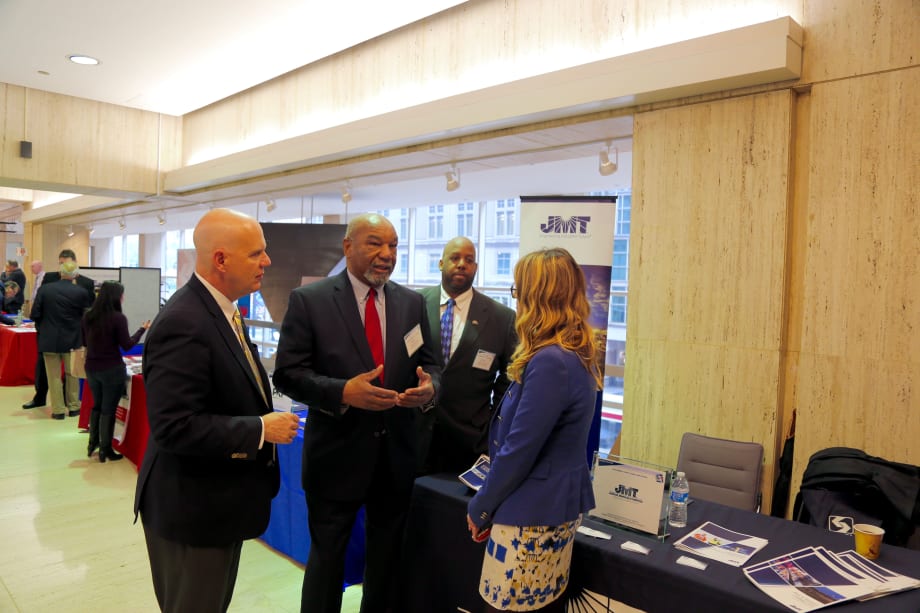
SEPTA GM Jeffrey Knueppel met with attendees at the spring DBE “Meet the Primes” event. Photo: SEPTA
2 min to read
SEPTA GM Jeffrey Knueppel met with attendees at the spring DBE “Meet the Primes” event. Photo: SEPTA
Doing business with a large transportation organization is not as daunting as one might think.The Southeastern Pennsylvania Transportation Authority (SEPTA) uses technology and in-person networking to facilitate relationships with companies pursuing opportunities with the authority.
About 10 years ago, SEPTA implemented an Electronic Procurement System (ePS), using eQuote for solicitations under $100,000. Recently, SEPTA expanded its ePS capabilities, conducting a soft launch of an electronic bid (eBid) system for selected solicitations of over $100,000.
“We previously received sealed bids that were delivered in person or sent by mail. Sometimes, the bid documents were incomplete,” said Marie Chua, SEPTA’s sr. director, procurement & supply chain.
The eBid system is aimed at automating the procurement process — once a company registers via SEPTA’s website and selects the appropriate commodity codes related to their line of business, it will receive electronic notifications for new procurement opportunities. Notices will also continue to be published on SEPTA's website and in local newspapers.
“The new system is beneficial for everyone involved. Bids cannot be submitted to SEPTA until all required information is complete. The submitter will receive an acknowledgment message once the bid is successfully transmitted," said Chua. "SEPTA can be assured that all of the bids we have received are complete. Greater operations efficiencies are achieved because we don’t have to physically open and process documents sent manually.”
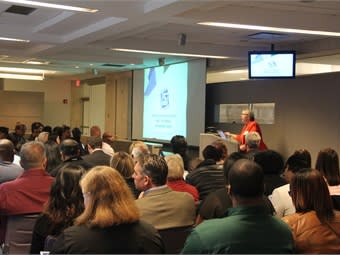
SEPTA DBE Program Manager Mary Connell spoke to a standing room only crowded at the Authority’s most recent networking event. Photo: SEPTA
In addition to utilizing new technologies to improve the procurement process, SEPTA supports the growth of small-, minority- and woman-owned businesses with its Disadvantaged Business Enterprise (DBE) program. SEPTA's DBE Program is designed to meaningfully involve small businesses in all facets of SEPTA's contracting and purchasing activities.
The DBE Program Office certifies companies as DBEs and provides technical assistance, training, and other resources for vendors looking to do business with SEPTA. The authority currently has 465 certified DBE firms.
As part of its commitment to small business equity and raising the numbers of minority and woman-owned firms participating in its contracts, SEPTA holds a number of outreach events throughout the year.
“We host certification workshops and networking events and have partnered with other Greater Philadelphia region entities to spread the word on how to do business with SEPTA,” said Mary Connell, the authority’s DBE program director. “In April, we had record attendance at our ‘Meet the Primes’ event, where minority and woman-owned businesses were invited to network with our prime contractors, as well as our engineering and procurement teams.”
Heather Redfern is the Public Information Manager for the Southeastern Pennsylvania Transportation Authority.
Subscribe to Our Newsletter
More Blog Posts
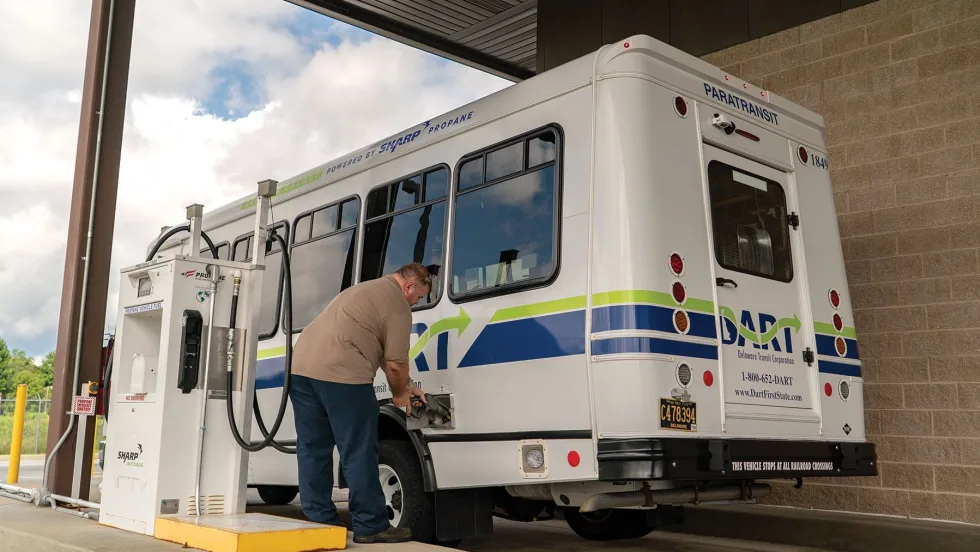
Building a Winning FTA Grant Proposal: Why Propane Autogas is the Pragmatic Choice for Fleet Resilience
With $610 million available through the FY 2026 Buses and Bus Facilities Competitive Program and the Low or No Emission Grant Program, agencies must build a compelling case before the September 21 deadline that balances environmental compliance with operational feasibility.
Read More →
Velo-city Conference 2026: Latest Trends in Cycling as Part of Urban Mobility
The global cycling conference highlighted how cities are integrating bicycles into multimodal transportation networks, expanding cycle tourism and reshaping urban mobility.
Read More →
Kindness Isn’t Soft...It’s Strategic.
Mike Bismeyer — often known as “The Kindness Guy” — has spent more than 17 years in public transit and mobility, serving in industry leadership roles, speaking across North America, and advocating for stronger workplace cultures. But his message doesn’t come from theory. It comes from lived experience.
Read More →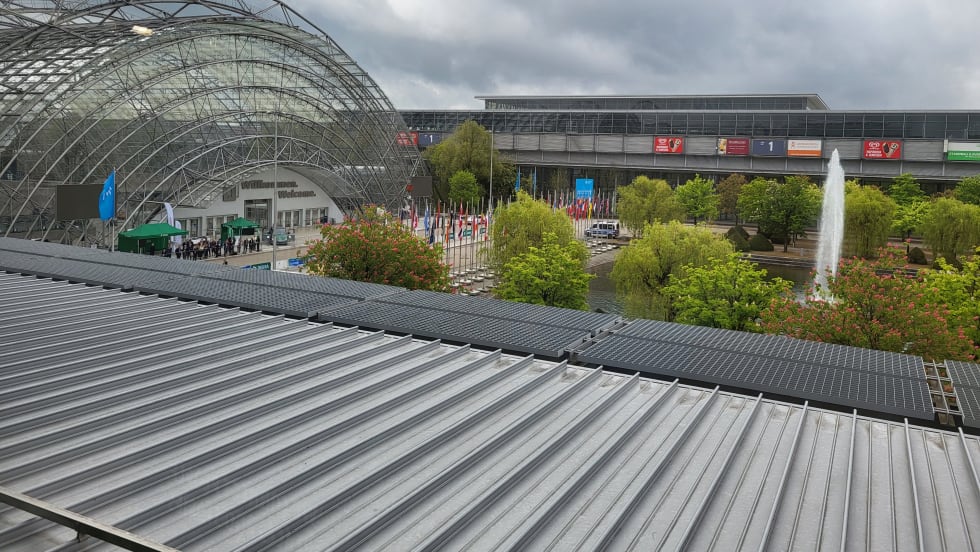
Inside ITF 2026: Transport Reacts to A Challenging World
Transport leaders from around the world gathered in Leipzig, Germany, for the 2026 International Transport Forum to discuss resilience, climate impacts, supply chains and the future of sustainable mobility.
Read More →
Every Ride Tells a Story — But You’re Not Just Selling the Ride
You’re selling the moment, the meaning, and the emotion behind it.
Read More →
How Digital Signage is Reshaping the Traveler Experience at Transportation Hubs
What was once a landscape of static signs has evolved into a responsive, immersive environment powered by real-time visual communication.
Read More →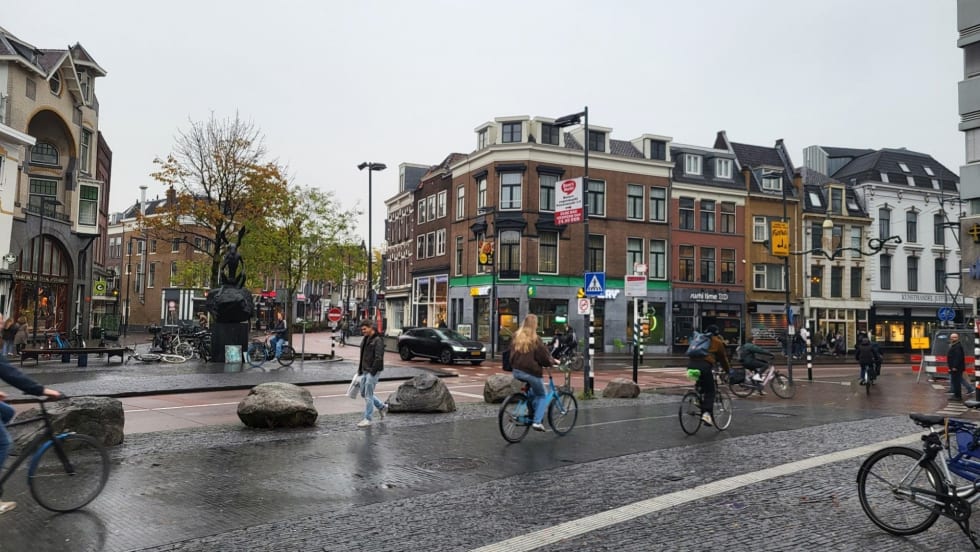
Latest Trends in Urban Mobility from Polis Conference 2025
Polis comprises cities and regions, as well as corporate partners, from across Europe, promoting the development and implementation of sustainable mobility. This year’s event had over a thousand attendees across various policy forums and an exhibition.
Read More →
Why Transit Leaders Require Better Tools for Operational Clarity In Today’s Tech-Fragmented Environment
Across North America and beyond, transit agency officials are contending with a perfect storm of operational headaches and strategic challenges that hamper daily service and long-term progress.
Read More →
The Powerless Brokers: Why California Can’t Build Transit
It is no secret that transit in the U.S. is slow and expensive to build.
Read More →
Why Transport Sustainability Should Focus on People Instead of Cars
Simply incentivizing electrification is not enough to make a meaningful impact; we must shift our focus toward prioritizing public transportation and infrastructure.
Read More →