



Post-Pandemic Priorities for the Transit Industry
Even with the rollout of a vaccine this year, the transit industry has been altered for the foreseeable future. What will that future be?

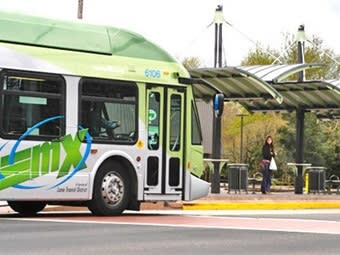
Transportation agencies should prioritize investment in bus improvements, such as BRT and route optimization, that are cheaper and faster to operationalize.
LTD
There has been a lot written about the devastating and overnight impacts of COVID-19 on ridership in all forms of publicly-accessed transportation and none more than transit. The American Public Transportation Association (APTA) is requesting $32 billion in immediate relief funding, and a bipartisan group of senators recently proposed a $908 billion COVID-19 relief bill that includes $15 billion for transit. But if transit agencies receive needed financial support, it will only allow them to remain on life support for a short period while they re-think their role in a post-pandemic world. Even with the rollout of a vaccine this year, the transit industry has been altered for the foreseeable future. What will that future be?
Earlier this fall, I hosted an international roundtable entitled Strategies for Adapting to Reduced Ridership in Public Transport that brought transportation leaders from New York, London, Paris, and Amsterdam together to discuss new threats, innovative solutions, and hopes for the future. Insights from the roundtable participants highlighted similarities and differences between countries’ challenges and potential strategies; and they all agreed that there will be a permanent impact on workplace norms and a lifestyle change is underway. Employees who have been working in fully remote environments are unlikely to return to a five-day weekly commute. And, population centers have shifted as a result of lockdowns, turmoil in cities, and increased difficulty with travel. With pre-pandemic ridership unlikely to return, transit agencies will need to accommodate for decreased usage and shifting patterns.
Given this, what should transit agencies prioritize? Here are some recommendations:
Bus and Rapid Transit should take priority over fixed infrastructure to provide more flexibility and serve the population most in need. Transit is often viewed as serving three key purposes: 1) Provide critical transportation for the economically disadvantaged; 2) Reduce congestion from highways and; 3) Reduce emissions. The pandemic has organically reduced congestion and emissions, leaving transits needing to focus the majority of its resources on serving the economically disadvantaged. These last nine months have highlighted the societal differences of two economies — one that that can work from home and one that must leave home daily and depends on public transportation for economic survival. Equity should play a major role in transit system redesign as these systems are key to providing access to opportunity. If you look at the use of rail versus the bus system in urban areas during the pandemic, it shows how important the bus system is for the economically disadvantaged. While bus ridership is down, it is not nearly as impacted as commuter rail, which moves workers from the suburbs to the cities. Transportation agencies should prioritize investment in bus improvements, such as bus rapid transit (BRT) and route optimization, that are cheaper and faster to operationalize. They also should be looking at how to better integrate Transportation Network Companies (TNCs) into first- and last-mile connections, such as integrating rideshare and/or scooters into a transit ticket, especially to reach the economically disadvantaged and people who cannot work from home. To their credit, many transit agencies recognized early on in the pandemic where their ridership was traveling, and they made rapid adjustments to ensure that they were routing to where essential workers live and work.
Creative, Data-Based Solutions. To regain public trust and lure riders back, innovation driven by creativity and data are imperative to survival. Such solutions include equipping riders with more knowledge by providing train car capacity counts on rider apps and informing users of the last time their train or bus was cleaned. Even more creative solutions such as providing scheduled station times are currently kept on hold but remain in the arsenal for future use. Solutions driven by practical necessity, such as decreasing the frequency of trains, or increasing the number of train cars per trip allowing more space, were also a common theme of the Strategies roundtable.
Improving Public Perception. Another commonality was the importance of rebuilding public perception of hygienic and safe trains and stations. Transit agencies have devoted significant resources to cleaning and improving air filtration to build confidence. In Paris, the transportation agency has taken it even one step further by performing their cleaning of trains and stations in public rail stations rather than maintenance depots so passengers can observe these actions firsthand, which gives them a deeper level of comfort that they are safe. Now is the time to accelerate the passenger experience with improved train punctuality; reliability of station functionality, e.g., ticket machines; and the use of smartphones and contactless payment devices to buy tickets.
Scenario/Futures Planning. While a few people predicted the impact the pandemic would have on the transit industry, virtually no agency undertook “Alternative Futures” and “What if?” scenario planning to build alternative operating models in advance. Most strategic planning activities see the future as one-dimensional and near-term. Futures Planning explores a wider spectrum of futures at a greater distance, which allows for better planning and creates preferable futures. Futuring allows organizations to plan effectively, minimize disruption, and take the necessary steps to create a preferable future state for their business and their customers. This is especially important for organizations that require significant capital and rely on long term infrastructure investment. Types of questions to answer could include:
What are the major emerging trends that will drive change?
What strategic pivot points and scenarios do we need to monitor?
What’s our preferable future state vision?
What are the implications on our future relationships and services?
How do we view our current versus future infrastructure?
How will we spend time and resources over the next three to five years? What are the major factors to drive future decisioning?
More Blog Posts
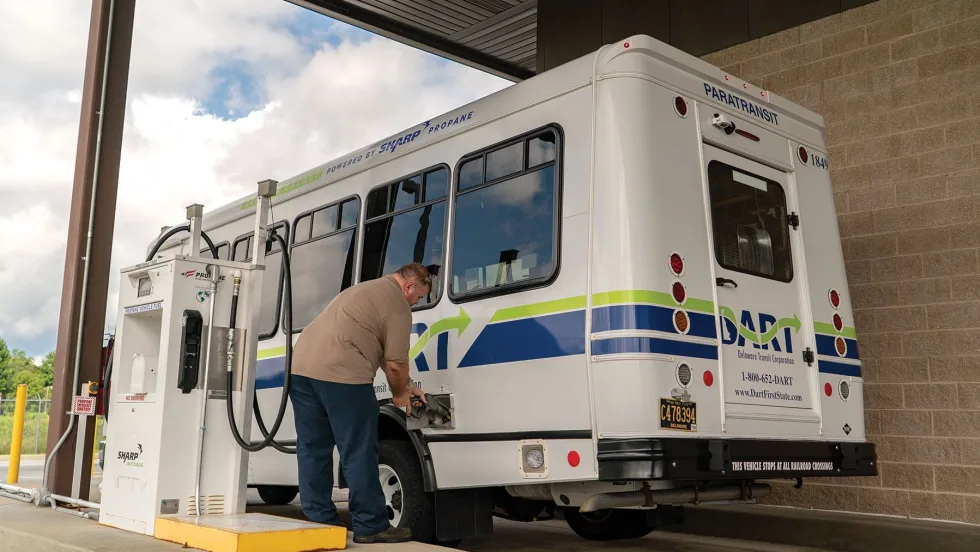
Building a Winning FTA Grant Proposal: Why Propane Autogas is the Pragmatic Choice for Fleet Resilience
With $610 million available through the FY 2026 Buses and Bus Facilities Competitive Program and the Low or No Emission Grant Program, agencies must build a compelling case before the September 21 deadline that balances environmental compliance with operational feasibility.
Read More →
Velo-city Conference 2026: Latest Trends in Cycling as Part of Urban Mobility
The global cycling conference highlighted how cities are integrating bicycles into multimodal transportation networks, expanding cycle tourism and reshaping urban mobility.
Read More →
Kindness Isn’t Soft...It’s Strategic.
Mike Bismeyer — often known as “The Kindness Guy” — has spent more than 17 years in public transit and mobility, serving in industry leadership roles, speaking across North America, and advocating for stronger workplace cultures. But his message doesn’t come from theory. It comes from lived experience.
Read More →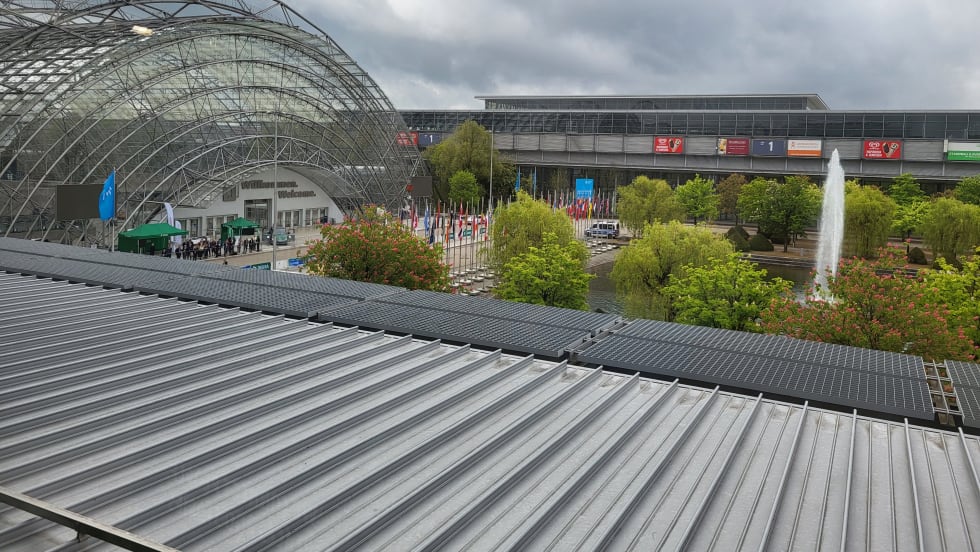
Inside ITF 2026: Transport Reacts to A Challenging World
Transport leaders from around the world gathered in Leipzig, Germany, for the 2026 International Transport Forum to discuss resilience, climate impacts, supply chains and the future of sustainable mobility.
Read More →
Every Ride Tells a Story — But You’re Not Just Selling the Ride
You’re selling the moment, the meaning, and the emotion behind it.
Read More →
How Digital Signage is Reshaping the Traveler Experience at Transportation Hubs
What was once a landscape of static signs has evolved into a responsive, immersive environment powered by real-time visual communication.
Read More →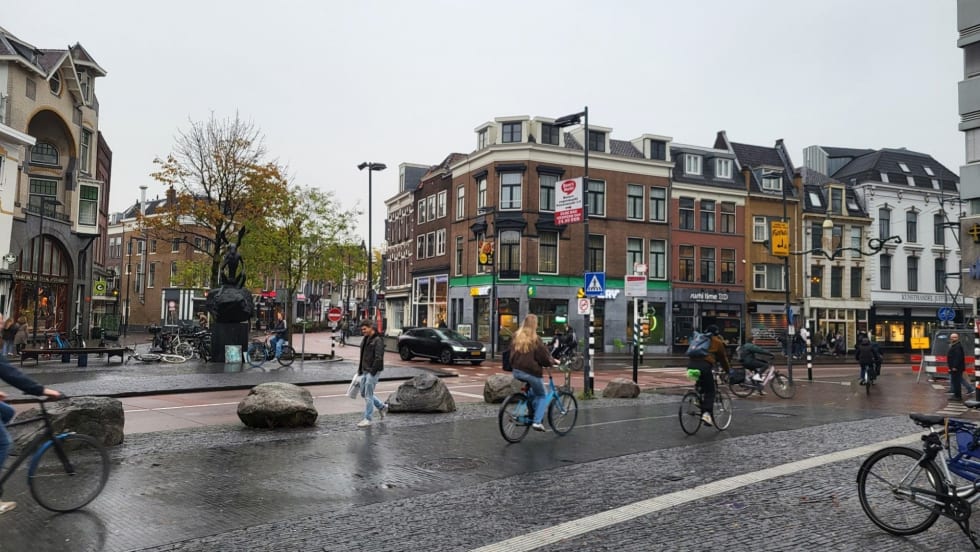
Latest Trends in Urban Mobility from Polis Conference 2025
Polis comprises cities and regions, as well as corporate partners, from across Europe, promoting the development and implementation of sustainable mobility. This year’s event had over a thousand attendees across various policy forums and an exhibition.
Read More →
Why Transit Leaders Require Better Tools for Operational Clarity In Today’s Tech-Fragmented Environment
Across North America and beyond, transit agency officials are contending with a perfect storm of operational headaches and strategic challenges that hamper daily service and long-term progress.
Read More →
The Powerless Brokers: Why California Can’t Build Transit
It is no secret that transit in the U.S. is slow and expensive to build.
Read More →
Why Transport Sustainability Should Focus on People Instead of Cars
Simply incentivizing electrification is not enough to make a meaningful impact; we must shift our focus toward prioritizing public transportation and infrastructure.
Read More →