




Want More? Best (and Worst) Cities for Commuting on Public Transportation in the U.S.
Public Transit Companies Among Country’s Best Employers
What do transit authorities like SEPTA, MBTA, MTA and BART have in common other than transporting thousands, even millions of riders every day?
April 27, 2015
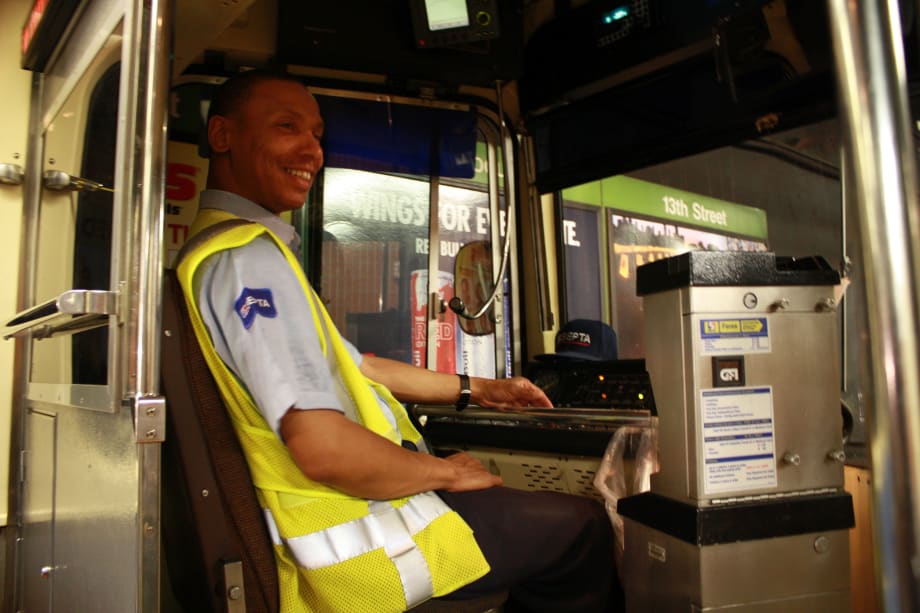
SEPTA Railcar Operator.
Photo: SEPTA
2 min to read
What do transit authorities like SEPTA, MBTA, MTA and BART have in common other than transporting thousands, even millions of riders every day? All were recently ranked as four of the U.S.’s 500 “Best Employers” by Forbes magazine.
SEPTA, MBTA, MTA and BART were among 25 organizations included in Forbes’ “Transportation & Logistics” category, along with Southwest Airlines, Amtrak, CSX, Union Pacific and Greyhound. In fact, SEPTA (#33) and MBTA (#49) placed higher than Apple (#55) and SEPTA was the highest ranked company in Pennsylvania.
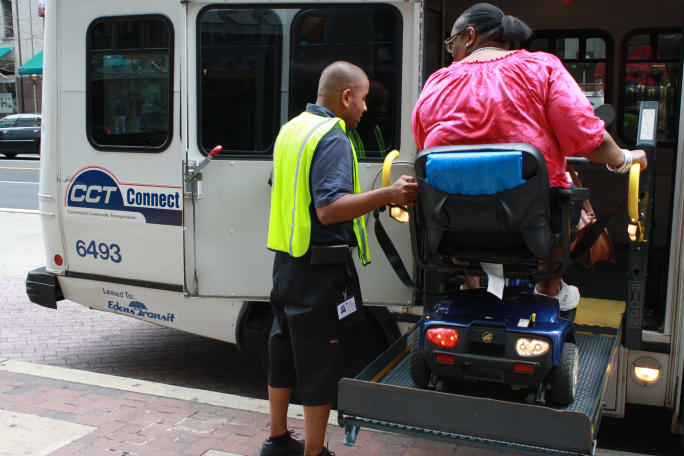
SEPTA Paratransit Vehicle Operator.
Photo: SEPTA
“We’ve known for years that mass transit is one of the best industries in which to work,” said SEPTA GM Joseph M. Casey. “The Forbes list confirms this for the rest of the country.”
The Forbes rankings are derived from an online survey of 20,000 American workers. Respondents gave their opinions of their employers and other companies in their industries. According to Forbes, Statista, a firm that partnered with the publication, used the survey data to form a list of 3,500 employers “for whom there was a statistically relevant result." The list of 3,500 was then narrowed down to the 500 companies on the “Best Employers” list. In all, the 500 companies ranked by Forbes comprise 24 categories, ranging from “Media & Advertising” and “Health Care Equipment and Services” to “Education” and “Drugs and Biotechnology."
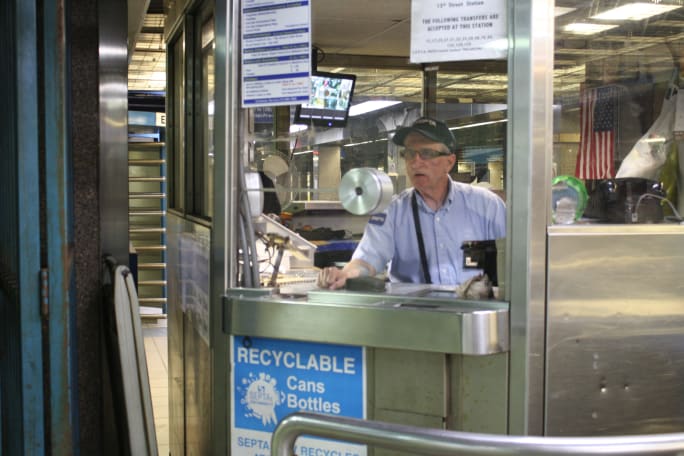
SEPTA Ticketing Agent.
Photo: SEPTA
Mass transit has so many career paths for employees — more than the public might think. Of course the operations staff — engineers, conductors, operators and mechanics — are the “driving” force of a transportation organization. But there are job opportunities in fields such as finance, engineering, government affairs and law enforcement, too.
In addition to offering a variety of work prospects, transportation authorities often have long-term employees, proving the companies to be more stable than those in other industries. In its 9,000-person organization, SEPTA has many staff members who have been with the authority for well over 30 years, including Casey, who joined SEPTA in 1982. That speaks volumes to the pride employees have in the organization, their dedication to their fields and their enjoyment of their jobs.
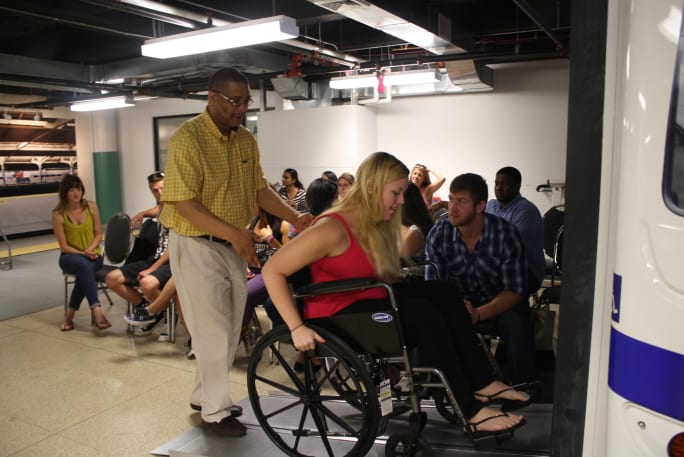
SEPTA travel training.
Photo: SEPTA
Public transit is a necessity and the rewards of working in the industry are many.
Subscribe to Our Newsletter
More Blog Posts
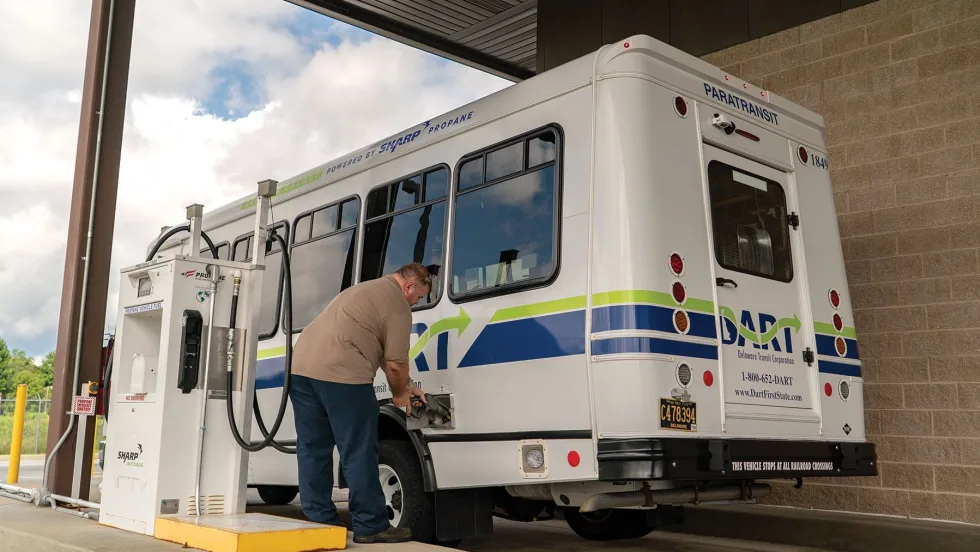
Building a Winning FTA Grant Proposal: Why Propane Autogas is the Pragmatic Choice for Fleet Resilience
With $610 million available through the FY 2026 Buses and Bus Facilities Competitive Program and the Low or No Emission Grant Program, agencies must build a compelling case before the September 21 deadline that balances environmental compliance with operational feasibility.
Read More →
Velo-city Conference 2026: Latest Trends in Cycling as Part of Urban Mobility
The global cycling conference highlighted how cities are integrating bicycles into multimodal transportation networks, expanding cycle tourism and reshaping urban mobility.
Read More →
Kindness Isn’t Soft...It’s Strategic.
Mike Bismeyer — often known as “The Kindness Guy” — has spent more than 17 years in public transit and mobility, serving in industry leadership roles, speaking across North America, and advocating for stronger workplace cultures. But his message doesn’t come from theory. It comes from lived experience.
Read More →
Inside ITF 2026: Transport Reacts to A Challenging World
Transport leaders from around the world gathered in Leipzig, Germany, for the 2026 International Transport Forum to discuss resilience, climate impacts, supply chains and the future of sustainable mobility.
Read More →
Every Ride Tells a Story — But You’re Not Just Selling the Ride
You’re selling the moment, the meaning, and the emotion behind it.
Read More →
How Digital Signage is Reshaping the Traveler Experience at Transportation Hubs
What was once a landscape of static signs has evolved into a responsive, immersive environment powered by real-time visual communication.
Read More →
Latest Trends in Urban Mobility from Polis Conference 2025
Polis comprises cities and regions, as well as corporate partners, from across Europe, promoting the development and implementation of sustainable mobility. This year’s event had over a thousand attendees across various policy forums and an exhibition.
Read More →
Why Transit Leaders Require Better Tools for Operational Clarity In Today’s Tech-Fragmented Environment
Across North America and beyond, transit agency officials are contending with a perfect storm of operational headaches and strategic challenges that hamper daily service and long-term progress.
Read More →
The Powerless Brokers: Why California Can’t Build Transit
It is no secret that transit in the U.S. is slow and expensive to build.
Read More →
Why Transport Sustainability Should Focus on People Instead of Cars
Simply incentivizing electrification is not enough to make a meaningful impact; we must shift our focus toward prioritizing public transportation and infrastructure.
Read More →