



RTC Pairs Tech, Forethought to Keep Riders Safe and Informed
Transit agencies around the world are in the middle of an uncertain time, when we are all being challenged with finding answers even if we do not know the questions yet.

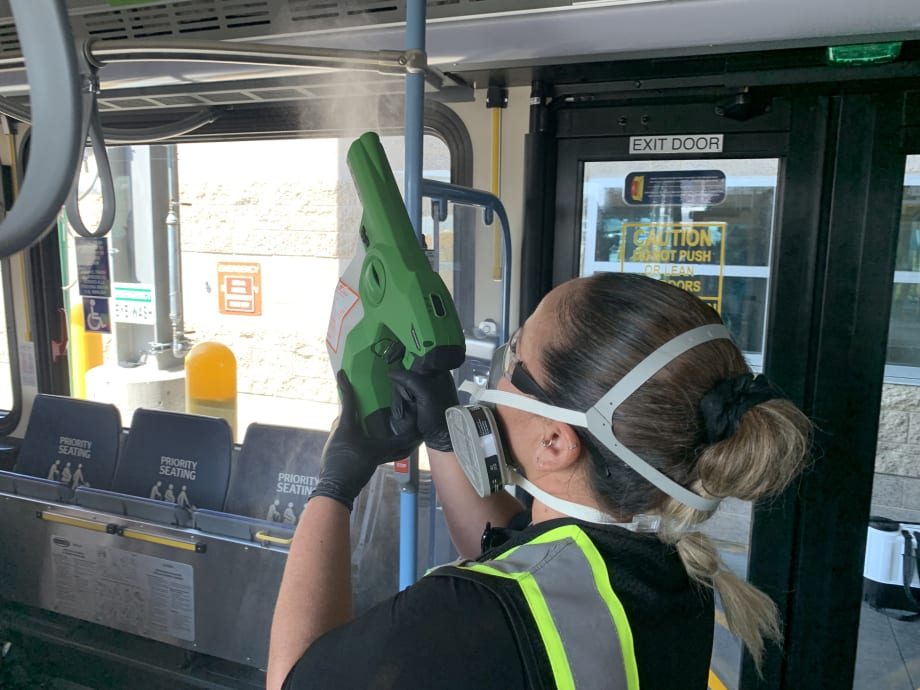
The RTC ramped up cleaning protocols, instituted social distancing measures on buses by reducing close-proximity seating, deployed higher-capacity vehicles on routes, and regulated Nevada’s face covering mandate.
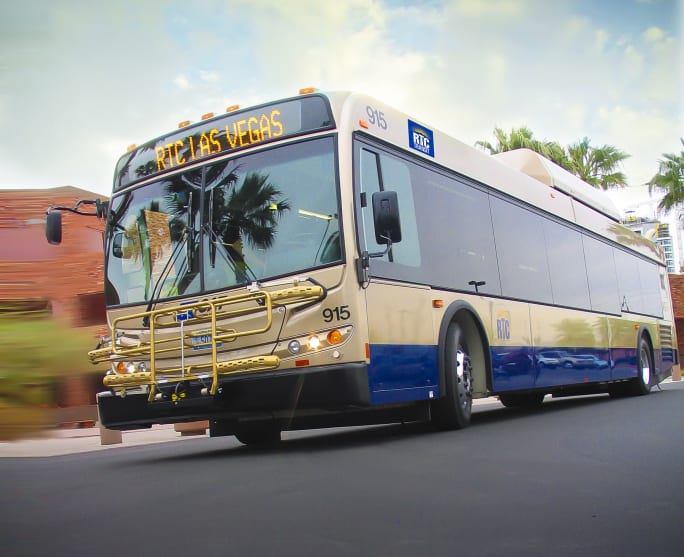
Photos courtesy RTC
Transit agencies around the world are in the middle of an uncertain time, when we are all being challenged with finding answers even if we do not know the questions yet. Without a roadmap, the Regional Transportation Commission of Southern Nevada (RTC) is adapting to the new landscape created by the coronavirus pandemic with one goal to guide us: to keep our riders safe.
Through the disruption, we are making strides to provide a safer, more enhanced experience for our customers, many of whom are the essential workers at grocery stores, food establishments, medical buildings, and more. We are implementing extensive precautions and exploring new high-tech options that will change transit as we know it, all while updating our customers in real time so we remain transparent and accountable.
Extensive safety protocols
Prior to the pandemic, we enjoyed year-over-year growth of increasing ridership, bucking the national trend of decreasing transit ridership. In just a few months’ time, however, the pandemic brought plummeting ridership, forcing us to adjust our transit schedule accordingly and explore new avenues to ensuring safety.
Like many of our peers, we ramped up cleaning protocols, instituted social distancing measures on buses by reducing close-proximity seating, deployed higher-capacity vehicles on routes, and regulated Nevada’s face covering mandate, all of which are outlined in our 14-Point Safety Plan.
However, we are one of few transit agencies that had previously installed driver enclosures on all of our buses. During the pandemic, we extended the existing enclosures to provide even more protection for our drivers.
Shortly after implementing these precautions, we surveyed our riders to get their feedback. The majority of those surveyed (74%) reported that they felt the RTC’s efforts to prevent the spread of COVID-19 made them feel safe while riding transit. While we were pleased with the results, we knew we could do more for our riders.
New high-tech options
As an agency, we have always taken pride in pivoting effortlessly to respond to change and in seeking new, innovative methods to reach our goals. The pandemic has certainly tested our abilities in both areas, leading us to cutting-edge options that will enhance safety for our riders.
In addition to the safety measures already in place, the RTC is pursuing several features moving forward:
Air ion cleaners that will kill germs and viruses circulating in the air while our vehicles are on the road.
Micro-bacterial shields, a clear, odorless protective coating, will be applied to seats and high-touch surfaces on buses to kill viruses upon contact.
Real-time passenger counts for buses that will be available online and via our smartphone app, rideRTC.
Sanitation information that will be displayed on each vehicle to notify passengers about the last time it was disinfected.
While we do not know when the pandemic will stabilize, we know that our riders deserve to feel as safe as possible while riding transit.
Information in real time
But instituting these safety measures is only half the battle. Our customers need to be informed about the protocols we have put in place and the strides we are taking on behalf of their safety. We are committed not only to improving the safety of our passengers but also to being transparent with our data so they can make the best, most informed decisions for themselves.
We have been able to communicate swiftly and transparently with our customers through a variety of methods:
Real-time detour alerts, which quickly allows us to notify customers via email and text message to more than 10,000 transit riders about potential issues. This feature has proven to be especially useful during the pandemic to communicate to our riders beyond detours.
An online data dashboard that displays how the pandemic is affecting our agency’s ridership, revenue, vehicle capacity, and more.
Wi-Fi messages on board. We know that 80% of our customers have a smartphone, some with limited data options, which has allowed us to communicate to riders who may not have internet access at home.
It is equally important to inform our riders about the safety measures we implement to bridge the gap between action and awareness.
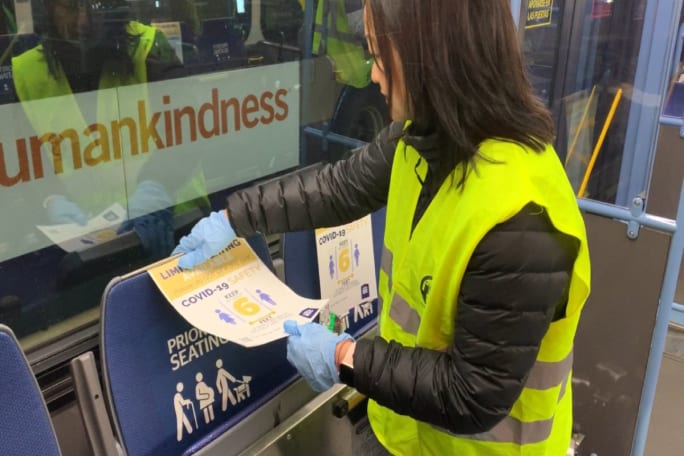
During the pandemic, RTC extended the existing enclosures to provide even more protection for drivers.
Moving forward
Safety has and continues to be the highest priority for the RTC, and the pandemic has only magnified it for us, as well as transit agencies across the world. We will continue with our existing safety protocols; exploring options as new technology emerges; and communicating effectively to our riders, operators, security officers, and staff. Ridership will return as communities reopen, and it is our duty to ensure passengers have a safe transit system waiting for them.
More Blog Posts
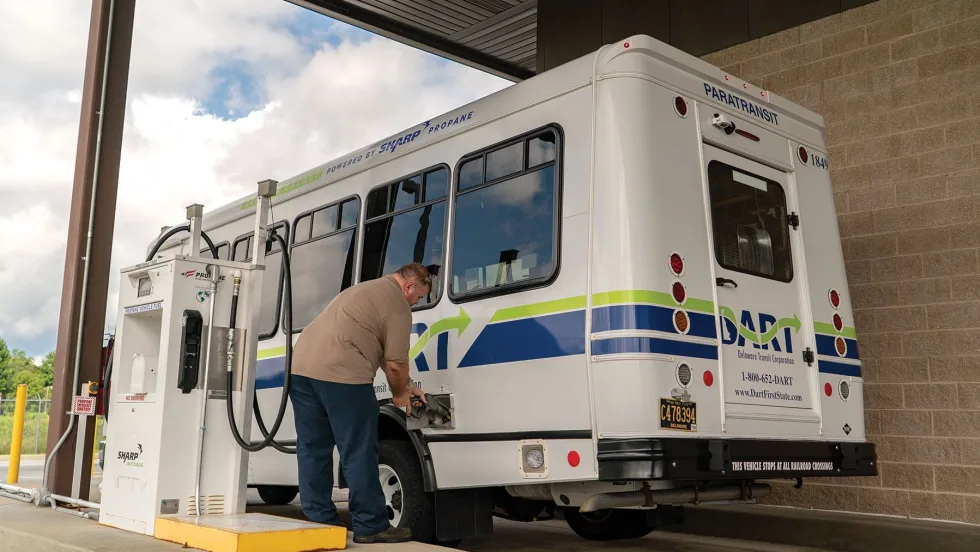
Building a Winning FTA Grant Proposal: Why Propane Autogas is the Pragmatic Choice for Fleet Resilience
With $610 million available through the FY 2026 Buses and Bus Facilities Competitive Program and the Low or No Emission Grant Program, agencies must build a compelling case before the September 21 deadline that balances environmental compliance with operational feasibility.
Read More →
Velo-city Conference 2026: Latest Trends in Cycling as Part of Urban Mobility
The global cycling conference highlighted how cities are integrating bicycles into multimodal transportation networks, expanding cycle tourism and reshaping urban mobility.
Read More →
Kindness Isn’t Soft...It’s Strategic.
Mike Bismeyer — often known as “The Kindness Guy” — has spent more than 17 years in public transit and mobility, serving in industry leadership roles, speaking across North America, and advocating for stronger workplace cultures. But his message doesn’t come from theory. It comes from lived experience.
Read More →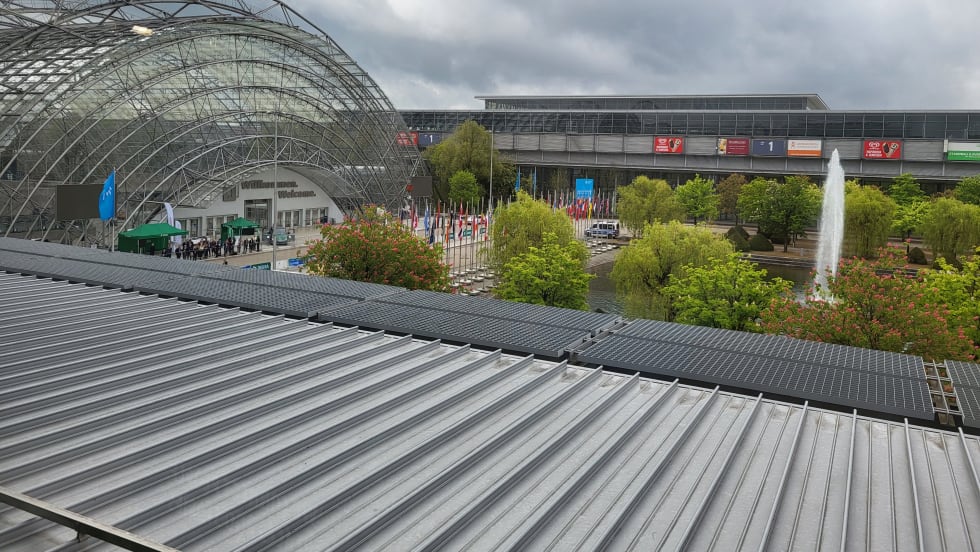
Inside ITF 2026: Transport Reacts to A Challenging World
Transport leaders from around the world gathered in Leipzig, Germany, for the 2026 International Transport Forum to discuss resilience, climate impacts, supply chains and the future of sustainable mobility.
Read More →
Every Ride Tells a Story — But You’re Not Just Selling the Ride
You’re selling the moment, the meaning, and the emotion behind it.
Read More →
How Digital Signage is Reshaping the Traveler Experience at Transportation Hubs
What was once a landscape of static signs has evolved into a responsive, immersive environment powered by real-time visual communication.
Read More →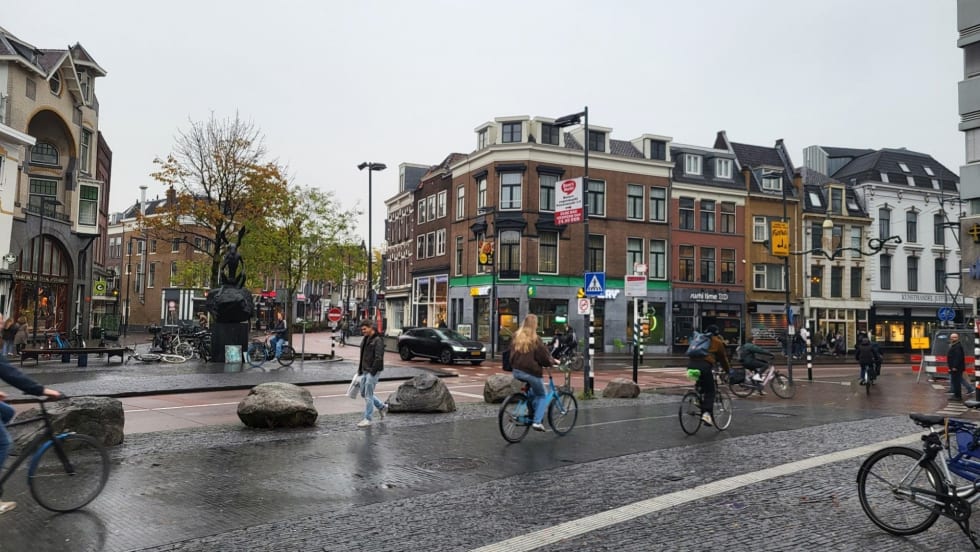
Latest Trends in Urban Mobility from Polis Conference 2025
Polis comprises cities and regions, as well as corporate partners, from across Europe, promoting the development and implementation of sustainable mobility. This year’s event had over a thousand attendees across various policy forums and an exhibition.
Read More →
Why Transit Leaders Require Better Tools for Operational Clarity In Today’s Tech-Fragmented Environment
Across North America and beyond, transit agency officials are contending with a perfect storm of operational headaches and strategic challenges that hamper daily service and long-term progress.
Read More →
The Powerless Brokers: Why California Can’t Build Transit
It is no secret that transit in the U.S. is slow and expensive to build.
Read More →
Why Transport Sustainability Should Focus on People Instead of Cars
Simply incentivizing electrification is not enough to make a meaningful impact; we must shift our focus toward prioritizing public transportation and infrastructure.
Read More →