



SEPTA beefs up its ‘social’ assets
In this age of smartphones, tablets, Twitter, Facebook and other social media, rapid transit has taken on a new meaning. Passengers not only want to get to their destinations fast, they want information about their trips in an instant. To answer customers’ demands of immediacy, transportation organizations across the country have taken to using a variety of methods to disseminate details as quickly as possible.

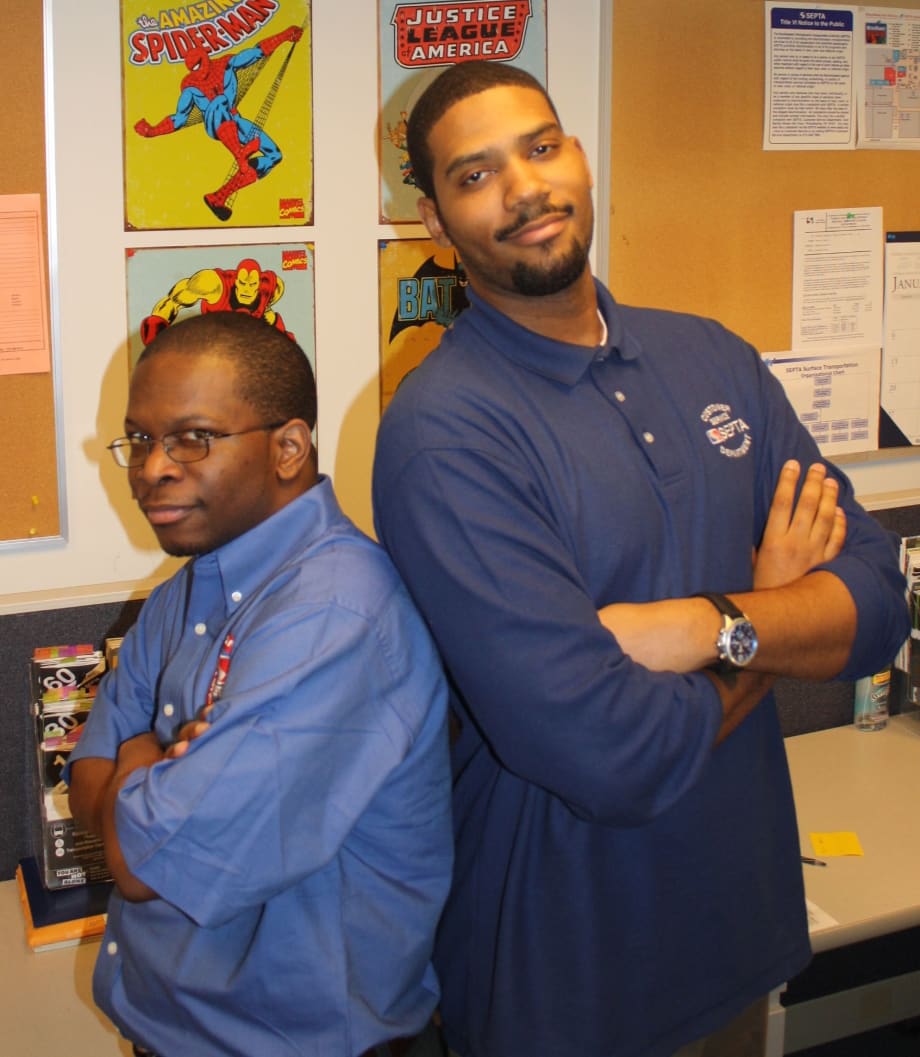
SEPTA Social Media Team members Ikenna Williams (shown left) and James Siler (right.) (Not shown: Mark Bariglio).

In this age of smartphones, tablets, Twitter, Facebook and other social media, rapid transit has taken on a new meaning.
Passengers not only want to get to their destinations fast, they want information about their trips in an instant, sometimes while even on the go. Gone is the time of learning about what caused a transportation service disruption long after the fact by reading the local paper or watching the evening newscast — details are needed now.
To answer customers’ demands of immediacy, transportation organizations across the country have taken to using a variety of methods to disseminate details as quickly as possible— ranging from real-time service and vehicle tracking applications to Facebook posts that alert riders to upcoming construction projects.
Over the past four years, Southeastern Pennsylvania Tranportation Authority (SEPTA) has regularly introduced and upgraded the tools it uses to make customers’ rides more interactive. For example, the agency’s transit customers can request the next four scheduled trips or schedule information for their specific routes via text message by using an assigned route stop identification number. The “System Status” feature on SEPTA’s website lists all routes and rail lines, giving details of detours, service alerts and advisories.
Trainview provides SEPTA regional rail customers with an online glimpse of trains out on the rails and if service is running on or close to schedule. Twitter updates announce service delays (and when normal service has resumed) almost as soon as they happen. In addition to tools designed by SEPTA’s in-house IT team, SEPTA has also invited the local tech community to create their own apps for riders.
While helpful in getting passengers to and from their destinations, the apps and web tools don’t lend themselves to being very “social” — there is little or no opportunity for customer s to offer feedback or ask questions and interact with staff. SEPTA’s Facebook page has helped by allowing customers to respond to the agency’s posts about special events, activities and construction, post questions for staff and “converse” with fellow riders.
To complement Facebook, SEPTA recently launched the @SEPTA_Social Twitter feed. Manned by a three-person “Social Media Team,” the feed is live seven days a week, from 9 a.m. to 6 p.m. The Social Media Team is dedicated solely to the transit system’s social media efforts. In addition to tweeting pertinent information and responding to customers’ comments and questions, they also monitor major social media platforms for all things SEPTA related.

After a tweet or post is spotted, the social media specialist will respond directly or gather additional details if needed. This information is passed on to supervisors or other additional internal channels if the situation requires action or attention.
@SEPTA_Social rolled out with a soft launch, but is gaining followers through users re-tweeting responses and online mentions via other social media platforms.
“The early response to @SEPTA_Social not only demonstrates our passengers’ desire for information about SEPTA service, but also their wanting to be heard other than via traditional methods such as in person and by letter or e-mail or phone call,” said Kim Scott Heinle, SEPTA’ s assistant GM of customer service. “As we continue to build upon our culture of customer service, we will expand upon the ways in which we socially interact with passengers.”
In case you missed it...
Read our METRO blog, "'Community involvement: Not just for the holiday season" here.
More Blog Posts
Velo-city Conference 2026: Latest Trends in Cycling as Part of Urban Mobility
The global cycling conference highlighted how cities are integrating bicycles into multimodal transportation networks, expanding cycle tourism and reshaping urban mobility.
Read More →
Kindness Isn’t Soft...It’s Strategic.
Mike Bismeyer — often known as “The Kindness Guy” — has spent more than 17 years in public transit and mobility, serving in industry leadership roles, speaking across North America, and advocating for stronger workplace cultures. But his message doesn’t come from theory. It comes from lived experience.
Read More →
Inside ITF 2026: Transport Reacts to A Challenging World
Transport leaders from around the world gathered in Leipzig, Germany, for the 2026 International Transport Forum to discuss resilience, climate impacts, supply chains and the future of sustainable mobility.
Read More →
Every Ride Tells a Story — But You’re Not Just Selling the Ride
You’re selling the moment, the meaning, and the emotion behind it.
Read More →
How Digital Signage is Reshaping the Traveler Experience at Transportation Hubs
What was once a landscape of static signs has evolved into a responsive, immersive environment powered by real-time visual communication.
Read More →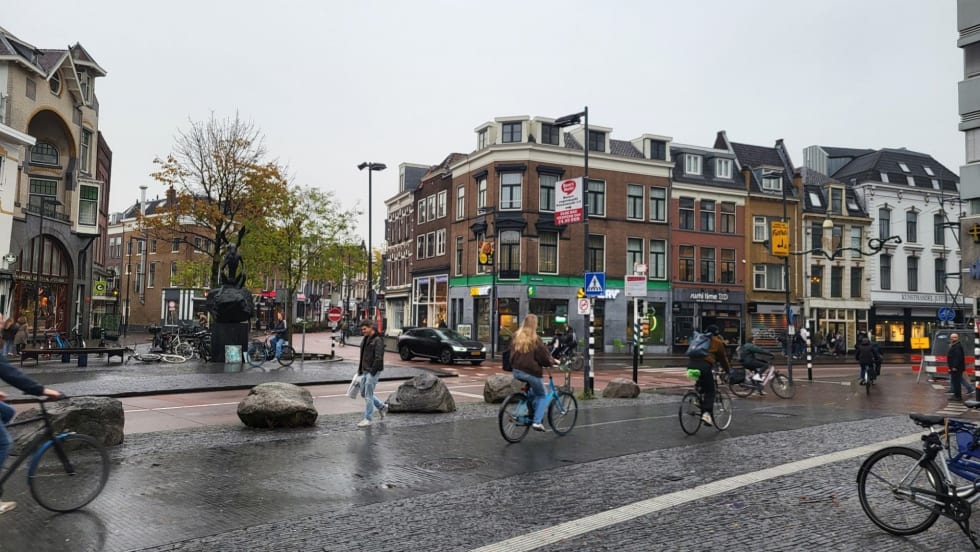
Latest Trends in Urban Mobility from Polis Conference 2025
Polis comprises cities and regions, as well as corporate partners, from across Europe, promoting the development and implementation of sustainable mobility. This year’s event had over a thousand attendees across various policy forums and an exhibition.
Read More →
Why Transit Leaders Require Better Tools for Operational Clarity In Today’s Tech-Fragmented Environment
Across North America and beyond, transit agency officials are contending with a perfect storm of operational headaches and strategic challenges that hamper daily service and long-term progress.
Read More →
The Powerless Brokers: Why California Can’t Build Transit
It is no secret that transit in the U.S. is slow and expensive to build.
Read More →
Why Transport Sustainability Should Focus on People Instead of Cars
Simply incentivizing electrification is not enough to make a meaningful impact; we must shift our focus toward prioritizing public transportation and infrastructure.
Read More →
Transit ROI & System Efficiencies Will Drive 'Big, Beautiful' Transit Funding
For many years, the narrative surrounding public transit improvements has been heavily weighted toward environmental gains and carbon reduction. While these are undeniably crucial long-term benefits, the immediate focus of this new funding environment is firmly on demonstrable system efficiencies and a clear return on investment.
Read More →