



SEPTA offers a different type of school bus
SEPTA transports approximately 58,000 of 134,000 public school students from a variety of grade levels every day, many using more than one mode of transit. The transit system launched its online School Trip Planner to help students who are moving to new institutions as a result of school closures look up their previous schools to find routes that service their new institution.

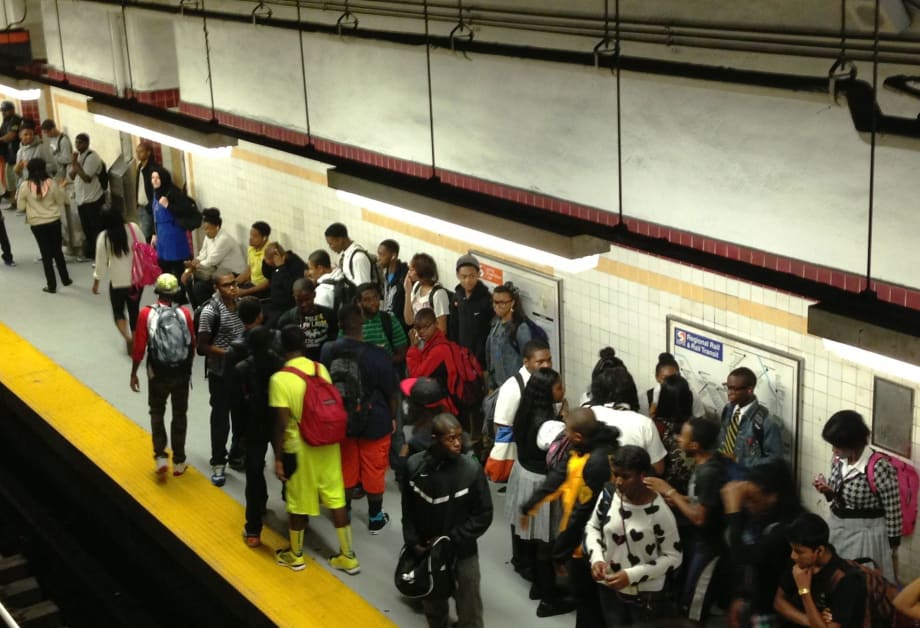
Students wait to take the Broad Street Line subway at City Hall Station — the line’s busiest station — during the morning rush hour. Photo courtesy SEPTA.

Students wait to take the Broad Street Line subway at City Hall Station — the line’s busiest station — during the morning rush hour. Photo courtesy SEPTA.
The bell ushering in the new academic year has rung and across the country children have headed back to school. For millions of students, getting to and from school means taking the bus. For those kids in major cities, that doesn’t mean the typical yellow bus, but a public transit bus, or even the subway.
In Philadelphia, Southeastern Pennsylvania Transportation Authority (SEPTA) transports approximately 58,000 of 134,000 public school students from a variety of grade levels every day, many using more than one mode of transit. Add to that 58,000 the thousands of parochial, private and charter school students commuting on public transit and you have close to 100,000 students using the SEPTA trains, buses and trolleys throughout the day, sometimes at the height of the morning and late afternoon rush hours.
For some adults who aren’t frequent transit riders, the thought of children traveling to and from school via a city bus or subway may seem daunting. But planning and collaboration between transit organizations, school districts and families can make the transition to using public transportation an easy one.
SEPTA recently launched its online School Trip Planner. Using the tool, students who are moving to new institutions as a result of school closures simply look up their previous schools to find routes that service their new institution.
“It gives three, four, five options, whether it’s the bus, trolley or the subway,” said Ron Hopkins, SEPTA assistant GM for operations. “We’ll tell you what station it is.”
Students and parents can click on the name of the new school to find route options from their homes. In a matter of seconds, the trip planner will provide the best travel routes. The agency’s regular online trip planner can also assist students who are attending other schools this year. SEPTA and the School District of Philadelphia encouraged parents and children to map out their routes before classes started and take “trial runs” to become familiar with stops, travel times and options.
And, to make using public transit an even more viable travel option for all students leaving their neighborhoods, since 2007, SEPTA has offered limited use Student Weekday Passes. The program was designed to provide free school-related transportation to Philadelphia middle and secondary school students, Mondays through Fridays from 5:30 a.m. to 7 p.m.
Prior to this, the school district required parents to purchase school tokens for their children. The district estimates the total quantity of passes needed for each school week and submits the order and payment to SEPTA. Passes are provided to the district in bulk and distributed to students by their schools. SEPTA calculates the number of passes actually used for travel for a specific week and credits the district for the unused passes.
Offering extra travel assistance to students is not only good public service, it also helps public transit organizations cultivate the next generation of riders.
“For many of these kids, this is their first real exposure to our buses, trains and trolleys,” said Hopkins. “If we can teach them at a young age how convenient and reliable our service is, we may gain lifelong SEPTA customers.”
RELATED: "Chicago transit partnership to offer free student rides"
More Blog Posts
Building a Winning FTA Grant Proposal: Why Propane Autogas is the Pragmatic Choice for Fleet Resilience
With $610 million available through the FY 2026 Buses and Bus Facilities Competitive Program and the Low or No Emission Grant Program, agencies must build a compelling case before the September 21 deadline that balances environmental compliance with operational feasibility.
Read More →
Velo-city Conference 2026: Latest Trends in Cycling as Part of Urban Mobility
The global cycling conference highlighted how cities are integrating bicycles into multimodal transportation networks, expanding cycle tourism and reshaping urban mobility.
Read More →
Kindness Isn’t Soft...It’s Strategic.
Mike Bismeyer — often known as “The Kindness Guy” — has spent more than 17 years in public transit and mobility, serving in industry leadership roles, speaking across North America, and advocating for stronger workplace cultures. But his message doesn’t come from theory. It comes from lived experience.
Read More →
Inside ITF 2026: Transport Reacts to A Challenging World
Transport leaders from around the world gathered in Leipzig, Germany, for the 2026 International Transport Forum to discuss resilience, climate impacts, supply chains and the future of sustainable mobility.
Read More →
Every Ride Tells a Story — But You’re Not Just Selling the Ride
You’re selling the moment, the meaning, and the emotion behind it.
Read More →
How Digital Signage is Reshaping the Traveler Experience at Transportation Hubs
What was once a landscape of static signs has evolved into a responsive, immersive environment powered by real-time visual communication.
Read More →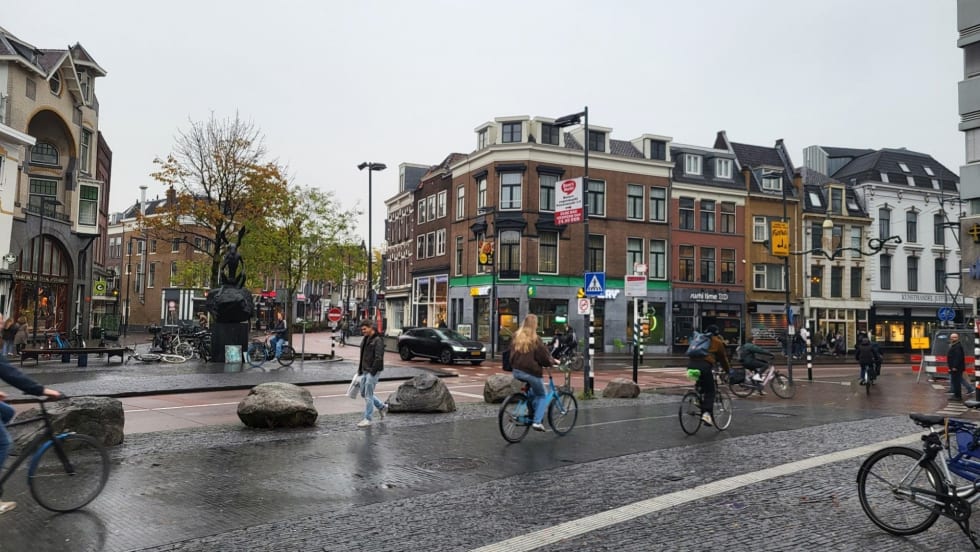
Latest Trends in Urban Mobility from Polis Conference 2025
Polis comprises cities and regions, as well as corporate partners, from across Europe, promoting the development and implementation of sustainable mobility. This year’s event had over a thousand attendees across various policy forums and an exhibition.
Read More →
Why Transit Leaders Require Better Tools for Operational Clarity In Today’s Tech-Fragmented Environment
Across North America and beyond, transit agency officials are contending with a perfect storm of operational headaches and strategic challenges that hamper daily service and long-term progress.
Read More →
The Powerless Brokers: Why California Can’t Build Transit
It is no secret that transit in the U.S. is slow and expensive to build.
Read More →
Why Transport Sustainability Should Focus on People Instead of Cars
Simply incentivizing electrification is not enough to make a meaningful impact; we must shift our focus toward prioritizing public transportation and infrastructure.
Read More →