



Take me out to the ballgame on transit
While public transit is becoming the way to get to a game because many new ballparks are being constructed in crowded city neighborhoods with little parking, taking a bus or “catching the sub” has been the most convenient and cost-effective method of traveling to a game in Philadelphia for decades.

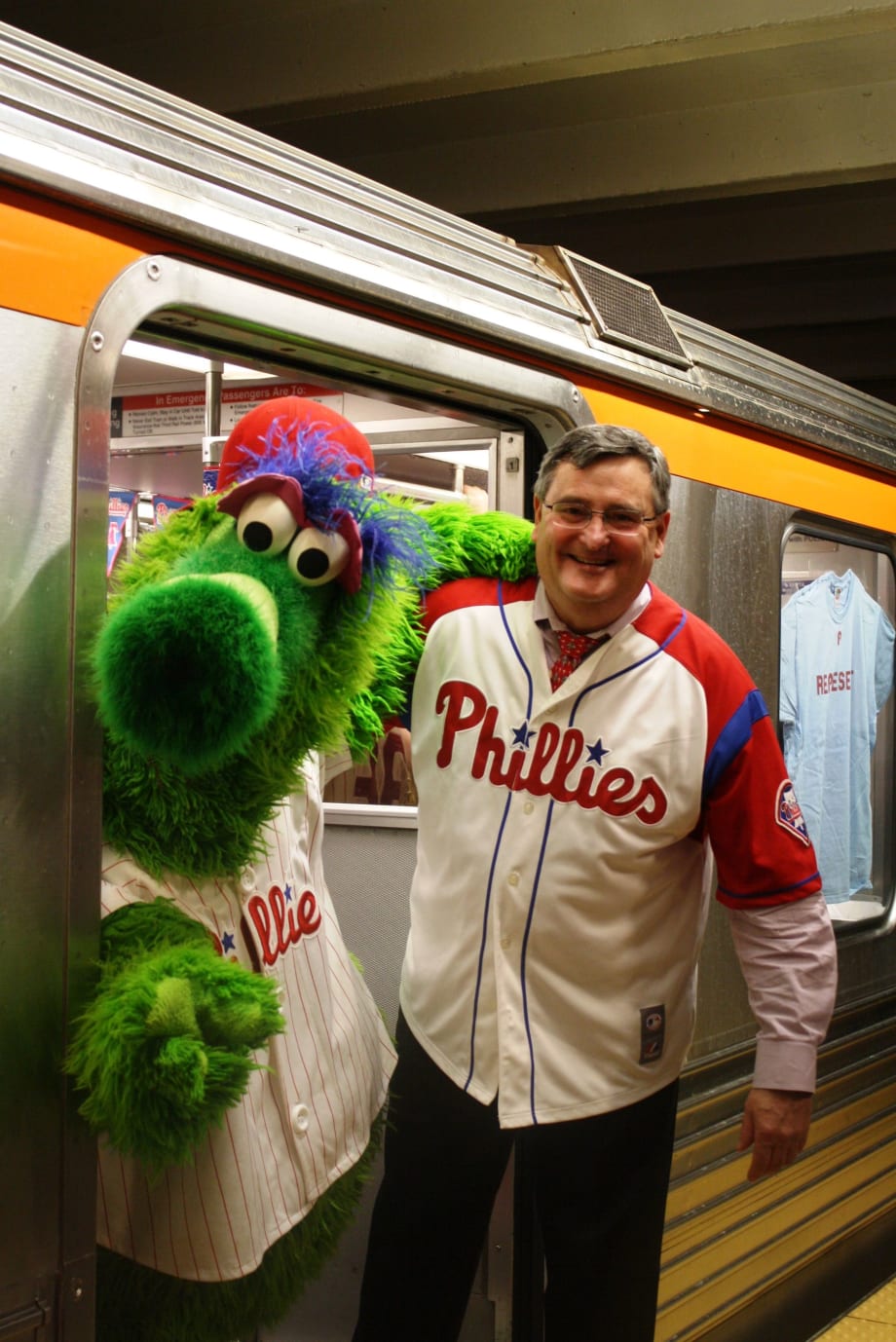
SEPTA GM Joe Casey and the Phanatic welcoming passengers on board the Broad Street Line subway.
SEPTA GM Joe Casey and the Phanatic welcoming passengers on board the Broad Street Line subway.
It’s April and shouts of “Play Ball!” can be heard across the country. Nothing beats the thrill of going to the ballpark to see your team pull off a big win — until you get stuck in a major traffic jam after the game.
As someone who frequently travels to ballparks throughout the U.S., — and prefers not to have to rent a car — one of the first features I explore when planning a trip is accessibility to the park via public transportation. In cities like San Francisco and Washington, D.C., trains leave you just steps from the game. And, all teams now list mass transportation options — for better or worse — on their websites.
While public transit is becoming the way to get to a game because many new ballparks are being constructed in crowded city neighborhoods with little parking, taking a bus or “catching the sub” has been the most convenient and cost-effective method of traveling to a game in Philadelphia for decades.
AT&T Station, the last stop on Southeastern Pennsylvania Transportation Authority's (SEPTA) Broad Street Line subway, is located in the heart of South Philadelphia’s Sports Complex — where the famed Spectrum and Veterans Stadium once stood and is now the home of Citizens Bank Park, Wells Fargo Center, Lincoln Financial Field and Xfinity Live entertainment center. The subway is a just an 11-minute ride from Center City (or eight minutes on a game-night Sports Express special), taking fans to within just a short walk to their venue. In fact, when the Temple University men’s basketball team played Duke at the Wells Fargo Center, head coach Fran Dunphy lead his team on a Broad Street Line ride from the school’s North Philadelphia campus and walked to the arena (was it a coincidence that the Owls defeated the Blue Devils that night?).
In 2011, fans made an average of 7,400 trips on the Broad Street Line to and from the ballpark each game day — a total of nearly 600,000 trips during the 81-game regular season. That’s thousands of people being in their seats in time for the first pitch because they are not stuck in pre-game traffic or having to leave at the seventh-inning stretch because they are afraid of being trapped in the parking lot even after the game is long over.
“The Phillies attract more than 43,000 fans every night. Add to that almost 20,000 people attending a hockey or basketball playoff game at the same time and road construction projects and you have traffic gridlock at the Sports Complex,” said SEPTA GM Joseph Casey. “However, our customers are well on their way home while their fellow fans are just merging onto the highway or crossing the bridge to New Jersey.”
And in Philadelphia, public transportation isn’t just convenient for people who live within the city’s boundaries. The Broad Street Line is accessible from a number of other SEPTA services, including the Market-Frankford Line, Regional Rail, and bus and trolley routes. South Jersey residents can also access the Broad Street Line from the Port Authority Transit Connection high-speed line.
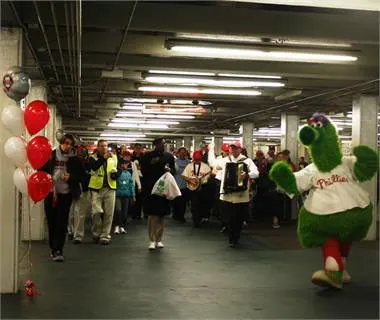
The Phillie Phanatic leading passengers to SEPTA’s Phillies Express.
SEPTA’s convenience to the ballpark has earned a fan in the Phillie Phanatic. The big green guy joined the agency to celebrate Opening Night of the 2012 season with a party at the Broad Street Line’s Walnut-Locust Station and a ride on the specially decorated Phillies Express train to the ballpark. If the Phanatic could talk, he would tell fans to take mass transit to the game. And fans, regardless of their team allegiance, should listen.
More Blog Posts
Velo-city Conference 2026: Latest Trends in Cycling as Part of Urban Mobility
The global cycling conference highlighted how cities are integrating bicycles into multimodal transportation networks, expanding cycle tourism and reshaping urban mobility.
Read More →
Kindness Isn’t Soft...It’s Strategic.
Mike Bismeyer — often known as “The Kindness Guy” — has spent more than 17 years in public transit and mobility, serving in industry leadership roles, speaking across North America, and advocating for stronger workplace cultures. But his message doesn’t come from theory. It comes from lived experience.
Read More →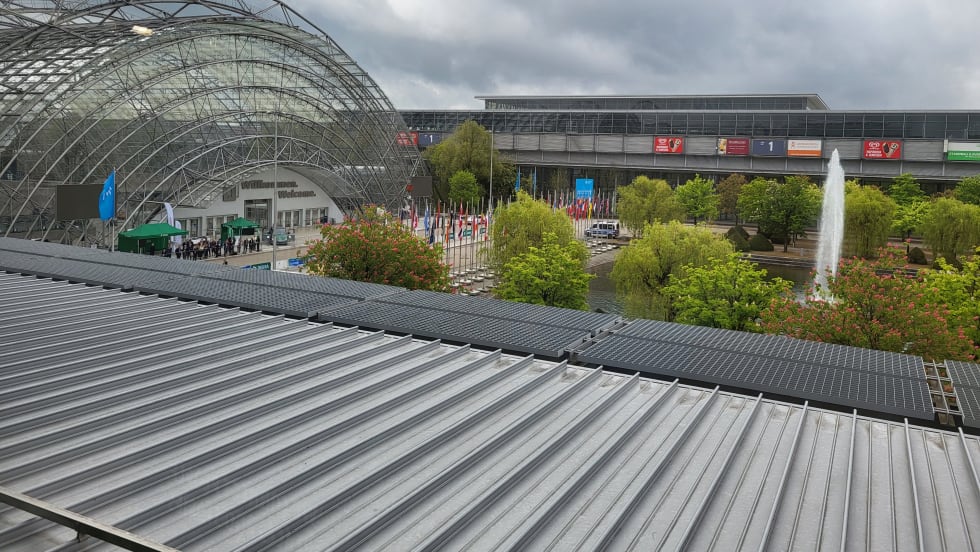
Inside ITF 2026: Transport Reacts to A Challenging World
Transport leaders from around the world gathered in Leipzig, Germany, for the 2026 International Transport Forum to discuss resilience, climate impacts, supply chains and the future of sustainable mobility.
Read More →
Every Ride Tells a Story — But You’re Not Just Selling the Ride
You’re selling the moment, the meaning, and the emotion behind it.
Read More →
How Digital Signage is Reshaping the Traveler Experience at Transportation Hubs
What was once a landscape of static signs has evolved into a responsive, immersive environment powered by real-time visual communication.
Read More →
Latest Trends in Urban Mobility from Polis Conference 2025
Polis comprises cities and regions, as well as corporate partners, from across Europe, promoting the development and implementation of sustainable mobility. This year’s event had over a thousand attendees across various policy forums and an exhibition.
Read More →
Why Transit Leaders Require Better Tools for Operational Clarity In Today’s Tech-Fragmented Environment
Across North America and beyond, transit agency officials are contending with a perfect storm of operational headaches and strategic challenges that hamper daily service and long-term progress.
Read More →
The Powerless Brokers: Why California Can’t Build Transit
It is no secret that transit in the U.S. is slow and expensive to build.
Read More →
Why Transport Sustainability Should Focus on People Instead of Cars
Simply incentivizing electrification is not enough to make a meaningful impact; we must shift our focus toward prioritizing public transportation and infrastructure.
Read More →
Transit ROI & System Efficiencies Will Drive 'Big, Beautiful' Transit Funding
For many years, the narrative surrounding public transit improvements has been heavily weighted toward environmental gains and carbon reduction. While these are undeniably crucial long-term benefits, the immediate focus of this new funding environment is firmly on demonstrable system efficiencies and a clear return on investment.
Read More →